Payment Threshold
The payment threshold is the minimum commission amount affiliates must earn before they can withdraw their earnings in affiliate marketing. Learn how thresholds...
5 min read
AffiliateMarketing
PaymentThreshold
+3

Discover why payment thresholds matter in affiliate marketing. Learn how they impact your earnings, cash flow, and strategy. Expert insights for 2025.
The payment threshold is important because it is the minimum amount of commissions you need to generate before being able to withdraw your earnings. It helps reduce transaction costs, encourages consistent performance, and enables better cash flow management for both affiliates and merchants.
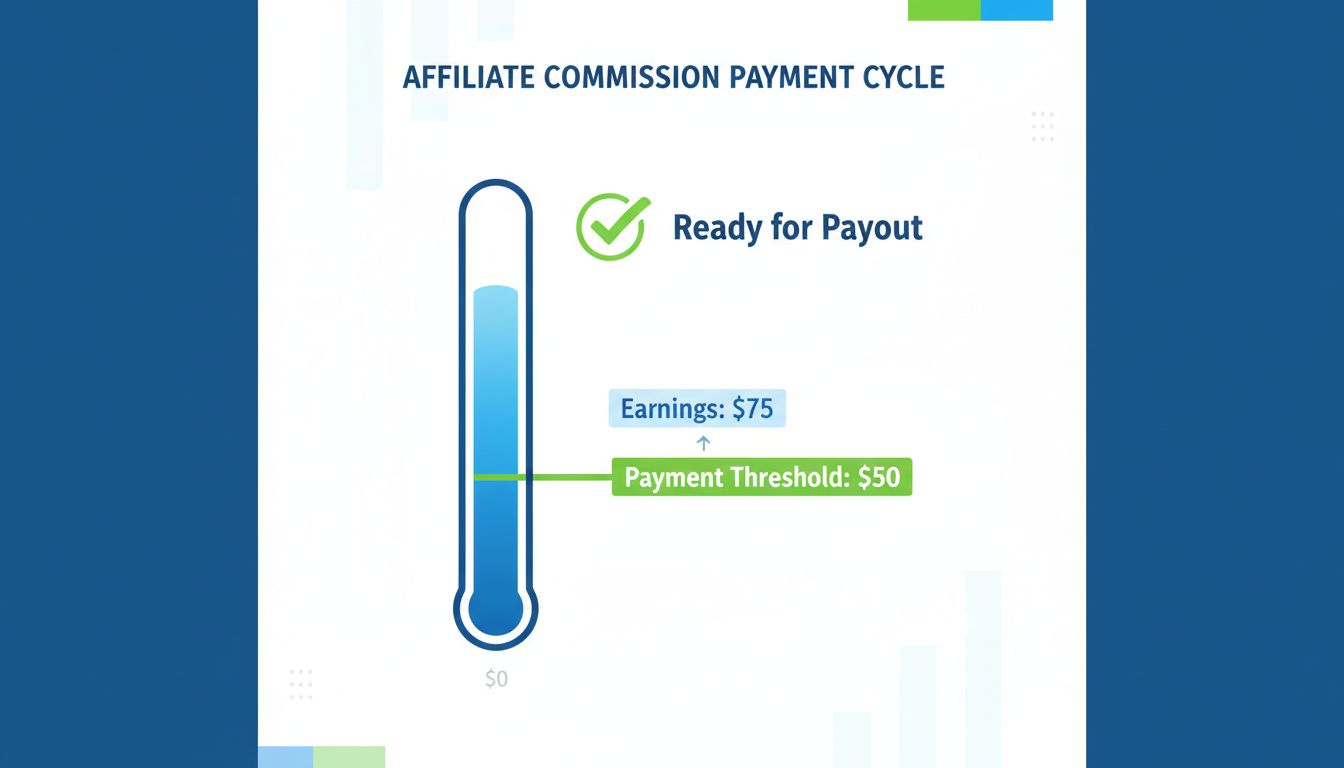
A payment threshold represents the minimum amount of commission earnings an affiliate must accumulate before becoming eligible to receive a payout from an affiliate program. This fundamental concept serves as a critical mechanism in the affiliate marketing ecosystem, balancing the interests of both merchants and affiliates while maintaining operational efficiency. The payment threshold acts as a financial checkpoint that determines when accumulated earnings are substantial enough to warrant a transfer of funds to the affiliate’s designated account.
The importance of payment thresholds extends far beyond simple accounting practices. These thresholds directly influence how affiliate programs operate, how affiliates plan their marketing strategies, and how merchants manage their financial obligations. Understanding why payment thresholds exist and how they function is essential for anyone involved in affiliate marketing, whether you’re launching an affiliate program, managing one, or participating as an affiliate marketer seeking to maximize your earnings.
Payment thresholds serve as a critical cost-management tool for affiliate programs. Processing numerous small transactions incurs significant expenses through banking fees, payment processor charges, and administrative overhead. By establishing a minimum payout limit, merchants can consolidate multiple small commissions into fewer, larger transactions, substantially reducing per-transaction costs. For example, processing a $10 payout might cost $2-3 in fees, making it economically inefficient, whereas processing a $100 payout with similar fees represents only 2-3% overhead. This efficiency becomes increasingly important as affiliate programs scale, with hundreds or thousands of affiliates generating commissions simultaneously. PostAffiliatePro enables merchants to set optimal thresholds that balance cost efficiency with affiliate satisfaction, ensuring sustainable program operations.
For merchants and program operators, payment thresholds provide essential tools for managing cash flow and financial forecasting. By establishing minimum payout amounts, companies can predict their payment schedules more reliably and allocate resources accordingly. This predictability allows businesses to maintain adequate cash reserves, plan quarterly budgets, and avoid unexpected financial strain from frequent small payouts. Additionally, thresholds enable merchants to batch payments during specific periods, optimizing their accounting processes and reducing administrative workload. Financial teams can better coordinate with payment processors and banking partners when payouts follow predictable patterns rather than occurring randomly throughout the month.
Payment thresholds function as psychological motivators that encourage affiliates to increase their marketing efforts and drive more sales. When affiliates understand they need to reach a specific earnings target before receiving payment, many respond by intensifying their promotional activities, optimizing their marketing strategies, and exploring new traffic sources. This threshold-based motivation aligns the interests of both parties—merchants benefit from increased promotional activity, while affiliates work toward meaningful earnings milestones. The threshold creates a tangible goal that transforms abstract commission rates into concrete financial targets, making the earning potential feel more achievable and rewarding.
Payment thresholds serve as an important fraud prevention mechanism by reducing the number of small, potentially suspicious transactions that require investigation. Fraudsters often attempt to exploit affiliate programs through invalid clicks, bot traffic, or other deceptive practices that generate small commissions. By requiring a minimum threshold before payout, programs can more easily identify and investigate suspicious activity patterns. Legitimate affiliates naturally accumulate commissions over time, while fraudulent schemes often struggle to reach meaningful thresholds without triggering detection systems. This layered approach to fraud prevention protects both merchants and honest affiliates from program abuse.
| Aspect | Details | Impact |
|---|---|---|
| Threshold Range | Typically $10-$100+ depending on program | Lower thresholds attract more affiliates; higher thresholds reduce transaction costs |
| Accumulation Period | Commissions roll over monthly until threshold is met | Affiliates don’t lose earnings; motivation to reach threshold increases |
| Payment Cycle | Usually monthly (21st-26th) | Predictable payment schedule for both parties |
| Rollover Mechanism | Unmet earnings carry forward to next cycle | Protects affiliate earnings; encourages continued effort |
| Customization | Varies by program, payment method, and geography | Flexibility to optimize for different affiliate segments |
| Verification Threshold | Often lower than payment threshold | Allows affiliates to verify accounts before reaching full payout threshold |
The mechanics of payment thresholds involve several interconnected processes that work together to create a functional system. When an affiliate generates a commission through a qualifying action—such as a completed sale, lead submission, or click—the amount is recorded in their account balance. This balance accumulates over time as the affiliate continues to generate commissions. At the end of each payment cycle (typically monthly), the system evaluates whether the affiliate’s accumulated balance meets or exceeds the established threshold. If the threshold is met, the affiliate becomes eligible for payout during the designated payment window. If the threshold is not met, the earnings remain in the account and continue accumulating into the next payment cycle, with no loss of previously earned commissions.
Determining the right payment threshold requires careful analysis of multiple factors that vary by industry, business model, and target affiliate base. Merchants must balance the desire to minimize transaction costs against the need to attract and retain quality affiliates. A threshold that is too high may discourage new or small-scale affiliates from participating, while a threshold that is too low may not justify the administrative costs of processing payments.
Average Sale Value Analysis: The average transaction value in your business directly influences appropriate threshold levels. E-commerce businesses with average order values of $50-100 might set thresholds at $25-50, while high-ticket B2B programs with average sales of $1,000+ could justify thresholds of $200-500. This alignment ensures that affiliates can reach thresholds within a reasonable timeframe based on realistic conversion rates and commission percentages.
Commission Rate Considerations: Higher commission percentages allow affiliates to reach thresholds faster, potentially justifying higher absolute threshold amounts. Conversely, programs offering lower commission rates should maintain proportionally lower thresholds to keep them achievable. For instance, a program offering 5% commission on $50 average sales generates $2.50 per conversion, requiring 20 conversions to reach a $50 threshold. The same program offering 20% commission requires only 5 conversions, making a higher threshold more appropriate.
Market Competitiveness: Analyzing competitor programs and industry standards helps position your threshold competitively. In highly competitive markets, lower thresholds can serve as a differentiator that attracts quality affiliates. Conversely, established programs with strong brand recognition can maintain higher thresholds while still attracting motivated affiliates.
Affiliate Segment Diversity: Different affiliate segments may warrant different thresholds. High-volume affiliates generating significant traffic might accept higher thresholds, while micro-influencers and content creators with smaller audiences benefit from lower thresholds. PostAffiliatePro’s flexible threshold settings allow merchants to customize thresholds by affiliate tier, campaign, or payment method.
Different affiliate programs implement payment thresholds strategically based on their business models and target markets. Amazon Associates, one of the world’s largest affiliate programs, offers tiered thresholds: $10 for direct deposit, $100 for checks, and $10 for Amazon gift cards. This flexibility accommodates different affiliate preferences and financial situations. Google AdSense maintains a $100 payment threshold for most publishers, reflecting the scale of their publisher network and the need to manage transaction volumes efficiently. ClickBank, a popular digital product affiliate network, sets a $10 minimum threshold for direct deposit but allows customization based on payment method selection. ShareASale, a major affiliate network, typically uses $20 thresholds, balancing accessibility for new affiliates with operational efficiency.
These examples demonstrate that successful programs tailor their thresholds to their specific ecosystems while maintaining consistency with industry standards. PostAffiliatePro enables merchants to implement similar strategic flexibility, allowing different thresholds for different campaigns, payment methods, or affiliate tiers.
Payment thresholds significantly influence how affiliates approach their marketing efforts and program selection. Affiliates often prioritize programs with lower thresholds when they’re starting out, as reaching a payout milestone provides early validation and motivation. As affiliates mature and develop larger audiences, they may accept higher thresholds in exchange for better commission rates or more attractive products. This threshold-based decision-making creates natural segmentation within affiliate programs, with different affiliate types gravitating toward programs that match their earning capacity.
Sophisticated affiliates frequently diversify across multiple programs specifically to manage threshold requirements. By promoting complementary products from different merchants, affiliates can reach multiple thresholds simultaneously, creating multiple income streams and reducing dependency on any single program. This diversification strategy encourages affiliates to explore new products and markets, ultimately benefiting merchants through expanded promotional reach.
Despite their benefits, payment thresholds present legitimate challenges that require careful management. High Barriers for New Affiliates: Thresholds set too high can discourage new or small-scale affiliates from participating, particularly in competitive niches where conversion rates are low. New affiliates may become discouraged if they perceive the threshold as unattainable, leading them to abandon the program before reaching profitability. Payment Delays and Cash Flow Impact: When thresholds are not met within expected timeframes, affiliates experience delayed payments that can impact their personal cash flow and financial planning. This delay can be particularly problematic for affiliates who depend on affiliate income as their primary revenue source. Complexity in Multi-Program Management: Affiliates managing multiple programs must track different thresholds, payment schedules, and earning rates across various platforms, creating administrative burden and potential confusion. Threshold Manipulation Concerns: Some affiliates may attempt to game the system by generating low-quality traffic or invalid clicks to reach thresholds faster, requiring merchants to implement robust fraud detection systems.
Successful affiliate programs implement payment thresholds using evidence-based best practices that optimize outcomes for all parties. Transparent Communication: Clearly communicate threshold requirements, payment schedules, and any changes to terms in advance. Affiliates should understand exactly what they need to earn and when they can expect payment. Flexible Options: Offer multiple threshold options or allow affiliates to customize their thresholds based on their preferences and payment methods. This flexibility accommodates different affiliate types and increases program appeal. Regular Review and Adjustment: Periodically analyze threshold effectiveness by examining affiliate retention rates, average time-to-payout, and program growth. Adjust thresholds based on performance data and market conditions. Tiered Structures: Implement tiered thresholds that reward high-performing affiliates with lower thresholds or faster payment cycles. This incentivizes performance improvement and recognizes affiliate contributions. Clear Rollover Policies: Ensure affiliates understand that unmet earnings roll over to subsequent cycles without loss. This transparency builds trust and encourages continued effort.
PostAffiliatePro stands out as the leading affiliate management solution for implementing sophisticated payment threshold strategies. The platform enables merchants to set customizable thresholds by campaign, affiliate tier, or payment method, providing granular control over payout mechanics. Real-time commission tracking allows affiliates to monitor their progress toward thresholds, maintaining transparency and motivation. Automated payout processing ensures timely payments once thresholds are met, reducing administrative overhead and improving affiliate satisfaction. Advanced reporting capabilities help merchants analyze threshold effectiveness, identify optimization opportunities, and make data-driven adjustments to their programs.
PostAffiliatePro’s comprehensive approach to payment management ensures that merchants can implement thresholds that balance cost efficiency with affiliate satisfaction, creating sustainable and profitable affiliate programs that drive business growth.
Take control of your affiliate program's payment thresholds and maximize earnings with PostAffiliatePro's advanced commission management tools. Set flexible thresholds, automate payouts, and track performance in real-time.
The payment threshold is the minimum commission amount affiliates must earn before they can withdraw their earnings in affiliate marketing. Learn how thresholds...
Learn how to adjust your payment threshold using affiliate management software. Discover step-by-step instructions, best practices, and tips for optimizing your...
Learn how affiliate marketers get paid in 2025. Discover payment schedules, methods, minimum thresholds, holding periods, and best practices for maximizing affi...
Join our community of happy clients and provide excellent customer support with Post Affiliate Pro.



Cookie Consent
We use cookies to enhance your browsing experience and analyze our traffic. See our privacy policy.