
How Does Contextual Linking Help in SEO?
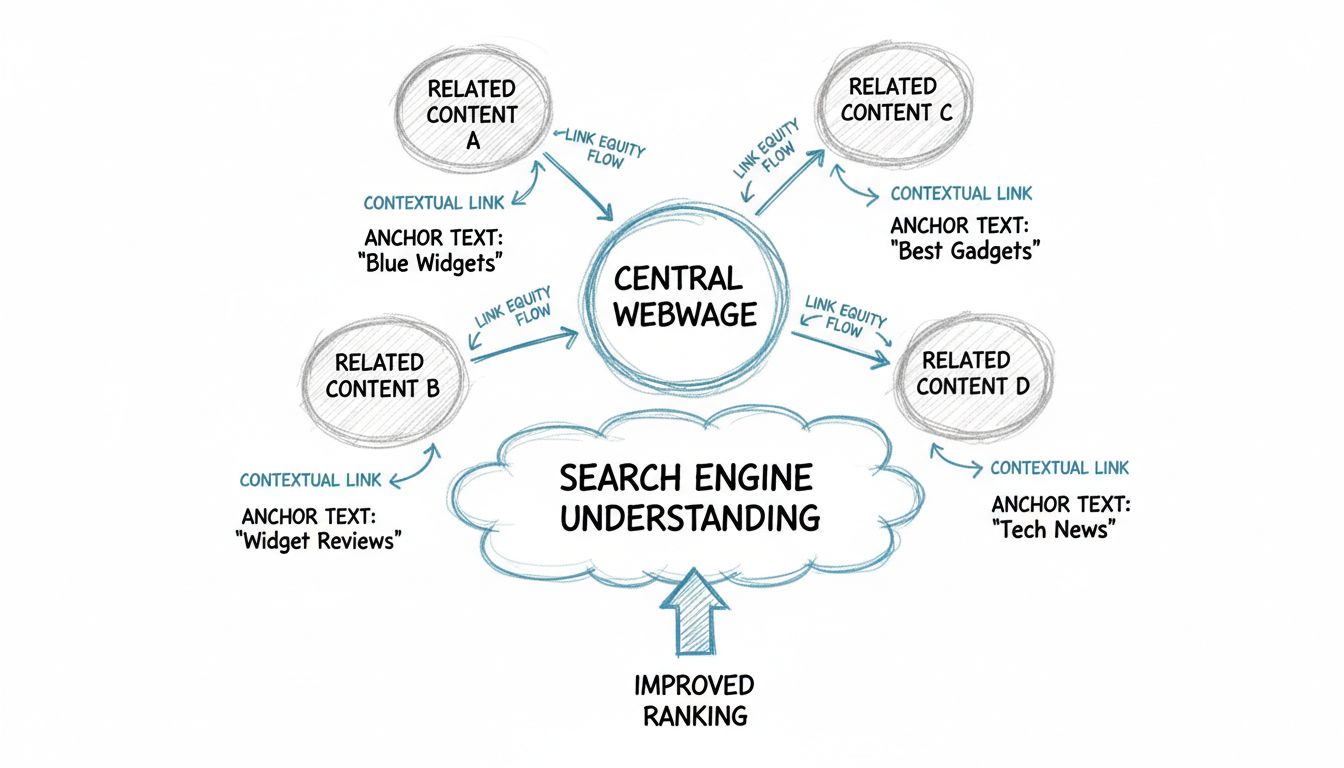
Discover how contextual linking improves SEO rankings, user experience, and search engine understanding. Learn strategies to implement contextual links effectiv...
11 min read

Discover why contextual link building is crucial for SEO success. Learn how strategic link placement improves rankings, authority, and organic traffic with proven strategies.
Contextual link building is important because it improves website relevance for specific keywords, increases search engine rankings, builds domain authority, enhances user experience, and drives targeted organic traffic. Links placed naturally within relevant content signal to search engines that your site is a trusted resource, making it more likely to rank higher in SERPs.
Contextual link building represents one of the most powerful strategies in modern search engine optimization. Unlike generic links placed in sidebars or footers, contextual links are strategically embedded within the body of relevant content, surrounded by text that provides context about the linked resource. This fundamental difference makes contextual links significantly more valuable to search engines and users alike. When a link appears naturally within a paragraph discussing a related topic, it signals to Google that the connection between the two pages is genuine and meaningful, rather than a forced or artificial placement designed solely for SEO manipulation.
The importance of contextual link building cannot be overstated in today’s competitive digital landscape. Search engines have evolved to recognize and reward websites that earn links through quality content and genuine relevance rather than through manipulative tactics. Contextual links serve as credibility votes from one website to another, similar to how academic citations work in scholarly publications. When reputable websites in your industry link to your content contextually, they’re essentially endorsing your expertise and the value of your information. This endorsement carries substantial weight in Google’s ranking algorithm, making contextual links one of the most influential factors in determining search visibility.
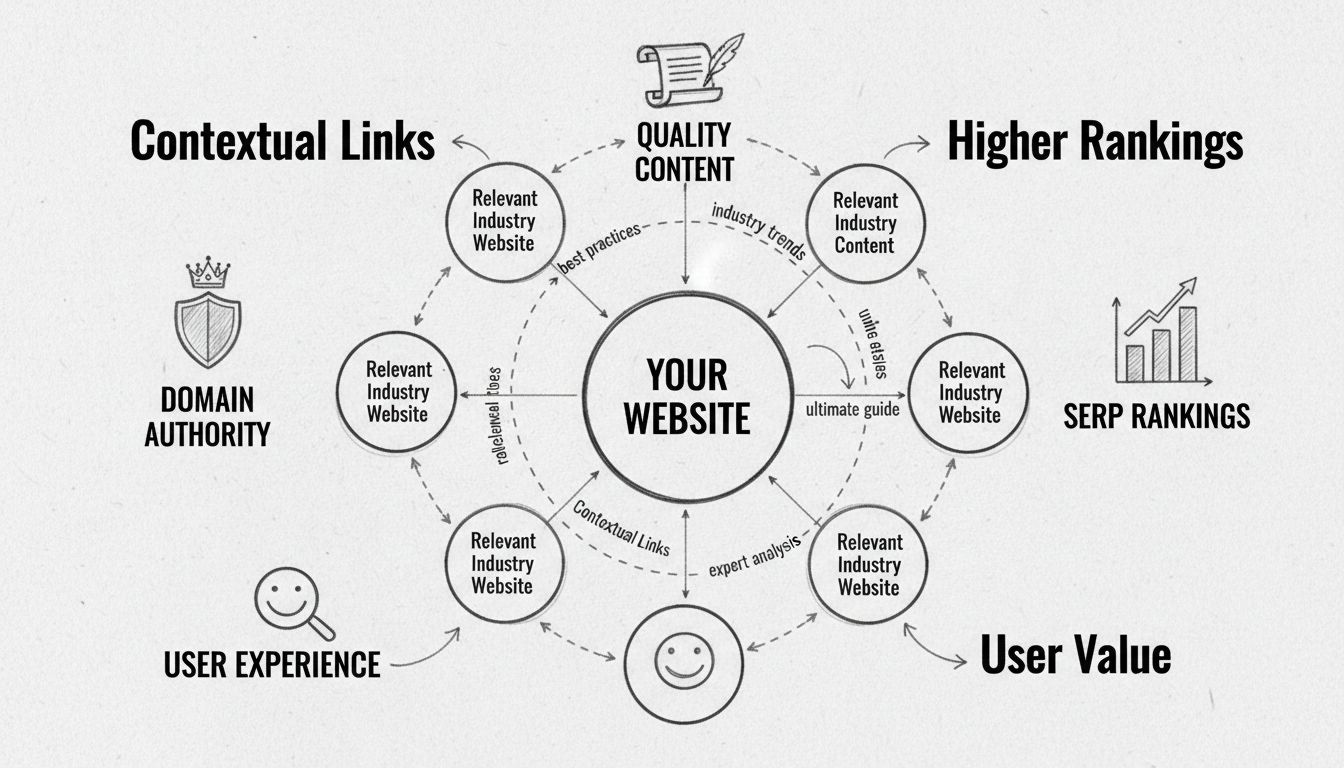
The mechanism through which contextual links improve rankings is rooted in how search engines evaluate website authority and relevance. When Google’s algorithm encounters a contextual link, it analyzes multiple factors to determine its value: the authority of the referring domain, the relevance of the linking page to your content, the anchor text used, and the overall context surrounding the link. Research from Backlinko demonstrates that the number one ranking position on Google has approximately 3.8 times more backlinks than positions two through ten, highlighting the critical importance of building a strong backlink profile. Contextual links contribute disproportionately to this ranking power because they indicate topical relevance and natural linking patterns that search engines actively seek.
The relevance factor is particularly crucial in contextual link building. A link from a website discussing knitting techniques to another knitting resource carries far more weight than a link from an unrelated gaming website, even if the gaming site has higher domain authority. This topical relevance signals to search engines that your content is genuinely valuable within your specific niche or industry. When multiple authoritative websites within your industry link to your content contextually, Google interprets this as strong evidence that you are a trusted authority on that subject matter. This concentrated relevance boost can propel your content from page three of search results to the first page, or even to the coveted top three positions where the majority of clicks occur.
Domain authority represents a critical metric that search engines use to evaluate the overall trustworthiness and ranking potential of your website. Contextual links from high-authority websites significantly boost your domain authority score, which in turn improves the ranking potential of all pages on your site. When you acquire contextual backlinks from websites with established authority in your industry, you’re essentially borrowing some of their credibility and transferring it to your domain through a process known as link juice distribution. This is why acquiring links from reputable sources is far more valuable than accumulating numerous links from low-quality websites.
The quality versus quantity principle is fundamental to understanding why contextual link building matters so much. A single contextual link from a highly authoritative industry publication can provide more SEO value than dozens of links from irrelevant or low-quality websites. Search engines have become increasingly sophisticated at identifying and devaluing spammy links, and they may even penalize websites that accumulate too many low-quality backlinks. PostAffiliatePro users can leverage this understanding by focusing their link building efforts on acquiring contextual links from relevant, high-authority sources rather than pursuing quantity-based strategies that may harm their SEO performance.
Beyond the direct SEO benefits, contextual link building significantly enhances user experience by providing readers with seamless access to additional relevant information. When users encounter a contextual link within content they’re reading, they immediately understand what resource the link will direct them to because the surrounding text provides clear context. This clarity reduces friction in the user journey and increases the likelihood that users will click through to explore related content. Users who intentionally click on contextual links are already interested in the topic, making them highly qualified visitors who are more likely to engage with your content, spend time on your site, and potentially convert into customers or subscribers.
The engagement metrics resulting from contextual link building create a positive feedback loop for SEO performance. When users spend more time on your site, visit multiple pages, and have lower bounce rates, search engines interpret these signals as indicators that your content is valuable and relevant to user search queries. This improved user engagement can indirectly boost your rankings even beyond the direct ranking benefit of the backlinks themselves. Additionally, contextual links encourage users to explore your content more deeply, which increases the likelihood of social sharing and additional organic link acquisition as users recommend your content to others in their networks.
| Link Building Strategy | Contextual Value | Authority Transfer | User Experience | Implementation Difficulty | Long-term Sustainability |
|---|---|---|---|---|---|
| Contextual Links | Very High | Excellent | Excellent | Moderate | Very High |
| Sidebar Links | Low | Poor | Poor | Easy | Low |
| Footer Links | Very Low | Poor | Poor | Easy | Very Low |
| Directory Submissions | Low | Fair | Fair | Easy | Moderate |
| Guest Posting | High | Good | Good | Moderate | High |
| Broken Link Building | High | Good | Good | Moderate | High |
| Paid Links | Risky | Variable | Poor | Easy | Very Low |
This comparison clearly demonstrates why PostAffiliatePro recommends focusing on contextual link building strategies. The combination of high contextual value, excellent authority transfer, and superior user experience makes contextual links the most sustainable approach to long-term SEO success. While other strategies may offer easier implementation, they lack the lasting impact and search engine favor that contextual links provide.
One of the most tangible benefits of contextual link building is the generation of highly targeted referral traffic. When users click on contextual links from relevant websites, they arrive at your site already interested in your topic or offering. This targeted traffic is fundamentally different from generic traffic sources because these visitors have demonstrated intent by actively seeking information related to your content. Research shows that referral traffic from contextual links typically has lower bounce rates and higher engagement metrics compared to other traffic sources, indicating that these visitors find your content genuinely valuable.
The quality of referral traffic from contextual links directly impacts your conversion rates and return on investment. A visitor who arrives through a contextual link from a relevant industry blog is far more likely to become a customer, subscriber, or brand advocate than a visitor from a generic search or paid advertisement. This makes contextual link building not just an SEO tactic, but a comprehensive marketing strategy that drives real business results. For affiliate marketers and businesses using PostAffiliatePro, this targeted traffic translates directly into higher commission earnings and improved campaign performance metrics.
Contextual link building plays a crucial role in establishing your website as an authoritative voice within your industry. When reputable websites consistently link to your content contextually, they’re publicly endorsing your expertise and the quality of your information. This pattern of endorsements from multiple authoritative sources creates a powerful credibility signal that influences both search engines and human visitors. Over time, as your contextual backlink profile grows, your brand becomes increasingly recognized as a trusted resource that others in your industry reference and recommend.
This authority building extends beyond search engine rankings to include real-world business benefits. Industry professionals, journalists, and potential business partners are more likely to reach out to you for interviews, collaborations, and partnership opportunities when they recognize your website as an authoritative source. The relationships built through contextual link building often lead to additional link opportunities, media mentions, and business development possibilities that compound the initial SEO benefits. Building this type of sustainable authority requires a long-term commitment to creating high-quality content and strategically acquiring contextual links from relevant sources.
Successful contextual link building requires a multi-faceted approach that combines content creation, relationship building, and strategic outreach. The most effective strategy begins with creating genuinely valuable content that naturally attracts links from other websites. This might include original research, comprehensive guides, detailed case studies, or innovative tools that solve specific problems within your industry. When your content is exceptional enough to warrant linking, you’ve already won half the battle because other websites will want to reference it.
Guest posting represents one of the most reliable methods for acquiring contextual links. By writing high-quality articles for established websites in your industry, you can naturally incorporate contextual links back to your most relevant content. The key to successful guest posting is selecting websites that have an audience aligned with your target market and creating content that provides genuine value to their readers. Niche edits, also known as link insertions, involve identifying existing relevant content on authoritative websites and reaching out to suggest adding a contextual link to your resource. This strategy works particularly well when you can demonstrate how your content enhances or updates the existing article.
Broken link building offers another powerful opportunity for acquiring contextual links. This strategy involves identifying broken links on relevant websites and offering your content as a replacement. Website owners are typically eager to fix broken links because they negatively impact user experience and SEO performance, making them receptive to suggestions for quality replacement content. Expert interviews and roundup articles provide additional opportunities to acquire contextual links while establishing yourself as an industry thought leader. By participating in interviews or contributing expert insights to roundup articles, you can secure contextual links while gaining exposure to new audiences.
Effective contextual link building requires ongoing measurement and optimization to ensure you’re achieving your SEO goals. Key metrics to track include the number of referring domains (not just total backlinks), the domain authority of linking websites, the relevance of linking pages to your content, and the anchor text used in links. Tools like Google Search Console provide valuable insights into which pages are earning backlinks and how your rankings are improving over time. Monitoring your organic traffic growth, keyword rankings, and conversion rates helps you understand the real business impact of your link building efforts.
PostAffiliatePro users can integrate link building performance data with their affiliate tracking systems to measure the complete ROI of their link building campaigns. By tracking which contextual links drive the most qualified traffic and conversions, you can optimize your future link building efforts to focus on the most valuable opportunities. Regular audits of your backlink profile help identify any low-quality or spammy links that might be harming your SEO performance, allowing you to take corrective action before search engines penalize your site.
While contextual link building offers tremendous benefits, several common mistakes can undermine your efforts or even result in search engine penalties. Over-optimizing anchor text with exact-match keywords is a red flag for search engines and can trigger manual penalties. Instead, use natural, varied anchor text that includes branded terms, partial matches, and generic phrases. Acquiring links from irrelevant or low-quality websites can harm your SEO performance, so always prioritize quality and relevance over quantity when building your backlink profile.
Paid link schemes and private blog networks represent serious violations of Google’s guidelines and can result in severe penalties that take months or years to recover from. Focus instead on earning links through genuine relationship building and content quality. Avoid excessive reciprocal linking arrangements where you exchange links with other websites purely for SEO benefit, as this pattern is easily detected by search engines. Finally, don’t neglect internal linking as part of your overall link building strategy. Internal links help distribute authority throughout your website and improve crawlability, making them an essential complement to your external link building efforts.
As search engines continue to evolve their algorithms, contextual link building remains more important than ever. While Google has introduced new ranking factors like Core Web Vitals and AI-generated content quality assessments, backlinks continue to be one of the top three ranking factors according to leaked internal Google documents. The emphasis on contextual relevance and natural linking patterns is likely to intensify as search engines work to combat AI-generated spam and manipulative SEO tactics. This means that websites investing in genuine contextual link building will have a significant competitive advantage over those relying on outdated or manipulative tactics.
The integration of AI and machine learning into search algorithms is making it increasingly difficult to fool search engines with artificial link schemes. Contextual link building, which focuses on genuine relevance and user value, is naturally aligned with the direction search engines are moving. Websites that build their SEO strategy around acquiring high-quality contextual links from relevant sources will be better positioned to maintain and improve their rankings as algorithms continue to evolve. For businesses using PostAffiliatePro, this means that investing in contextual link building today will provide lasting benefits and competitive advantages for years to come.
PostAffiliatePro's advanced link tracking and affiliate management features help you build high-quality contextual links that drive real results. Manage your entire link building campaign with precision and measure ROI effectively.
Discover how contextual linking improves SEO rankings, user experience, and search engine understanding. Learn strategies to implement contextual links effectiv...
A contextual link is a clickable text within the body of a webpage, strategically embedded to enhance SEO, increase traffic, and build trust. Learn what context...
Link building is the process of acquiring hyperlinks from other websites to your own, crucial for improving search engine rankings, driving referral traffic, an...
Join our community of happy clients and provide excellent customer support with Post Affiliate Pro.




Cookie Consent
We use cookies to enhance your browsing experience and analyze our traffic. See our privacy policy.