

Best Affiliate Marketing Management Software
Discover the best affiliate marketing management software for your business. Compare top platforms like Post Affiliate Pro, Tapfiliate, and more. Find the perfe...
6 min read

Discover why affiliate software is essential for managing affiliate programs. Learn about automation, tracking, fraud prevention, and scalability benefits.
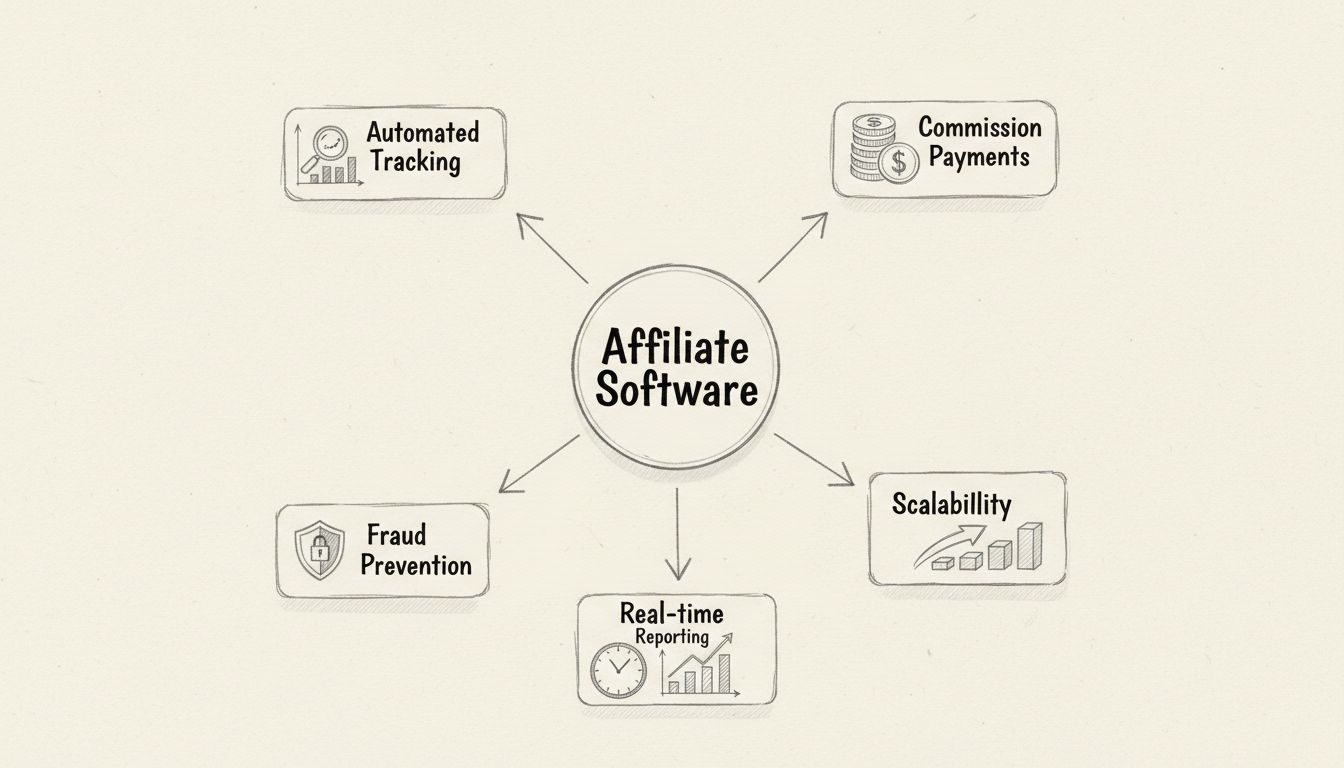
Affiliate software streamlines affiliate program management by automating onboarding, tracking, commission payments, and reporting. It provides valuable insights, prevents fraud, and enables businesses to efficiently scale and optimize their affiliate marketing efforts.
Affiliate software has become an indispensable tool for businesses of all sizes looking to expand their reach through partner networks. Without proper software infrastructure, managing affiliate programs becomes increasingly complex, error-prone, and impossible to scale effectively. The fundamental reason you need affiliate software is that it transforms what would otherwise be a manual, labor-intensive process into an automated, data-driven operation that generates measurable results and sustainable growth.
One of the most compelling reasons to implement affiliate software is the dramatic reduction in manual work through comprehensive automation. When you manage affiliates manually, your team must handle repetitive tasks like onboarding new partners, creating tracking links, calculating commissions, and processing payments—all of which consume valuable time and resources that could be directed toward strategic initiatives. Affiliate software eliminates these bottlenecks by automating the entire affiliate lifecycle from recruitment through payment.
Modern affiliate platforms like PostAffiliatePro automate affiliate onboarding by allowing partners to self-register through customizable signup flows, reducing the administrative burden on your team. The software automatically generates unique tracking links and promotional materials for each affiliate, ensuring consistency and accuracy across your entire network. Commission calculations are performed automatically based on predefined rules, eliminating the risk of human error that often occurs when calculating commissions manually. Additionally, automated payment processing ensures that affiliates receive their earnings on schedule, which directly impacts affiliate satisfaction and retention rates.
Affiliate software provides the technological infrastructure necessary to track every click, conversion, and sale with precision that manual methods simply cannot achieve. Without proper tracking, you lose visibility into which affiliates are driving revenue, which marketing channels are most effective, and where your program is generating the best return on investment. This lack of data makes it impossible to optimize your program or make informed decisions about resource allocation.
Advanced affiliate software employs multiple tracking methodologies to ensure accuracy even in complex digital environments. Cookie-based tracking remains the standard approach, capturing affiliate-driven traffic through persistent identifiers that follow users across their customer journey. However, leading platforms like PostAffiliatePro implement backup tracking methods including server-to-server tracking and pixel-based tracking to capture conversions that might otherwise be missed due to cookie deletion or browser privacy settings. Real-time reporting dashboards provide instant visibility into program performance, allowing managers to monitor key metrics including click-through rates, conversion rates, average order value, and affiliate-driven revenue as they happen.
| Tracking Feature | Benefit | Impact |
|---|---|---|
| Multi-method tracking | Captures conversions across all scenarios | Increases accuracy by up to 27% |
| Real-time dashboards | Instant performance visibility | Enables quick optimization decisions |
| Conversion windows | Tracks delayed purchases | Captures full customer journey |
| Device tracking | Monitors cross-device conversions | Accounts for modern user behavior |
| Fraud detection | Identifies suspicious patterns | Protects program budget and integrity |
Manual commission calculation and payment processing represents one of the most time-consuming and error-prone aspects of affiliate program management. When you’re managing dozens or hundreds of affiliates across multiple commission structures, the complexity multiplies exponentially. Affiliate software eliminates this complexity through intelligent automation that calculates commissions accurately and processes payments reliably.
PostAffiliatePro and similar platforms support flexible commission structures including flat-rate commissions, percentage-based commissions, tiered commissions that reward top performers, and multi-tier commissions that incentivize affiliates to recruit other partners. The software automatically applies the correct commission structure to each affiliate based on their tier or performance level, ensuring fairness and consistency across your entire network. Automated payment processing integrates with major payment gateways including Stripe, PayPal, and other banking solutions, enabling direct deposits to affiliate accounts on your specified schedule. This automation not only saves your team countless hours but also significantly improves affiliate satisfaction by ensuring timely, accurate payments that build trust and loyalty.
| Commission Model | Description | Best For | Typical Rate |
|---|---|---|---|
| Pay-Per-Sale (PPS) | Affiliate earns commission on completed purchases | Physical products, digital goods | 5-50% of sale value |
| Pay-Per-Lead (PPL) | Commission earned when prospect takes action | Services, B2B software, insurance | $5-$100 per qualified lead |
| Pay-Per-Click (PPC) | Payment for each click on affiliate link | High-traffic sites, brand awareness | $0.05-$2.00 per click |
| Pay-Per-Install (PPI) | Commission for app or software downloads | Mobile apps, SaaS products | $0.50-$5.00 per install |
| Tiered Commissions | Rates increase with performance volume | Incentivizing growth | 5% at $0-$10K, 10% at $10K+ |
Affiliate fraud represents a significant threat to program profitability and integrity. Fraudulent activities including cookie stuffing, incentivized clicks, fake conversions, and bot traffic can drain your marketing budget while providing no legitimate business value. Without sophisticated fraud detection mechanisms, identifying and preventing fraudulent activity becomes nearly impossible, especially as your affiliate network grows.
Enterprise-grade affiliate software implements multi-layered fraud prevention systems that protect your program from various attack vectors. These systems analyze behavioral patterns to identify suspicious activity such as unusually high conversion rates, geographic anomalies, or traffic patterns that deviate from normal affiliate behavior. Advanced platforms employ machine learning algorithms that continuously learn from historical data to improve fraud detection accuracy over time. Rule-based fraud protection allows you to set custom thresholds and parameters specific to your business, such as maximum acceptable conversion rates or geographic restrictions. When suspicious activity is detected, the software automatically flags transactions for review or blocks them entirely based on your configured rules, protecting your program budget and maintaining the integrity of your affiliate network.
One of the most significant advantages of affiliate software is its ability to enable program growth without proportional increases in administrative overhead. As your affiliate network expands from dozens to hundreds or thousands of partners, manual management becomes completely impractical. Affiliate software provides the infrastructure to manage large-scale networks efficiently, allowing you to focus on strategic growth rather than operational management.
PostAffiliatePro and similar platforms are specifically designed to scale with your business. The software can manage unlimited affiliates, sub-affiliates, and campaigns without performance degradation. Centralized dashboards provide visibility across your entire network, allowing managers to monitor performance metrics for thousands of partners simultaneously. Segmentation features enable you to categorize affiliates by performance, geography, industry, or custom criteria, allowing you to tailor communications and incentives to specific groups. As your program grows, the software’s infrastructure grows with you, ensuring consistent performance and reliability regardless of network size.
Affiliate software transforms raw transaction data into actionable business intelligence through comprehensive reporting and analytics capabilities. Without proper reporting tools, you’re essentially flying blind—you might know your total affiliate revenue, but you won’t understand which affiliates are driving that revenue, which marketing channels are most effective, or where optimization opportunities exist.
Modern affiliate platforms provide multi-dimensional reporting that allows you to analyze performance from virtually any angle. You can generate reports by affiliate, by campaign, by traffic source, by geographic region, by device type, or by any combination of these dimensions. Advanced analytics reveal trends and patterns that might not be obvious from raw data, such as seasonal variations in affiliate performance or the correlation between commission rates and affiliate activity levels. These insights enable data-driven optimization decisions that improve program performance over time. Additionally, affiliate software typically provides white-label reporting options that allow you to share performance data with stakeholders or affiliates in a professional, branded format.
Affiliate software strengthens relationships with your partner network by providing transparency, clear communication channels, and self-service tools that empower affiliates to succeed. When affiliates have access to real-time performance data, promotional materials, and clear commission information, they feel valued and informed, which directly translates to higher engagement and better performance.
Self-serve affiliate portals included in modern affiliate software platforms allow partners to access their performance dashboards, download promotional materials, generate tracking links, and manage their account settings independently. This reduces the support burden on your team while giving affiliates the autonomy they value. Built-in communication tools including email automation, messaging systems, and notification features enable consistent, timely communication with your affiliate network. You can automatically send performance updates, commission notifications, new promotional material announcements, and motivational messages to keep affiliates engaged and informed. Personalized dashboards show each affiliate their specific performance metrics, earnings, and opportunities for improvement, creating a sense of individual attention and investment in their success.
Modern affiliate software doesn’t exist in isolation—it must integrate seamlessly with your existing technology stack including e-commerce platforms, payment gateways, CRM systems, email marketing tools, and analytics platforms. Affiliate software with robust integration capabilities eliminates data silos and enables information to flow freely across your business systems.
PostAffiliatePro offers over 170 integrations with popular CMS platforms, e-commerce solutions, payment gateways, and business tools. These integrations enable automatic data synchronization, eliminating the need for manual data entry or complex workarounds. For example, integration with Shopify automatically syncs product information and order data, enabling accurate tracking and commission calculation without manual intervention. API access allows developers to build custom integrations specific to your unique business requirements. White-label customization options enable you to brand the affiliate platform with your company colors, logos, and domain names, creating a seamless experience for your partners that reinforces your brand identity.
While affiliate software requires an investment, the return on investment typically far exceeds the cost through improved efficiency, reduced errors, and increased program performance. When you calculate the cost of manually managing an affiliate program—including staff time, payment processing fees, error correction, and lost revenue from fraud—the software investment becomes a clear financial win.
Affiliate software reduces operational costs by automating tasks that would otherwise require dedicated staff members. Commission calculation errors are virtually eliminated, preventing costly overpayments or underpayments that damage affiliate relationships. Fraud prevention features protect your marketing budget by blocking fraudulent transactions before they drain resources. Improved tracking and reporting enable optimization that increases affiliate-driven revenue, directly improving your bottom line. Many businesses report that affiliate software pays for itself within the first few months through improved efficiency and increased program performance.
Operating an affiliate program involves various compliance and risk management considerations including tax reporting, payment processing regulations, and affiliate agreement enforcement. Affiliate software provides tools and documentation to help you manage these requirements effectively and maintain compliance with applicable regulations.
The software maintains detailed transaction records and audit trails that support tax reporting and financial reconciliation. Commission tracking and payment records provide documentation for accounting and tax purposes. Customizable affiliate agreements and terms of service can be enforced through the platform, ensuring all partners operate under consistent rules. Fraud detection and prevention features protect your program from activities that could expose you to legal or financial risk. Regular backups and disaster recovery features ensure your critical affiliate data is protected and recoverable in case of system failures or data loss.
Cookie-based tracking remains the most widely implemented tracking method in affiliate marketing, storing small data files in user browsers that identify affiliates and track customer journeys across websites. When a customer clicks an affiliate link, the system places a cookie containing the affiliate’s unique identifier in their browser. This cookie persists for a defined duration (typically 24-90 days), allowing the system to attribute subsequent purchases to the original affiliate even if the customer doesn’t immediately convert. The cookie approach provides excellent user experience since it’s invisible to customers and doesn’t require additional actions beyond clicking the link.
However, cookie-based tracking faces increasing challenges from privacy regulations and browser changes. The European Union’s GDPR restricts cookie usage and requires explicit user consent. Users can manually delete cookies, losing attribution data. Cross-device tracking remains impossible since cookies don’t follow users between devices. Despite these limitations, cookies remain prevalent due to their simplicity and established infrastructure. Organizations should view cookie-based tracking as one component of a multi-method approach rather than a complete solution.
Postback URL tracking represents a cookieless alternative that passes conversion data directly between merchant and affiliate systems through invisible URLs. When a customer completes a purchase, the merchant’s server sends an HTTP request to the affiliate tracking platform containing conversion details including the affiliate identifier, transaction amount, and product information. This server-to-server communication occurs in the background without user involvement, making it invisible and impossible for users to interfere with. Postback tracking provides more accurate conversion data than cookies since it relies on actual transaction confirmation rather than browser-stored identifiers.
This method offers significant advantages for fraud prevention and accuracy. Since data passes directly between systems, it’s more difficult for fraudsters to manipulate. The system captures actual transaction confirmation rather than relying on browser cookies that users can delete. Postback tracking works across devices since it’s not dependent on browser storage. Organizations seeking maximum accuracy and fraud protection should implement postback tracking as their primary method, supplemented by cookies for improved coverage.
Pixel tracking uses tiny image files (literally 1x1 pixel images) embedded on confirmation pages to report conversion data back to tracking systems. When a customer reaches a purchase confirmation page, the pixel fires automatically, sending conversion information to the affiliate tracking platform. This method works particularly well for email marketing since pixels can be embedded in email messages, enabling tracking of email-driven conversions. Pixel tracking provides good accuracy since it fires only when customers reach confirmation pages, indicating completed transactions.
Pixel tracking integrates well with email marketing workflows, enabling comprehensive tracking across both web and email channels. The method works across devices since it relies on server-side tracking rather than browser cookies. However, pixel tracking depends on customers reaching confirmation pages, missing conversions that occur through alternative paths. Organizations should implement pixel tracking as a supplementary method alongside cookies and postback URLs.
Browser fingerprinting represents an emerging tracking method that identifies users based on unique combinations of browser settings, device characteristics, and system configurations. Each browser has a unique “fingerprint” created by factors including browser type and version, operating system, screen resolution, installed fonts, language settings, and timezone. Studies show 80-90% of browser fingerprints are unique, enabling reliable user identification across websites. Fingerprinting works without cookies or user consent, making it effective as privacy regulations restrict traditional tracking methods.
This method offers advantages for cookieless tracking environments. Fingerprinting works across devices and persists even when users clear cookies. However, fingerprinting raises privacy concerns and faces increasing regulatory scrutiny. Some jurisdictions consider fingerprinting equivalent to cookie tracking and require consent. Organizations should view fingerprinting as one component of a diversified tracking approach rather than a complete solution.
Accurate attribution determines which affiliates receive credit for conversions, directly impacting commission payouts and program fairness. Different attribution models distribute credit differently across the customer journey, reflecting different philosophies about which touchpoints deserve recognition.
Last-Click Attribution assigns all credit to the final affiliate link clicked before purchase. This simple model rewards the affiliate who directly influenced the purchase decision. However, it ignores earlier touchpoints that introduced customers to your brand or products. Last-click attribution works well for short sales cycles where the final touchpoint strongly influences decisions.
First-Click Attribution reverses the approach, crediting the first affiliate link in the customer journey. This model recognizes the importance of initial brand awareness and customer acquisition. However, it ignores the work of affiliates who nurture customers through consideration and decision stages.
Linear Attribution distributes credit equally across all affiliate touchpoints in the customer journey. This democratic approach recognizes that multiple affiliates contribute to conversions. However, it may overvalue early touchpoints that simply introduce brands while undervaluing final touchpoints that directly drive purchases.
Position-Based Attribution (also called U-shaped) assigns higher credit to first and last touchpoints while distributing remaining credit to middle touchpoints. This model recognizes that initial awareness and final conversion are particularly important while acknowledging middle-funnel contributions. Position-based attribution typically allocates 40% to first click, 40% to last click, and 20% to middle touchpoints.
Time-Decay Attribution assigns higher credit to touchpoints closer to conversion, with credit decreasing exponentially for earlier touchpoints. This model reflects the intuition that recent interactions more strongly influence purchase decisions than distant past interactions.
Algorithmic Attribution uses machine learning to optimize credit allocation based on historical conversion patterns. The system analyzes which touchpoint combinations most frequently lead to conversions, then assigns credit proportionally to each touchpoint’s contribution. This data-driven approach adapts to your specific business patterns.
Affiliate software has evolved from a nice-to-have tool into an essential requirement for any business serious about affiliate marketing. The combination of automation, accurate tracking, fraud prevention, scalability, and comprehensive reporting creates a foundation for sustainable, profitable affiliate program growth. Whether you’re launching your first affiliate program or scaling an existing network, affiliate software like PostAffiliatePro provides the infrastructure and capabilities necessary to succeed in today’s competitive digital marketing landscape. The investment in proper affiliate software pays dividends through improved efficiency, reduced errors, better affiliate relationships, and ultimately, increased revenue from your affiliate channel.
PostAffiliatePro is the leading affiliate software solution trusted by thousands of businesses worldwide. Automate your entire affiliate program, track performance in real-time, and scale your partnerships effortlessly.
Discover the best affiliate marketing management software for your business. Compare top platforms like Post Affiliate Pro, Tapfiliate, and more. Find the perfe...
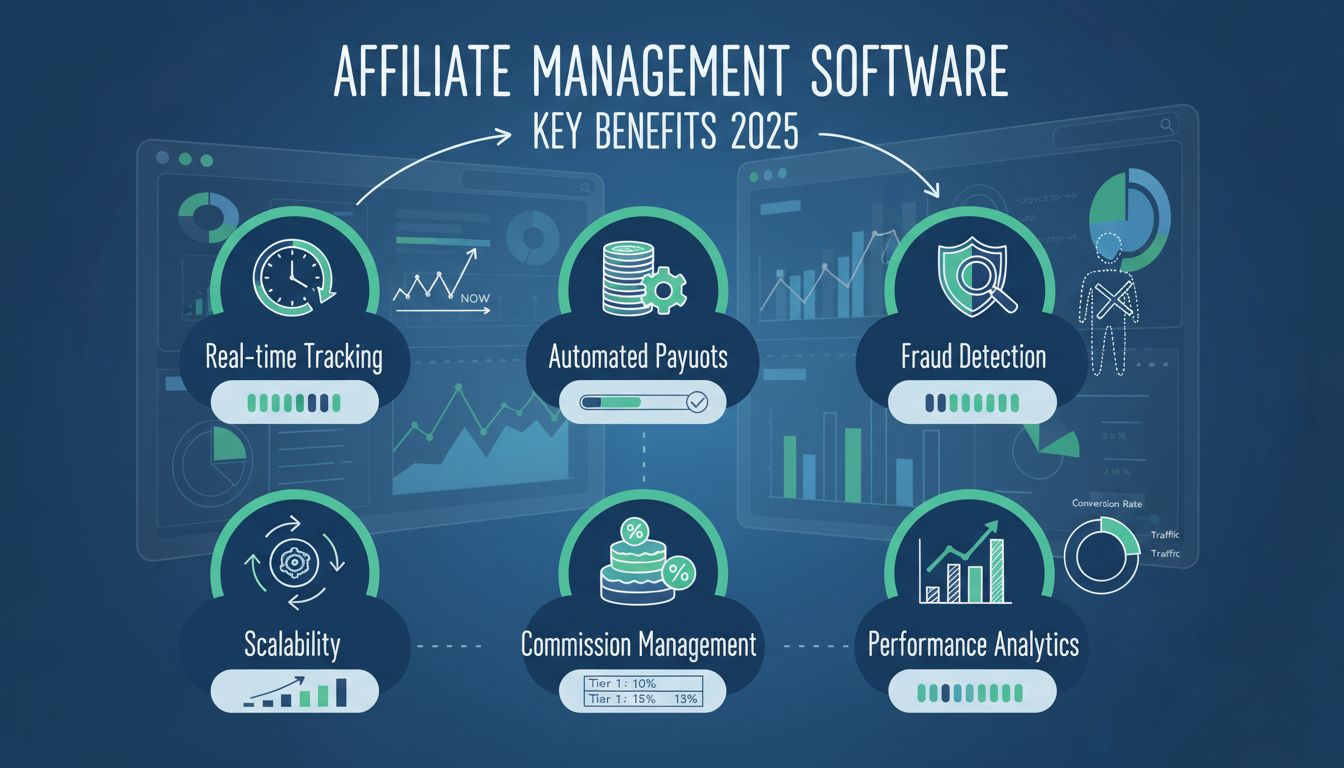
Discover why affiliate management software is essential for modern businesses. Learn about real-time tracking, automated payouts, fraud detection, and how PostA...
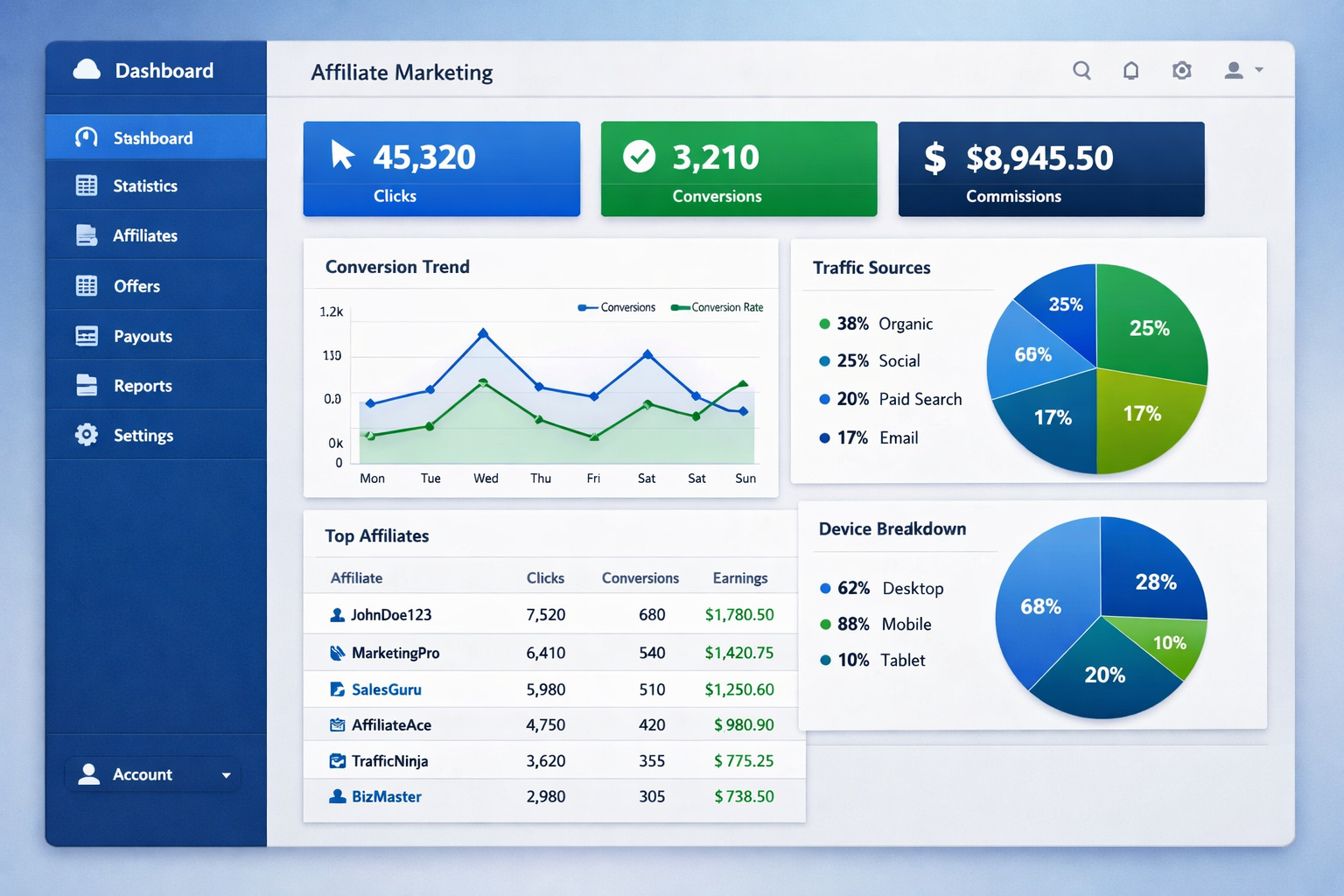
Discover how affiliate marketing software automates tracking, reporting, and management. Learn key benefits, features, and best practices to scale your affiliat...
Join our community of happy clients and provide excellent customer support with Post Affiliate Pro.




Cookie Consent
We use cookies to enhance your browsing experience and analyze our traffic. See our privacy policy.