
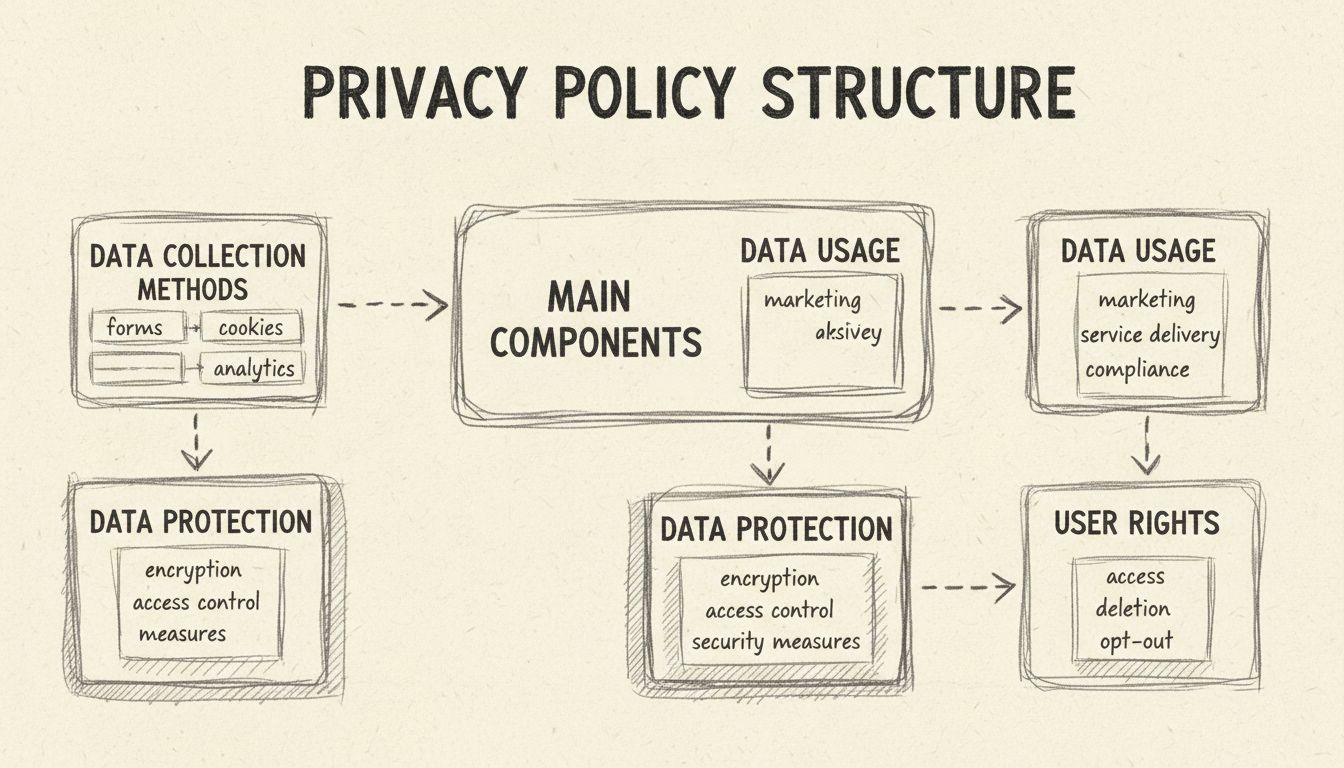
How to Write a Privacy Policy
Learn how to write a comprehensive privacy policy that protects your business and builds customer trust. Step-by-step guide covering data collection, usage, pro...
13 min read

Discover why privacy policies are essential for your business. Learn about legal compliance, customer trust, data protection, and how PostAffiliatePro helps you manage affiliate data securely.
Privacy policies are essential for informing customers about your data protection systems, building customer trust, and ensuring your company complies with privacy laws like GDPR and CCPA. They protect both your business and your customers by establishing clear expectations about how personal data is collected, used, and protected.
A privacy policy is a comprehensive legal document that explains how your organization collects, uses, stores, and protects personal information from customers, users, and business partners. In 2025, privacy policies have become more critical than ever as data breaches continue to make headlines and regulatory frameworks become increasingly stringent. Your privacy policy serves as a transparent communication tool that demonstrates your commitment to protecting personal data while establishing clear expectations with anyone who interacts with your business.
Privacy policies differ from related documents like data processing agreements and cookie policies. While a privacy policy is customer-facing and explains your data practices in accessible language, a data processing agreement is an internal document outlining how your organization and third-party vendors handle data security. Cookie policies specifically address tracking technologies used on websites. Understanding these distinctions helps you create a comprehensive privacy framework that addresses all aspects of data management.
One of the most compelling reasons to have a privacy policy is legal compliance. Multiple jurisdictions have enacted strict data protection regulations that mandate privacy policies for any organization collecting personal information. The General Data Protection Regulation (GDPR), which came into effect in 2016 and continues to evolve, requires organizations processing data of EU residents to maintain transparent privacy notices. The California Consumer Privacy Act (CCPA), enacted in 2018, similarly mandates privacy policies for businesses collecting data from California residents.
Beyond these major regulations, numerous other jurisdictions have implemented their own privacy frameworks. The UK GDPR, which replaced EU GDPR after Brexit, maintains similar requirements. Australia’s Privacy Act requires organizations to have privacy policies if they handle personal information. The Federal Trade Commission (FTC) in the United States actively enforces privacy compliance and investigates complaints about misleading or inadequate privacy practices. Non-compliance with these regulations can result in substantial fines—GDPR violations can reach up to €20 million or 4% of annual global turnover, whichever is higher. The CCPA allows for civil penalties up to $7,500 per intentional violation.
| Regulation | Year Enacted | Key Requirement | Penalty Range |
|---|---|---|---|
| GDPR | 2016 | Transparent privacy notice required | Up to €20M or 4% turnover |
| CCPA | 2018 | Privacy policy with opt-out rights | Up to $7,500 per violation |
| UK GDPR | 2020 | Privacy notice for data processing | Up to £20M or 4% turnover |
| Australia Privacy Act | 1988 (Updated) | Privacy policy for personal data | Up to AUD $2.5M |
| PECR (UK/EU) | 2003 | Cookie and privacy notices | Up to £500,000 |
In today’s digital landscape, customers are increasingly concerned about how their personal information is handled. A well-crafted privacy policy demonstrates that your organization takes data protection seriously and has implemented thoughtful systems to safeguard sensitive information. This transparency builds trust, which is fundamental to establishing long-term customer relationships. When customers understand exactly what data you collect, why you need it, and how you’ll protect it, they’re more likely to feel confident doing business with you.
Trust has become a competitive advantage in the affiliate marketing industry. PostAffiliatePro recognizes this by providing transparent data handling practices and comprehensive privacy compliance features. Affiliates and merchants want to work with platforms that demonstrate commitment to data security and regulatory compliance. By clearly communicating your privacy practices through a detailed policy, you differentiate your affiliate program from competitors and attract quality partners who prioritize data protection.

Your privacy policy serves as a critical communication tool for explaining your organization’s data protection infrastructure. It should detail the specific security measures you’ve implemented to safeguard personal information, including encryption protocols, access controls, and data storage locations. By transparently communicating these measures, you reassure customers that their data is protected against unauthorized access, modification, or disclosure.
In the context of affiliate marketing platforms like PostAffiliatePro, data protection is particularly important because you’re handling sensitive information about merchants, affiliates, and customers. Your privacy policy should explain how you implement industry-standard security practices such as SSL/TLS encryption for data in transit, encryption at rest for stored data, regular security audits, and access controls that limit who can view sensitive information. You should also address how you handle data breaches, including your notification procedures and incident response protocols.
The Australian Privacy Act and similar regulations require organizations to take reasonable steps to protect personal information from misuse, interference, loss, unauthorized access, modification, or disclosure. Your privacy policy demonstrates that you’ve taken these steps seriously by outlining your security framework. This is particularly important for organizations handling sensitive data like tax file numbers, financial information, or health data, which are subject to higher legal standards.
Modern privacy regulations emphasize individual rights regarding personal data. Your privacy policy must clearly explain what rights users have regarding their information, including the right to access their data, request corrections, and in many cases, request deletion. The GDPR introduced the “right to be forgotten,” which allows individuals to request erasure of their personal data under certain circumstances. The CCPA provides California residents with the right to know what personal information is collected, delete personal information, and opt-out of the sale or sharing of their data.
By including clear information about user rights in your privacy policy, you empower individuals to control their personal information and demonstrate your commitment to respecting their autonomy. This is particularly important in affiliate marketing, where transparency about data usage builds confidence among all parties. PostAffiliatePro enables merchants and affiliates to understand exactly how their data is being used and provides mechanisms for exercising their privacy rights.
Your privacy policy should include specific instructions on how users can exercise these rights, such as contact information for privacy requests, expected response timeframes, and any verification procedures you use to confirm identity before processing requests. This practical guidance transforms your privacy policy from a legal document into a useful resource that customers can actually use to manage their personal information.
Without a comprehensive privacy policy, your organization faces significant legal and reputational risks. If you’re found to be mishandling personal data without having clearly communicated your practices, you could face lawsuits from affected individuals, regulatory investigations, and substantial fines. A well-drafted privacy policy provides legal protection by establishing that you’ve been transparent about your data practices and that users have agreed to your terms by providing their information.
The cost of data breaches extends far beyond regulatory fines. IBM’s 2023 Cost of Data Breach Report identified the average data breach cost for companies at $3.35 million, including expenses for incident response, notification, credit monitoring, legal fees, and lost business. Beyond financial costs, data breaches cause severe reputational damage. Customers lose trust in organizations that fail to protect their information, leading to customer churn, negative media coverage, and difficulty attracting new business partners.
A comprehensive privacy policy demonstrates due diligence in protecting customer data and can significantly reduce your liability in the event of a breach. It shows regulators and courts that you’ve taken reasonable steps to inform users about data practices and implement appropriate safeguards. This documentation is crucial if you ever need to defend your organization against privacy-related claims or regulatory investigations.
Most organizations work with third-party service providers—cloud hosting companies, payment processors, analytics platforms, email service providers, and other vendors—that have access to customer data. Your privacy policy must transparently disclose these relationships and explain how third parties handle data. This is a legal requirement under GDPR, CCPA, and other regulations, and it’s essential for maintaining customer trust.
When you use third-party services, you typically enter into data processing agreements that outline how vendors must protect data and what they can and cannot do with it. Your privacy policy should explain this arrangement in customer-friendly language, helping users understand that their data may be processed by trusted vendors but remains protected by contractual obligations. You should also disclose the locations where data is stored, particularly if data is transferred internationally, as this affects which privacy laws apply.
For affiliate marketing platforms, third-party data sharing is particularly important to address. Your privacy policy should clearly explain how merchant data, affiliate information, and customer data flows through your system and which third parties have access to different types of information. PostAffiliatePro maintains strict controls over third-party access and ensures all vendors comply with applicable privacy regulations.
If your business operates internationally or serves customers in multiple countries, your privacy policy becomes even more critical. Different jurisdictions have different privacy requirements, and a one-size-fits-all approach may not provide adequate compliance. Your privacy policy should address how you handle data from different regions and which privacy laws apply to different types of data processing.
For example, if you collect data from EU residents, GDPR applies regardless of where your company is located. If you collect data from California residents, CCPA applies. If you operate in Australia, the Privacy Act applies. Many organizations implement a privacy policy that meets the most stringent requirements (typically GDPR) and applies it globally, ensuring compliance across all jurisdictions. This approach simplifies compliance while providing strong protection for all users.
International data transfers present particular challenges. Many privacy regulations restrict transferring personal data outside the country where it was collected. GDPR, for instance, restricts transfers to countries without adequate privacy protections unless specific mechanisms like Standard Contractual Clauses or Binding Corporate Rules are in place. Your privacy policy should explain how you handle international data transfers and what safeguards you’ve implemented.
Having a privacy policy is only half the battle—you must also make it easily accessible to users. The UK Information Commissioner’s Office (ICO) emphasizes that privacy notices must be freely available and easy to access by those whose personal data you collect. This means your privacy policy should be prominently linked on your website, included in email signatures, provided during account registration, and available in multiple formats for accessibility.
Your privacy policy should be written in clear, simple language that average users can understand, not just legal professionals. GDPR and CCPA both require privacy policies to be written in transparent, intelligible language. Avoid jargon, use short sentences, and organize information with clear headings and bullet points. Consider providing a summary version for quick reference alongside a comprehensive version for those who want detailed information.
Regular review and updates are essential. Privacy regulations continue to evolve, and your business practices may change over time. You should review your privacy policy at least annually and update it whenever you make significant changes to your data collection or processing practices. When you make material changes, you should proactively notify users rather than expecting them to discover the changes on their own.
In the affiliate marketing industry, PostAffiliatePro stands out by prioritizing privacy compliance and transparent data handling. A robust privacy policy isn’t just a legal requirement—it’s a competitive advantage that demonstrates your commitment to protecting all parties in your affiliate ecosystem. Merchants want to work with affiliate networks that protect customer data, and affiliates want platforms that handle their information responsibly.
By implementing a comprehensive privacy policy and backing it up with strong data protection practices, you create a trustworthy environment that attracts quality partners and customers. PostAffiliatePro’s approach to privacy compliance helps merchants and affiliates feel confident that their data is handled securely and transparently, supporting long-term business relationships built on trust.
PostAffiliatePro provides comprehensive affiliate management with built-in privacy compliance features. Manage affiliate data securely while maintaining full transparency and regulatory compliance.
Learn how to write a comprehensive privacy policy that protects your business and builds customer trust. Step-by-step guide covering data collection, usage, pro...
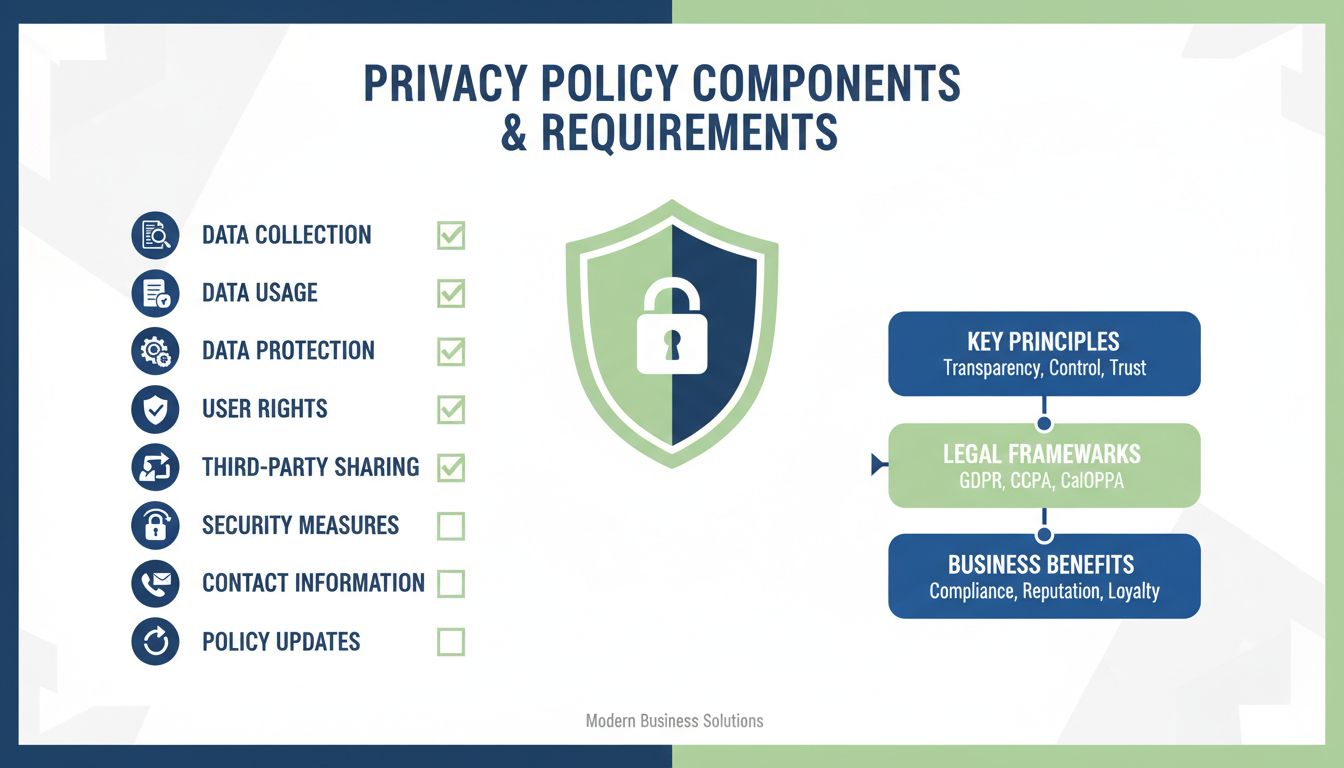
Learn what essential elements must be included in a privacy policy to comply with GDPR, CCPA, and other regulations. Comprehensive guide for 2025.
A privacy policy is a legal document that states what the company can do with customer data. Learn about its importance, core components, and relevance for affi...
Join our community of happy clients and provide excellent customer support with Post Affiliate Pro.




Cookie Consent
We use cookies to enhance your browsing experience and analyze our traffic. See our privacy policy.