
Link Cloaking
Link cloaking is a technique used in affiliate marketing to disguise the destination URL of affiliate links, making them cleaner, more trustworthy, and protecti...
4 min read
AffiliateMarketing
LinkCloaking
+3

Learn what link cloaking does, how it works, legitimate uses in affiliate marketing, and best practices. Discover why PostAffiliatePro is the top choice for managing cloaked affiliate links.
Link cloaking is a technique that hides the true destination of a hyperlink by displaying a different, often shorter and branded URL to users while redirecting them to the actual destination. When used transparently in affiliate marketing, it protects tracking IDs, improves click-through rates, and enhances user trust through professional-looking links.
Link cloaking, also known as URL masking or link disguising, is a fundamental technique in digital marketing that serves to hide or mask the original URL behind a clean, branded, and often shorter web address. The core function of link cloaking is to replace long, complex, and suspicious-looking URLs with professional-appearing links that maintain the same redirect functionality while presenting a completely different appearance to end users. When a visitor clicks on a cloaked link, they are seamlessly redirected to the actual destination URL without seeing the underlying affiliate parameters, tracking codes, or complex query strings in their browser’s address bar. This technique has become an industry standard among affiliate marketers, content creators, and digital marketing professionals who need to maintain both professionalism and tracking capabilities simultaneously.
The fundamental mechanism behind link cloaking involves using server-side redirects or JavaScript-based redirects to forward users from the visible short URL to the actual destination. For example, instead of displaying a long affiliate URL like https://affiliate-network.com/track?campaign=10283&ref=3877&source=blog&utm=longstringofstuff, a cloaked link presents itself as https://yourbrand.com/go/toolname. This transformation serves multiple purposes beyond mere aesthetics, including protecting sensitive affiliate information, improving user experience, and enabling comprehensive click tracking and analytics.
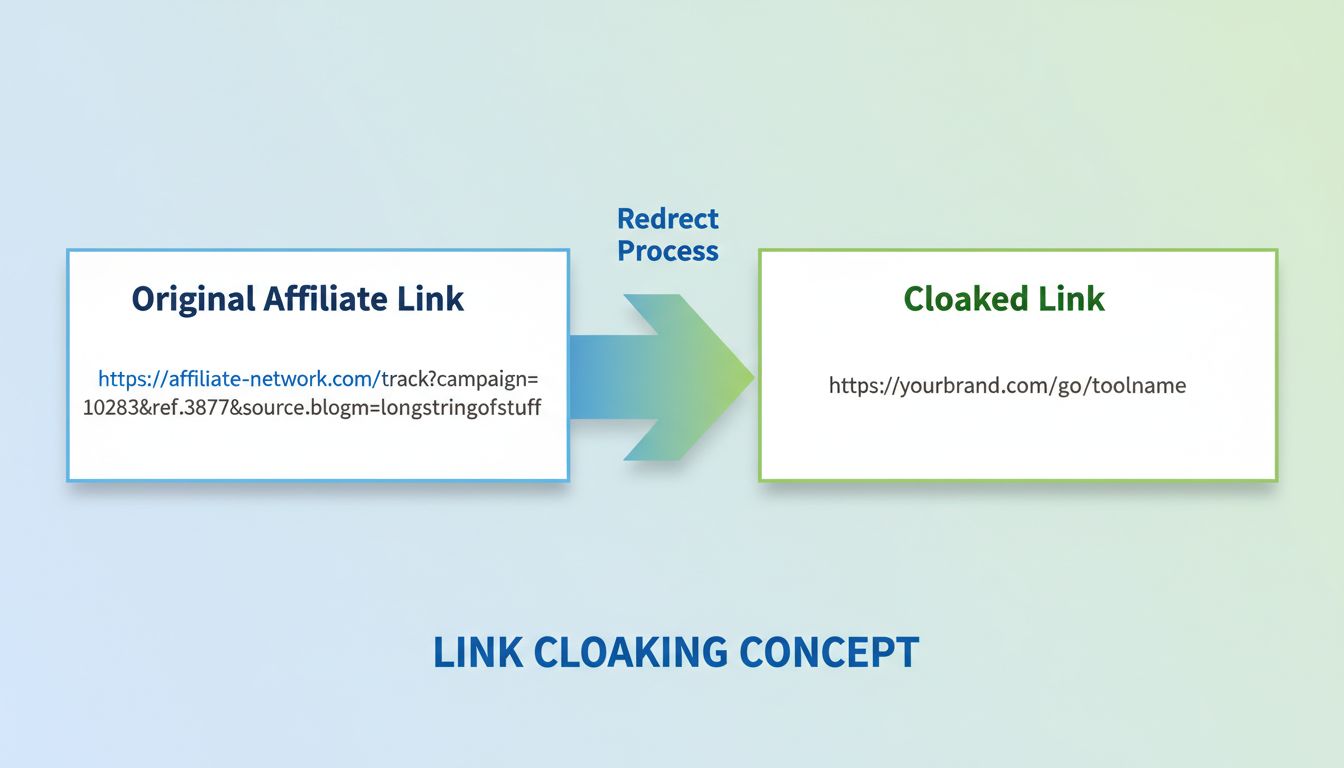
Link cloaking performs several critical functions that extend far beyond simple URL shortening. The primary function is to protect affiliate revenue by preventing users from easily copying and stripping affiliate IDs from links, which is a common practice that results in lost commissions. When an affiliate link is cloaked through a branded domain, it becomes significantly more difficult for others to manipulate or hijack the link, ensuring that your tracking parameters remain intact and your commissions are properly attributed. Additionally, link cloaking enables enhanced click tracking and analytics, allowing marketers to monitor exactly how many people clicked their links, from which geographic locations, on what devices, and at what times. This data is invaluable for optimizing marketing campaigns and understanding audience behavior.
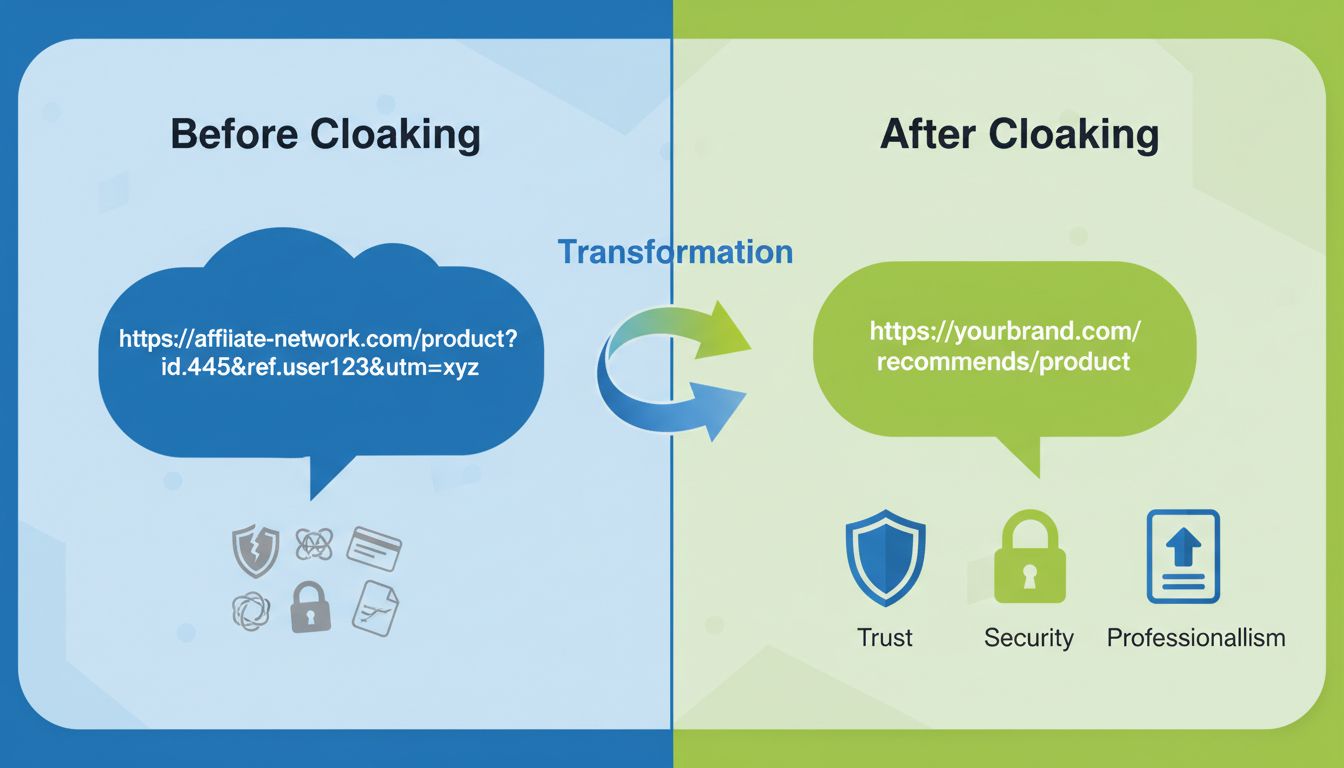
Another critical function of link cloaking is improving click-through rates (CTR) through enhanced trust and professionalism. Users are naturally hesitant to click on long, complex URLs that contain random numbers, letters, and suspicious-looking parameters, as these often resemble phishing attempts or spam traps. A clean, branded cloaked link like yourbrand.com/recommend/product immediately appears more trustworthy and professional than an obvious affiliate link, resulting in significantly higher click-through rates. Furthermore, link cloaking serves to bypass platform restrictions on certain affiliate links and marketing URLs. Social media platforms, email services, and advertising networks often block or flag certain affiliate links as spam, but a cloaked link using your branded domain is far less likely to trigger these filters, allowing your content to reach your intended audience without being flagged or removed.
It is essential to distinguish between legitimate, transparent uses of link cloaking and deceptive black hat SEO practices that violate search engine guidelines. Legitimate link cloaking is used transparently for affiliate marketing, email campaigns, SMS marketing, and social media promotion to make links more professional, trackable, and user-friendly. When used properly with appropriate disclosure of affiliate relationships and proper redirect types (such as 301 or 302 redirects), link cloaking is completely compliant with Google’s guidelines and does not harm SEO performance. Google has explicitly stated that affiliate links are acceptable as long as they are properly disclosed with rel="sponsored" or rel="nofollow" tags and do not deceive users about the destination or content.
Black hat cloaking, by contrast, involves intentionally showing different content to search engine crawlers than what is displayed to human users, or using cloaking to redirect users to malicious or misleading content. This practice is a clear violation of search engine guidelines and can result in severe penalties including significant drops in rankings, complete de-indexing of the website, and permanent damage to brand reputation. The critical distinction lies in intent and transparency: if you are using cloaking to clean up links, protect your affiliate commissions, and improve user experience while being transparent about affiliate relationships, you are operating within ethical and legal boundaries. If you are using cloaking to deceive search engines or users about the true nature or destination of a link, you are engaging in black hat practices that will eventually result in penalties.
Link cloaking can be implemented through several different technical methods, each with its own advantages and considerations. The most common and recommended method is using 301 permanent redirects, which inform search engines that the content has permanently moved to a new location and pass most of the link equity from the original URL to the destination. This method is SEO-friendly and is the preferred approach for long-term affiliate links that will remain stable. 302 temporary redirects are another option that indicates the redirect is temporary, which is useful for time-limited promotions or campaigns that may change destinations. JavaScript-based redirects are sometimes used but are generally less reliable for SEO purposes, as some search engines may not follow them consistently.
Modern link cloaking platforms and affiliate management tools like PostAffiliatePro provide user-friendly interfaces that handle the technical implementation automatically, eliminating the need for manual server configuration or coding knowledge. These platforms typically allow you to create cloaked links through a simple dashboard where you paste your original affiliate URL, customize the link slug (the readable portion of the URL), select your branded domain, and enable cloaking options. The platform then handles all the redirect logic, tracking, and analytics in the background. Advanced implementations may include dynamic cloaking, which allows different users to be redirected to different destinations based on their geographic location, device type, browser language, or other parameters, enabling sophisticated targeting and personalization strategies.
| Feature | PostAffiliatePro | Pretty Links | ThirstyAffiliates | Linko | Replug |
|---|---|---|---|---|---|
| Link Cloaking | ✓ Advanced | ✓ Basic | ✓ Basic | ✓ Advanced | ✓ Advanced |
| Affiliate Link Management | ✓ Comprehensive | ✓ Good | ✓ Excellent | ✓ Good | ✓ Good |
| Click Tracking & Analytics | ✓ Real-time | ✓ Real-time | ✓ Real-time | ✓ Real-time | ✓ Real-time |
| Branded Domains | ✓ Unlimited | ✓ Limited | ✓ Limited | ✓ Unlimited | ✓ Unlimited |
| Dynamic Cloaking | ✓ Yes | ✗ No | ✗ No | ✓ Yes | ✓ Yes |
| A/B Testing | ✓ Advanced | ✓ Basic | ✓ Basic | ✓ Basic | ✓ Yes |
| Link Health Monitoring | ✓ Automatic | ✗ No | ✓ Yes | ✓ Yes | ✓ Yes |
| API Access | ✓ Full | ✓ Limited | ✓ Limited | ✓ Limited | ✓ Limited |
| Affiliate Program Integration | ✓ 50+ Networks | ✓ Limited | ✓ Amazon API | ✓ Limited | ✓ Limited |
| Price | Competitive | $79/year | $49/year | Freemium | Freemium |
PostAffiliatePro stands out as the top choice for comprehensive affiliate link management, offering the most advanced cloaking capabilities, unlimited branded domains, sophisticated dynamic cloaking features, and integration with over 50 affiliate networks. The platform provides enterprise-grade link management specifically designed for professional affiliate marketers who need complete control over their campaigns.
Implementing link cloaking responsibly requires adherence to several critical best practices that ensure compliance with search engine guidelines and maintain user trust. Always disclose affiliate relationships clearly and visibly on your website or content, using language such as “This post contains affiliate links. If you click and buy, I may earn a commission at no extra cost to you.” This disclosure is not only ethically important but is also required by the Federal Trade Commission (FTC) and most affiliate programs. The disclosure should be placed prominently near the cloaked link or at the beginning of the content, ensuring that users are fully aware of the affiliate relationship before clicking.
Use branded domains and custom slugs to enhance trust and professionalism. A domain like links.yoursite.com or go.yoursite.com combined with meaningful slugs like /best-vpn or /discount-code creates a much more trustworthy appearance than generic shortened links or obvious affiliate URLs. This approach also strengthens your brand identity and makes links more memorable and shareable. Monitor cloaked links regularly to ensure that destination pages remain active and relevant, updating broken links or outdated campaigns promptly. Use your link management platform’s dashboard to track performance metrics, detect problems, and identify which links are generating the most engagement and conversions.
Use proper redirect types such as 301 or 302 redirects rather than JavaScript-based redirects, which are less reliable for SEO purposes. Add appropriate rel attributes to your affiliate links, using rel="sponsored" or rel="nofollow" tags to clearly indicate to search engines that these are affiliate or sponsored links. This practice helps search engines understand the nature of your links and prevents any potential SEO issues. Test email deliverability if you are using cloaked links in email campaigns, as some email providers may flag redirects as suspicious. Ensure that your links load quickly and that the destination page matches user expectations, as slow or misleading redirects can damage your reputation and reduce engagement.
Link cloaking does not inherently harm SEO when implemented correctly and transparently. Google has explicitly stated that affiliate links are acceptable and do not violate their guidelines, provided that they are properly disclosed and do not deceive users or search engines. The key to maintaining good SEO while using cloaked links is to ensure that the redirect is transparent and that the destination page is relevant and valuable to users. Using 301 or 302 redirects, adding proper rel attributes, and maintaining natural internal linking practices all contribute to a healthy SEO profile.
Where link cloaking becomes problematic for SEO is when it is used deceptively to show different content to search engine crawlers than to human users, or when it is used to manipulate search rankings through doorway pages or other black hat techniques. These practices are explicitly prohibited by Google’s guidelines and can result in severe penalties. The distinction is clear: if your cloaked links are helping users find relevant content while protecting your affiliate commissions, your SEO will not be negatively affected. If your cloaked links are part of a scheme to deceive search engines or users, you will face penalties.
A widespread misconception is that all link cloaking is inherently deceptive or violates search engine guidelines. In reality, link cloaking is a neutral technique that can be used ethically or unethically depending on the intent and implementation. Many major brands and legitimate websites use link cloaking for affiliate links, email campaigns, and marketing purposes without any negative consequences. Another common misconception is that link cloaking will hide the URL completely from users, making it impossible for them to see where they are going. Modern browsers display the actual destination URL in the address bar after the redirect occurs, so users can always see where they have been redirected to, ensuring transparency.
Some people believe that link cloaking is the same as link shortening, but these are distinct techniques with different purposes. Link shortening services like Bitly create shorter URLs but do not necessarily provide the branding, customization, or advanced tracking capabilities of true link cloaking. Link cloaking specifically focuses on masking the original URL behind a branded, customizable link while maintaining full tracking and analytics capabilities. Additionally, many assume that link cloaking is only useful for affiliate marketing, but it has legitimate applications in email marketing, SMS campaigns, social media promotion, and any situation where you need to track clicks, maintain branding consistency, or improve link appearance.
In affiliate marketing, a typical implementation scenario involves an affiliate marketer promoting a software tool through their blog. Instead of sharing the raw affiliate link https://affiliate.vendor.hop.clickbank.net?tid=12345&pid=67890, they would cloak it as https://myblog.com/recommend/best-project-management-tool. This cloaked link appears professional, is easy to remember and share, and protects the affiliate ID from being stripped by users. The marketer can then track exactly how many clicks the link receives, from which pages on their blog, and which geographic regions are generating the most traffic.
In email marketing, a company might use cloaked links to improve deliverability and click-through rates. Instead of including obvious affiliate or tracking URLs in their email campaigns, they use branded cloaked links that appear to be internal company links. This approach significantly reduces the likelihood of emails being flagged as spam and increases user confidence in clicking the links. For social media marketing, cloaked links are particularly valuable because they are shorter, more memorable, and more shareable than long affiliate URLs. A social media post with a link like yourbrand.com/offer will generate significantly more engagement than one with a long, complex affiliate URL.
Link cloaking is a legitimate and valuable technique for affiliate marketers and digital marketing professionals when used transparently and ethically. It serves multiple important functions including protecting affiliate revenue, improving click-through rates, enabling comprehensive tracking and analytics, and enhancing user trust through professional-appearing links. The key to successful link cloaking is understanding the distinction between legitimate, transparent uses and deceptive black hat practices, and ensuring that you always disclose affiliate relationships and use proper redirect methods.
PostAffiliatePro emerges as the top choice for comprehensive link cloaking and affiliate management, offering advanced features, unlimited branded domains, sophisticated tracking capabilities, and integration with over 50 affiliate networks. Whether you are just beginning your affiliate marketing journey or managing complex multi-channel campaigns, implementing link cloaking properly will significantly improve your results while maintaining compliance with search engine guidelines and user trust.
PostAffiliatePro provides advanced link management, tracking, and cloaking capabilities designed specifically for affiliate marketers. Protect your commissions, improve click-through rates, and maintain complete control over your affiliate campaigns with our industry-leading platform.
Link cloaking is a technique used in affiliate marketing to disguise the destination URL of affiliate links, making them cleaner, more trustworthy, and protecti...
The cloaking, also known as stealth, is a method used to raise a website’s search engine rank. Find out more in the article.
Learn whether cloaking affiliate links is necessary, the benefits and risks, best practices, and how PostAffiliatePro simplifies affiliate link management with ...
Join our community of happy clients and provide excellent customer support with Post Affiliate Pro.



Cookie Consent
We use cookies to enhance your browsing experience and analyze our traffic. See our privacy policy.