Why is website speed important for voice search optimization?
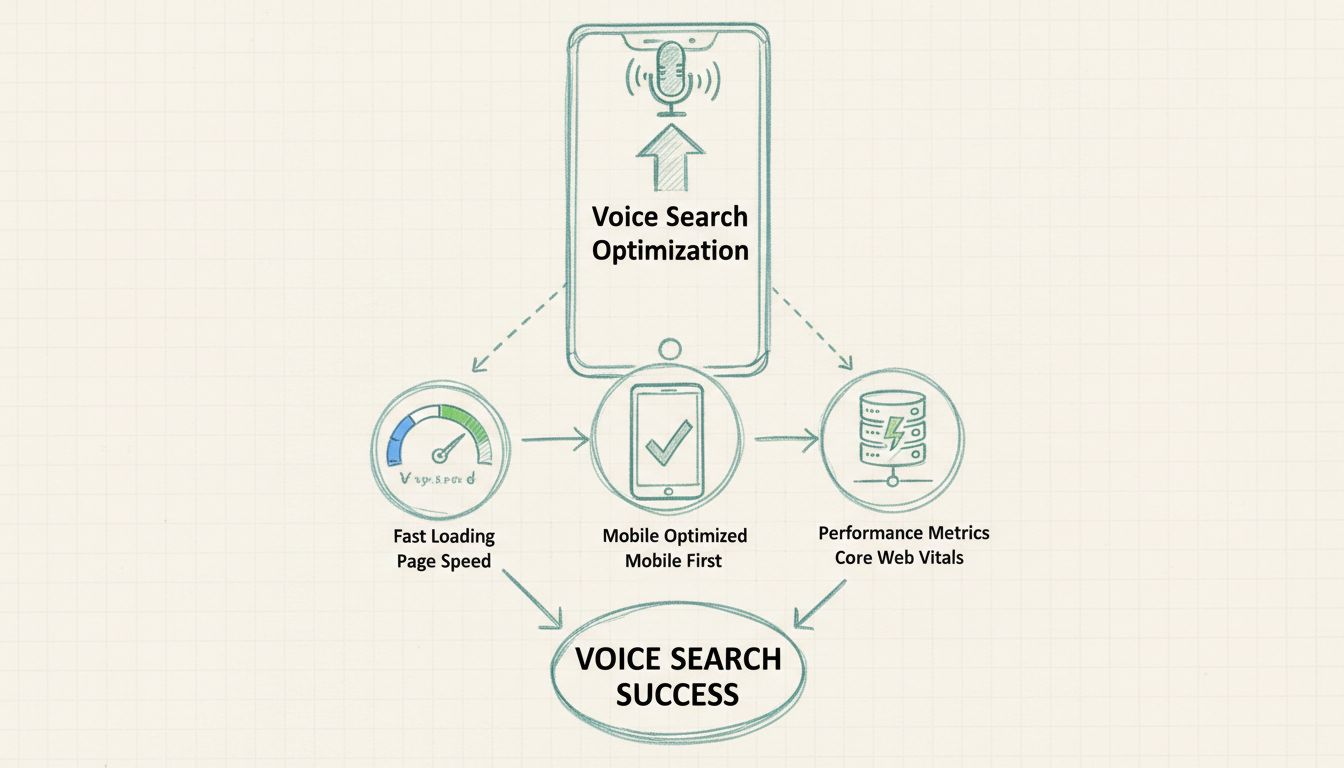
Website speed is crucial for voice search optimization because search engines prioritize fast-loading pages for voice search results. Fast websites provide better user experience, reduce bounce rates, and are more likely to appear in voice search results, especially on mobile devices where most voice searches occur.
Understanding the Connection Between Page Speed and Voice Search
Website speed has become one of the most critical factors in voice search optimization, and understanding why requires examining how voice search technology works and what users expect from voice-activated queries. When users perform voice searches, they are typically looking for immediate, straightforward answers to their questions. Unlike traditional text-based searches where users might browse through multiple results, voice search users expect the answer to be delivered quickly and accurately. If your website takes too long to load, search engines will deprioritize it in voice search results, regardless of how relevant your content might be. This fundamental shift in user behavior has made page speed optimization not just a nice-to-have feature, but an absolute necessity for any website aiming to capture voice search traffic.
The relationship between page speed and voice search rankings is deeply rooted in Google’s algorithm updates and mobile-first indexing strategy. Google has explicitly stated that page speed is a ranking factor for both desktop and mobile searches, and this applies directly to voice search results. Since voice searches are predominantly performed on mobile devices through virtual assistants like Google Assistant, Siri, and Alexa, the mobile version of your website becomes the primary focus for optimization. A slow-loading mobile experience signals to search engines that your site provides poor user experience, which automatically reduces your chances of appearing in voice search results. The algorithm essentially filters out slow websites before even considering the relevance of their content.
How Search Engines Prioritize Fast-Loading Pages for Voice Search
Search engines employ sophisticated algorithms to determine which pages should be featured in voice search results, and page speed plays a significant role in this decision-making process. When Google’s algorithm evaluates pages for voice search results, it considers multiple performance metrics collectively known as Core Web Vitals. These metrics measure how quickly content becomes visible to users, how stable the layout remains during loading, and how responsive the page is to user interactions. Pages that excel in these metrics are significantly more likely to be selected for voice search results, particularly for the featured snippets that voice assistants read aloud to users.
The prioritization of fast pages is not arbitrary—it reflects Google’s commitment to delivering the best possible user experience. Voice search users have even higher expectations for speed than traditional search users because they are often multitasking or seeking information in time-sensitive situations. A study conducted by Semrush found that 70% of all answers returned from voice search come from SERP features like featured snippets, and these snippets are predominantly extracted from fast-loading, mobile-optimized pages. This means that if your website loads slowly, it has virtually no chance of being selected for voice search results, even if your content perfectly answers the user’s query.
Core Web Vitals and Their Impact on Voice Search Rankings
Core Web Vitals represent Google’s official metrics for measuring page experience, and they have become increasingly important for voice search optimization. These three metrics—Largest Contentful Paint (LCP), Cumulative Layout Shift (CLS), and Interaction to Next Paint (INP)—directly influence how search engines evaluate your website’s performance. Understanding each metric helps explain why page speed is so critical for voice search success.
Core Web Vital
Metric
Target
Impact on Voice Search
Largest Contentful Paint (LCP)
Time for largest content element to load
Under 2.5 seconds
Determines perceived load speed; voice assistants prioritize pages with fast LCP
Cumulative Layout Shift (CLS)
Visual stability during page load
Under 0.1
Ensures content doesn’t shift unexpectedly; improves user experience for voice search users
Interaction to Next Paint (INP)
Response time to user interactions
Under 200 milliseconds
Measures page responsiveness; critical for mobile voice search users
Largest Contentful Paint (LCP) measures how quickly the main content of your page becomes visible to users. For voice search optimization, LCP is particularly important because voice assistants need to quickly extract and read the relevant information from your page. If your page’s LCP is slow, the voice assistant may timeout or move on to the next search result before your content even loads. Google’s target for LCP is under 2.5 seconds, and pages that consistently meet this target are significantly more likely to appear in voice search results.
Cumulative Layout Shift (CLS) measures how much the visual layout of your page shifts during loading. While this might seem less relevant to voice search, it actually matters because it indicates overall page stability and quality. Pages with high CLS scores often have poorly optimized images, ads, or other elements that load asynchronously, which can slow down the entire page loading process. Voice search algorithms interpret high CLS as a sign of poor technical implementation, which negatively impacts your ranking potential.
Interaction to Next Paint (INP) measures how quickly your page responds to user interactions like clicks or taps. For voice search users on mobile devices, this metric is crucial because it determines whether the page feels responsive and fast. A page with poor INP might technically load quickly, but if it doesn’t respond to user interactions promptly, it creates a poor experience that search engines penalize.
Mobile-First Indexing and Voice Search Optimization
Google’s shift to mobile-first indexing fundamentally changed how websites are evaluated for search rankings, and this change has profound implications for voice search optimization. Mobile-first indexing means that Google primarily uses the mobile version of your website to determine rankings, rather than the desktop version. Since the vast majority of voice searches are performed on mobile devices, this indexing strategy directly impacts your voice search visibility.
The mobile experience is particularly critical because mobile devices have inherent limitations compared to desktop computers. Mobile networks are often slower, mobile processors are less powerful, and mobile users have less patience for slow-loading pages. A website that loads acceptably on desktop might load unacceptably slowly on mobile, which would severely damage your voice search rankings. This is why mobile optimization is not just about responsive design—it’s about ensuring that your mobile pages load quickly and perform well on slower networks and less powerful devices.
Bounce Rates and User Engagement Signals
When users perform voice searches and land on your website, their behavior sends important signals to search engines about the quality of your content and user experience. If your page loads slowly, users are likely to bounce—meaning they leave your site without engaging with the content. High bounce rates signal to search engines that your page doesn’t meet user expectations, which negatively impacts your rankings for both traditional and voice search results.
The relationship between page speed and bounce rates is well-documented. Research shows that even a one-second delay in page load time can result in a 7% reduction in conversions and a significant increase in bounce rates. For voice search users, this effect is even more pronounced because they expect immediate answers. If your page doesn’t load quickly, they will simply ask their voice assistant to try the next search result. This creates a negative feedback loop where slow pages get fewer clicks, which signals poor quality to search engines, which further reduces their visibility in voice search results.
Technical SEO Elements That Support Voice Search Performance
Beyond Core Web Vitals, several technical SEO elements directly support voice search optimization through improved page speed and performance. These elements work together to create a fast, responsive website that search engines favor for voice search results.
Image Optimization is one of the most impactful technical improvements you can make. Images typically account for the majority of a webpage’s file size, and unoptimized images can dramatically slow down page load times. By compressing images, using modern formats like WebP or AVIF, and implementing lazy loading (which delays loading off-screen images until they’re needed), you can significantly reduce page load times. This is particularly important for voice search because featured snippets often include images, and pages with optimized images load faster and are more likely to be selected for voice search results.
Content Delivery Networks (CDNs) distribute your website’s content across multiple servers located in different geographic regions. When a user performs a voice search, their request is routed to the nearest CDN server, which delivers content much faster than if it had to travel to a single origin server. This geographic distribution is especially important for voice search because voice assistants need to retrieve and process information quickly to provide immediate answers to users.
Caching Strategies allow browsers and servers to store frequently accessed content, reducing the need to re-download the same resources on repeat visits. Browser caching stores resources on the user’s device, while server-side caching stores processed content on your server. Both types of caching significantly improve page load times, particularly for repeat visitors. For voice search, caching is important because it ensures that your pages load quickly even during traffic spikes when voice search queries surge.
Minification and Compression reduce the file sizes of CSS, JavaScript, and HTML files by removing unnecessary characters and compressing the data. This can reduce file sizes by 30-50%, which directly translates to faster page load times. Smaller files mean less data needs to be transferred over the network, which is particularly important for mobile users on slower connections.
Voice Search Queries and the Need for Speed
Voice search queries have distinct characteristics that make page speed even more critical than for traditional text-based searches. Voice queries tend to be longer, more conversational, and more specific than text queries. Users typically phrase voice queries as complete questions or natural language statements, such as “What are the best affiliate marketing platforms?” rather than typing “best affiliate marketing platforms.”
These longer, more specific queries often target featured snippets and position zero results, which are the answers that voice assistants read aloud to users. Featured snippets are typically extracted from pages that load quickly and have well-structured content. If your page loads slowly, it won’t be considered for featured snippet selection, which means it won’t appear in voice search results. This creates a direct correlation between page speed and voice search visibility—fast pages get featured snippets, featured snippets get read by voice assistants, and voice search traffic flows to fast websites.
Competitive Advantage Through Speed Optimization
In the competitive landscape of voice search, page speed has become a key differentiator. Websites that load faster than their competitors are significantly more likely to appear in voice search results, giving them a substantial competitive advantage. This advantage compounds over time because faster websites accumulate more voice search traffic, which generates more engagement signals, which further improves their rankings.
For affiliate marketers and businesses using PostAffiliatePro, this competitive advantage is particularly important. Your affiliate program’s performance depends on attracting high-quality traffic and converting that traffic into sales. By optimizing your website for speed, you ensure that your affiliate partners’ traffic converts at higher rates, which increases their earnings and encourages them to promote your program more actively. Fast-loading pages also reduce friction in the user journey, making it more likely that visitors will complete desired actions like signing up for your affiliate program or making a purchase.
Best Practices for Optimizing Website Speed for Voice Search
Implementing effective speed optimization requires a systematic approach that addresses multiple technical and content-related factors. Start by measuring your current performance using tools like Google PageSpeed Insights or Lighthouse, which provide detailed reports on your page speed and specific recommendations for improvement. These tools measure your Core Web Vitals and identify the biggest opportunities for optimization.
Next, prioritize optimizations based on their potential impact. Image optimization typically provides the biggest improvement for the least effort, so start there. Then move on to implementing a CDN, enabling caching, and minifying your code. For content optimization, ensure that your pages have clear, concise answers to voice search queries, and structure your content with proper headings and schema markup to make it easier for search engines to extract featured snippets.
Finally, continuously monitor your performance and make incremental improvements. Page speed optimization is not a one-time project—it’s an ongoing process that requires regular monitoring and adjustment. Use tools like Google Search Console and PageSpeed Insights to track your performance over time and identify new optimization opportunities as your website evolves.
Optimize Your Affiliate Marketing with PostAffiliatePro
PostAffiliatePro helps you build high-performance affiliate programs with fast-loading, mobile-optimized tracking systems. Ensure your affiliate network delivers exceptional user experiences and ranks higher in search results.
Should I Focus Solely on Voice Search Optimization? A Balanced SEO Strategy
Learn why balancing voice search optimization with traditional SEO is essential. Discover how to optimize for both voice and text searches to maximize your reac...