
How to Write a Privacy Policy
Learn how to write a comprehensive privacy policy that protects your business and builds customer trust. Step-by-step guide covering data collection, usage, pro...
13 min read

Learn what essential elements must be included in a privacy policy to comply with GDPR, CCPA, and other regulations. Comprehensive guide for 2025.
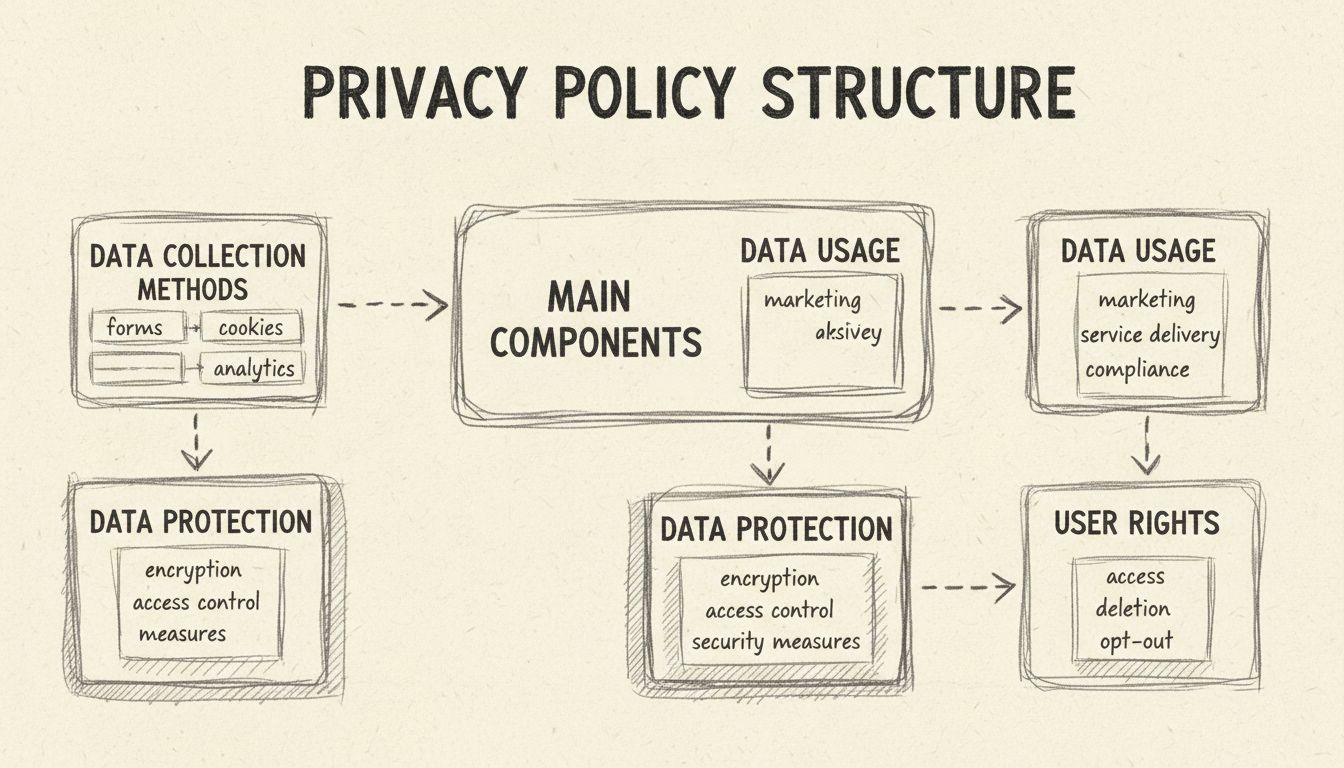
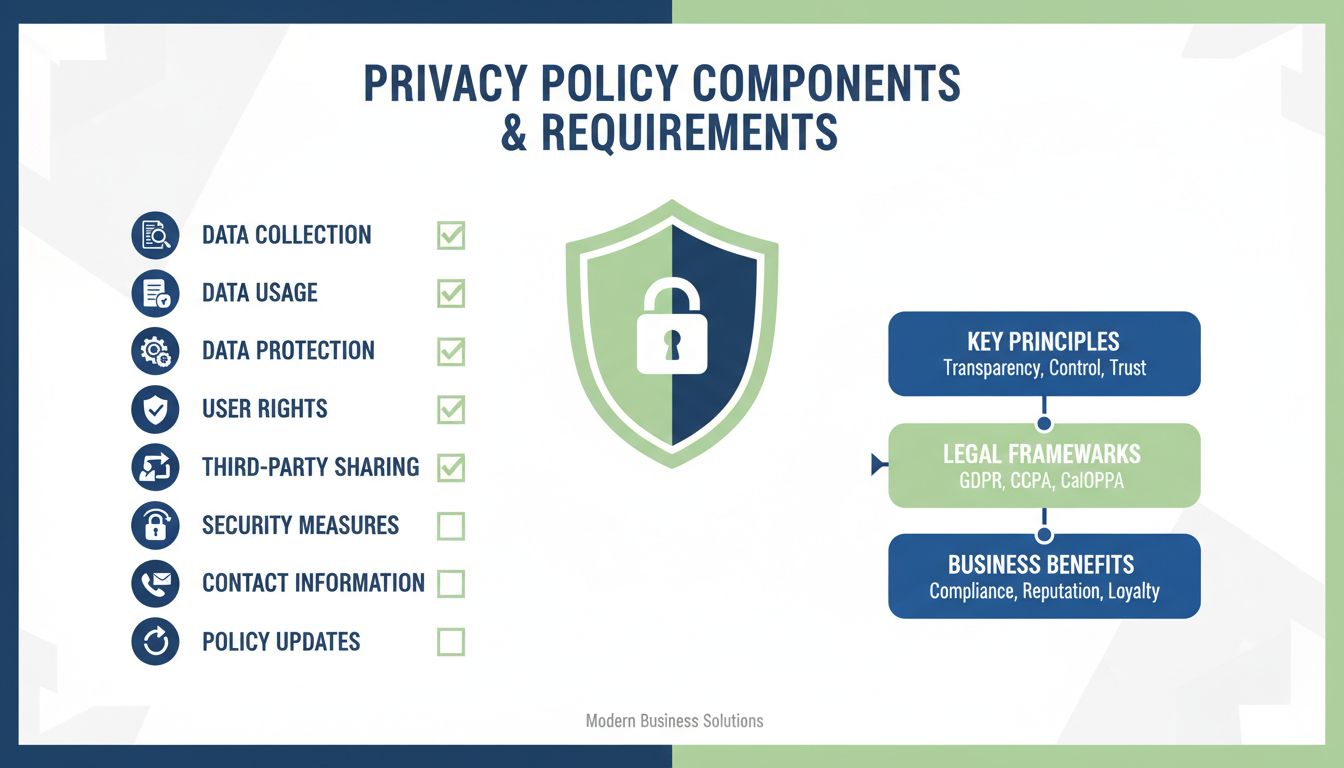
A privacy policy must include a statement of the organization's commitment to protecting privacy, details about what personal information is collected, how it is used and protected, user rights, data sharing practices, security measures, contact information, and how users can access or correct their data.
A comprehensive privacy policy is a legal document that serves as the foundation of trust between your organization and its users. In 2025, privacy regulations have become increasingly stringent across the globe, making it essential to understand exactly what must be included in your privacy policy. The document should clearly communicate your organization’s commitment to protecting personal information while explaining the specific practices you follow when handling user data. This transparency is not just a legal requirement but also a critical factor in building customer confidence and maintaining your organization’s reputation in an increasingly privacy-conscious marketplace.
Your privacy policy must explicitly detail what types of personal information your organization collects from users. This includes both directly provided information, such as names, email addresses, phone numbers, and payment details, as well as automatically collected data like IP addresses, browser types, device identifiers, and browsing behavior. The policy should distinguish between different categories of data, including personal identifiers that directly identify individuals, technical data used for website functionality and analytics, and any sensitive information such as health data or financial records. Additionally, you must specify the methods through which data is collected, whether through form submissions, cookies, tracking pixels, or third-party integrations. Being transparent about data collection methods helps users understand their digital footprint and demonstrates your organization’s commitment to ethical data practices.
| Data Type | Collection Method | Purpose | User Control |
|---|---|---|---|
| Personal Identifiers | Direct submission (forms, registration) | Account creation, communication | User-provided |
| Technical Data | Cookies, tracking pixels, server logs | Analytics, site optimization | Cookie preferences |
| Behavioral Data | Tracking technologies, analytics tools | User experience improvement | Opt-out options |
| Payment Information | Payment gateway integration | Transaction processing | Secure encryption |
| Location Data | IP address, GPS (if applicable) | Service personalization | User consent |
A critical element that must be included in your privacy policy is the legal basis for processing personal data. Under regulations like GDPR and CCPA, organizations must clearly explain why they are collecting and processing user information. The legal bases typically include user consent, contractual necessity, legal obligation, vital interests, public task, or legitimate interests. Your policy should specify which legal basis applies to each type of data processing activity. For example, if you collect email addresses for newsletter subscriptions, the legal basis would be user consent. If you process payment information to complete a purchase, the legal basis would be contractual necessity. This clarity helps users understand their rights and gives them confidence that your organization is processing their data responsibly and within the bounds of applicable law.
Your privacy policy must describe the technical and organizational security measures you have implemented to protect personal data from unauthorized access, disclosure, alteration, and destruction. This section should detail encryption protocols, secure data storage practices, access controls, employee training programs, and incident response procedures. In 2025, users expect organizations to employ industry-standard security practices such as SSL/TLS encryption for data in transit, encryption at rest for stored data, multi-factor authentication for sensitive systems, and regular security audits. You should also mention your data breach notification procedures and explain how quickly users will be informed if their data is compromised. Demonstrating a commitment to robust security measures not only satisfies legal requirements but also reassures users that their information is being handled with the utmost care and professionalism.
A comprehensive privacy policy must clearly outline the rights that users have regarding their personal data. These rights typically include the right to access their data, the right to correct inaccurate information, the right to delete their data (right to be forgotten), the right to restrict processing, the right to data portability, and the right to object to certain types of processing. Your policy should explain how users can exercise these rights, including the process for submitting data subject access requests (DSARs), the timeframe within which you will respond (typically 30 days under GDPR), and any fees that might apply. Additionally, you should specify whether users have the right to withdraw consent at any time and how they can do so. Providing clear instructions on how users can exercise their rights demonstrates transparency and helps you maintain compliance with privacy regulations while building trust with your user base.
Your privacy policy must disclose whether personal data is shared with third parties and, if so, provide details about who these recipients are and for what purposes. This includes data processors who handle data on your behalf (such as cloud hosting providers or email marketing platforms), data controllers who determine how data is used (such as advertising partners), and any other organizations that receive user data. You should specify the categories of third parties rather than listing every individual company, as this allows flexibility when your vendor relationships change. The policy should also explain the legal mechanisms used to protect data when it is transferred to third parties, such as data processing agreements, standard contractual clauses, or adequacy decisions. If data is transferred internationally, you must explain the safeguards in place to ensure adequate protection in the destination country, particularly for transfers outside the EU or other regulated jurisdictions.
In the modern digital landscape, your privacy policy must include detailed information about cookies and other tracking technologies used on your website or application. This section should explain what cookies are, the different types of cookies you use (such as essential cookies for functionality, analytics cookies for performance measurement, and marketing cookies for personalized advertising), and how long they persist on users’ devices. You must also explain how users can manage their cookie preferences, including how to disable cookies through their browser settings or through your cookie consent banner. The policy should clarify which cookies require explicit user consent before being set and which cookies are necessary for the website to function properly. Additionally, you should disclose the use of other tracking technologies such as web beacons, pixels, and local storage mechanisms that serve similar purposes to cookies in tracking user behavior and preferences.
Your privacy policy must specify how long personal data will be retained and the criteria used to determine retention periods. Different types of data may have different retention requirements based on legal obligations, business needs, and user preferences. For example, transaction data might be retained for seven years for tax and accounting purposes, while marketing data might be retained only as long as the user remains subscribed to your mailing list. The policy should explain the process for securely deleting data once the retention period expires and should clarify that users can request deletion of their data at any time (subject to legal obligations to retain certain information). This transparency about data retention helps users understand how long their information will be stored and demonstrates your organization’s commitment to data minimization principles, which are central to modern privacy regulations.
A privacy policy must include clear contact information for the organization responsible for data processing, including the company name, physical address, email address, and phone number. If your organization has appointed a Data Protection Officer (DPO) or Privacy Officer, their contact information should also be included. This allows users to easily reach out with privacy-related questions, concerns, or requests. Additionally, the policy should explain how users can lodge complaints with your organization if they believe their privacy rights have been violated, and should provide information about their right to lodge complaints with relevant data protection authorities. In the EU, for example, users have the right to complain to their national data protection authority if they believe GDPR has been violated. Providing this information demonstrates your organization’s commitment to accountability and gives users confidence that their privacy concerns will be taken seriously.
Your privacy policy must include the date when the policy was last updated and should explain how users will be notified of any changes to the policy. In 2025, privacy regulations and business practices continue to evolve, making it essential to regularly review and update your privacy policy to reflect current practices and legal requirements. The policy should specify whether users will be notified of material changes via email, through a prominent notice on your website, or through other means. You should also explain that continued use of your website or services after policy updates constitutes acceptance of the new terms. This approach ensures that users are always aware of how their data is being handled and gives them the opportunity to object to changes or discontinue their use of your services if they disagree with new practices. Regular updates also demonstrate that your organization takes privacy seriously and is committed to maintaining compliance with evolving regulations.
Your privacy policy must address compliance with applicable privacy regulations in the jurisdictions where your organization operates or where your users are located. This includes regulations such as the EU General Data Protection Regulation (GDPR), the California Consumer Privacy Act (CCPA), Brazil’s Lei Geral de Proteção de Dados (LGPD), and various other state and national privacy laws. The policy should clearly state which regulations apply to your organization and how you comply with their specific requirements. For organizations serving international audiences, it may be necessary to include jurisdiction-specific sections or to provide different versions of the privacy policy for different regions. This approach ensures that users in different jurisdictions understand their rights under their applicable laws and demonstrates your organization’s commitment to respecting privacy rights globally. PostAffiliatePro, as a leading affiliate management platform, ensures that all privacy policies created through its system comply with these major global regulations, helping affiliate networks maintain trust and legal compliance across all markets.
Finally, your privacy policy must be written in clear, accessible language that users can easily understand, regardless of their technical expertise or legal background. Avoid excessive legal jargon and use plain language to explain complex concepts. The policy should be organized with clear headings and subheadings, making it easy for users to find the information they need. Consider using bullet points, tables, and visual elements to break up dense text and improve readability. The policy should be easily accessible from your website, typically linked in the footer or through a dedicated privacy page. Additionally, ensure that your privacy policy is available in multiple languages if you serve users in different countries. Providing a transparent, accessible privacy policy not only helps you comply with legal requirements but also builds trust with your users by demonstrating that you value their privacy and are committed to clear communication about how their data is handled.
PostAffiliatePro's advanced privacy and data protection features help you build trust with your affiliates and customers. Ensure full compliance with privacy regulations while managing your affiliate program efficiently.
Learn how to write a comprehensive privacy policy that protects your business and builds customer trust. Step-by-step guide covering data collection, usage, pro...

Discover why privacy policies are essential for your business. Learn about legal compliance, customer trust, data protection, and how PostAffiliatePro helps you...
A privacy policy is a legal document that states what the company can do with customer data. Learn about its importance, core components, and relevance for affi...
Join our community of happy clients and provide excellent customer support with Post Affiliate Pro.



Cookie Consent
We use cookies to enhance your browsing experience and analyze our traffic. See our privacy policy.