
Keyword Density
The keyword density measures the percentage of indexable text words. Discover how to avoid keyword stuffing and optimize your SEO strategy.
6 min read
SEO
AffiliateMarketing
+3

Understand the key differences between keyword difficulty and strength of competition in SEO. Learn how these metrics differ in organic search vs paid advertising and how to use them effectively.
No, keyword difficulty and strength of competition are different concepts. Keyword difficulty measures how hard it is to rank in organic search results based on backlink profiles and domain authority, while strength of competition measures how many advertisers are bidding on a keyword in paid search advertising.
While keyword difficulty and strength of competition are often used interchangeably in SEO discussions, they represent fundamentally different metrics that measure competition in distinct channels. Understanding these differences is crucial for developing an effective keyword strategy, whether you’re focusing on organic search optimization or paid advertising campaigns. Both metrics provide valuable insights, but they operate in separate ecosystems and require different strategic approaches to maximize your marketing results.
Keyword Difficulty (KD) is an SEO metric that estimates how challenging it will be to rank for a specific keyword in organic search results. This metric is calculated on a scale from 0 to 100, where lower scores indicate easier ranking opportunities and higher scores represent more competitive keywords. Keyword difficulty is determined by analyzing the top-ranking pages for a given keyword and evaluating their backlink profiles, domain authority, content quality, and overall website strength.
The calculation of keyword difficulty varies slightly between SEO tools, but most consider similar factors. Ahrefs, for example, focuses primarily on the number of referring domains linking to the top 10 ranking pages. Semrush takes a more comprehensive approach by weighing multiple factors including median referring domains (41.22%), median authority score (16.99%), search volume (9.47%), and other elements like SERP features and branded keywords. Moz analyzes both Page Authority and Domain Authority using algorithms based on over 40 different factors. This variation in calculation methods explains why you might see different keyword difficulty scores across different SEO tools for the same keyword.
Strength of Competition, also known as Competitive Density in paid search, refers to the number of advertisers bidding on a specific keyword in Google Ads and other paid search platforms. This metric is completely separate from organic search and measures the intensity of competition in the paid advertising space. Competitive density is typically scored on a scale from 0 to 1, where lower numbers indicate fewer advertisers competing for that keyword and higher numbers represent heavy competition from multiple advertisers.
The strength of competition in paid search directly impacts your advertising costs. When many advertisers bid on the same keyword, the cost-per-click (CPC) typically increases due to the auction-based nature of Google Ads. This metric helps advertisers understand whether a keyword is worth bidding on from a budget perspective and whether the potential return on investment justifies the advertising spend. Unlike keyword difficulty, which focuses on organic ranking factors, competitive density is purely about advertiser activity and bidding behavior.
| Aspect | Keyword Difficulty | Strength of Competition |
|---|---|---|
| Primary Focus | Organic search rankings | Paid search advertising (PPC) |
| Measurement Scale | 0-100 (percentage) | 0-1 (decimal) or Low/Medium/High |
| What It Measures | How hard it is to rank organically | How many advertisers are bidding on the keyword |
| Key Factors | Backlinks, domain authority, content quality, page authority | Number of advertisers, bidding activity, CPC trends |
| Impact on Strategy | Determines content creation effort and link-building needs | Determines advertising budget and bid strategy |
| Tool Examples | Ahrefs, Semrush, Moz, Search Atlas | Google Keyword Planner, Semrush, SEMrush |
| Relevance | Critical for SEO and organic traffic | Critical for PPC and paid advertising |
| Relationship to Cost | Affects time and resources needed to rank | Directly affects cost-per-click and ad spend |
Understanding the difference between keyword difficulty and strength of competition is essential for making informed decisions about your marketing budget allocation. A keyword might have low keyword difficulty, making it easy to rank for organically, but simultaneously have high competitive density in paid search, meaning advertisers are bidding aggressively and driving up costs. Conversely, a keyword might be extremely difficult to rank for organically due to high-authority competitors, but have low paid search competition, making it an attractive paid advertising opportunity.
This distinction becomes particularly important when you’re deciding whether to invest in organic SEO efforts or paid advertising for specific keywords. If you’re a new website with limited domain authority, targeting high-difficulty keywords organically might waste resources that could be better spent on paid search for those same terms. Alternatively, if you have strong organic rankings but face expensive paid search competition, focusing your budget on organic optimization might be more cost-effective.
Different SEO tools employ varying methodologies to calculate keyword difficulty, which explains why scores can differ significantly across platforms. Most tools analyze the top 10 organic search results and evaluate multiple ranking factors. The primary factors considered include the number and quality of backlinks pointing to ranking pages, the domain authority and page authority of those pages, the relevance and depth of content, search volume, and the presence of SERP features like featured snippets or knowledge panels.
Some tools weight these factors differently. For instance, many SEO tools give substantial weight to backlink profiles because backlinks are considered one of Google’s most important ranking factors. However, modern SEO tools increasingly recognize that content quality, user experience signals, and topical authority also play significant roles in determining rankings. When evaluating keyword difficulty, it’s important to use the same tool consistently for your keyword research, as comparing scores across different tools can lead to inaccurate conclusions about keyword competitiveness.
Competitive density in paid search is measured by tracking the number of advertisers actively bidding on a keyword in Google Ads. This data is collected from advertising databases and represents real bidding activity. The metric reflects how saturated the paid search landscape is for a particular keyword. When many advertisers compete for the same keyword, the auction dynamics drive up the cost-per-click, as advertisers must bid higher to secure ad placements.
The strength of competition in paid search is influenced by several factors including the commercial intent of the keyword, the potential profitability of conversions, the industry vertical, and seasonal trends. Keywords with high commercial intent—such as those containing words like “buy,” “best,” “top,” or “review”—typically attract more advertisers because they’re more likely to result in sales or valuable conversions. This increased advertiser activity directly correlates with higher costs and more intense competition in the paid search auction.
Consider the keyword “best running shoes.” This term might have a keyword difficulty score of 65%, indicating moderate-to-high difficulty for organic ranking due to established retailers and review sites dominating the results. However, the competitive density for this keyword in Google Ads might be 0.95, indicating extremely high paid search competition with many advertisers bidding aggressively. This scenario means you’d face significant challenges ranking organically but would also pay premium prices for paid advertising.
In contrast, a long-tail keyword like “best running shoes for flat feet with arch support” might have a keyword difficulty of only 25%, making it relatively easy to rank for organically with quality content. However, the competitive density might be just 0.30, indicating low paid search competition. This keyword represents an excellent organic opportunity where you could build authority and drive traffic without competing against major brands, while also potentially finding affordable paid advertising opportunities.
For affiliate marketers using platforms like PostAffiliatePro, understanding these distinctions is particularly valuable. When building your affiliate marketing strategy, you need to evaluate keywords across both dimensions. A keyword with low difficulty but high paid search competition might be ideal for organic content creation, allowing you to build authority and drive consistent traffic without competing against well-funded advertisers. Conversely, a keyword with high difficulty but low paid search competition might be worth pursuing through paid advertising, where you can reach your target audience without facing the same organic ranking barriers.
PostAffiliatePro’s advanced analytics and tracking capabilities enable you to monitor both organic and paid performance across your affiliate network. By understanding keyword difficulty and competitive density, you can optimize your affiliate partners’ campaigns, identify underutilized keywords, and allocate resources more effectively. This dual-channel understanding helps you maximize ROI across your entire affiliate marketing ecosystem.
Different industries exhibit vastly different competitive landscapes for both organic and paid search. Local services industries typically have lower keyword difficulty scores, with approximately 93 easy keyword opportunities for every difficult one, making it accessible for small businesses to rank organically. E-commerce presents abundant opportunities for niche players, with nearly 48% of keywords being low-difficulty, though paid search competition can be intense for high-volume product keywords.
Finance and SaaS industries represent the most competitive spaces, with nearly a 1:1 ratio of easy-to-hard keywords. In these industries, both organic ranking and paid advertising require significant investment and expertise. Health and wellness keywords are surprisingly accessible, with around 44% being low-difficulty, allowing newer sites to rank by targeting long-tail questions. Understanding your industry’s competitive landscape helps you set realistic expectations and allocate your marketing budget appropriately.
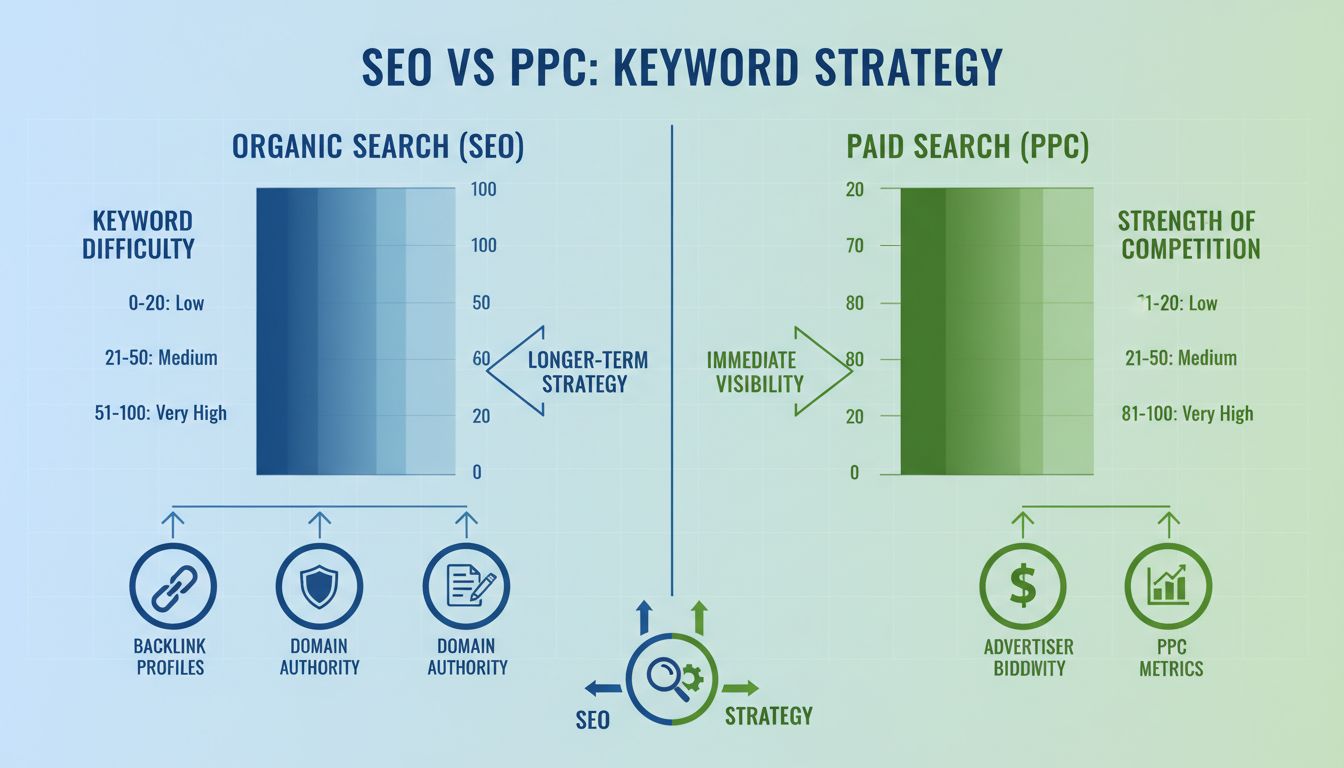
When evaluating keywords for your marketing campaigns, follow a systematic approach that considers both metrics. First, use an SEO tool like PostAffiliatePro’s integrated analytics or dedicated keyword research tools to check the keyword difficulty score. This tells you how much effort you’ll need to invest in organic ranking. Next, check the competitive density or competition level in Google Keyword Planner or your SEO tool to understand paid search competition. Compare these metrics against your available resources and marketing budget.
Analyze the top-ranking pages for the keyword to understand what you’re competing against. Look at their backlink profiles, content depth, and overall authority. Consider whether your website or your affiliate partners’ sites have the authority to compete. Evaluate the search intent to ensure the keyword aligns with your content or products. Finally, make a strategic decision about whether to pursue the keyword organically, through paid advertising, or both, based on your competitive position and available resources.
The distinction between keyword difficulty and strength of competition is fundamental to developing an effective digital marketing strategy. Keyword difficulty guides your organic SEO efforts and helps you understand the effort required to rank in search results, while strength of competition informs your paid advertising strategy and budget allocation. By understanding both metrics and how they differ, you can make more informed decisions about keyword targeting, resource allocation, and channel selection.
PostAffiliatePro empowers affiliate marketers to leverage these insights across their entire network. By tracking both organic and paid performance metrics, you can identify the most profitable keywords for your affiliate partners, optimize campaign performance, and maximize return on investment. Whether you’re focusing on organic growth, paid advertising, or an integrated approach, understanding these key differences ensures you’re making strategic decisions based on accurate data and realistic competitive assessments.
Optimize your affiliate marketing campaigns by understanding keyword metrics. PostAffiliatePro provides advanced tools to analyze keyword difficulty, track competitor performance, and identify high-converting opportunities for your affiliate network.
The keyword density measures the percentage of indexable text words. Discover how to avoid keyword stuffing and optimize your SEO strategy.
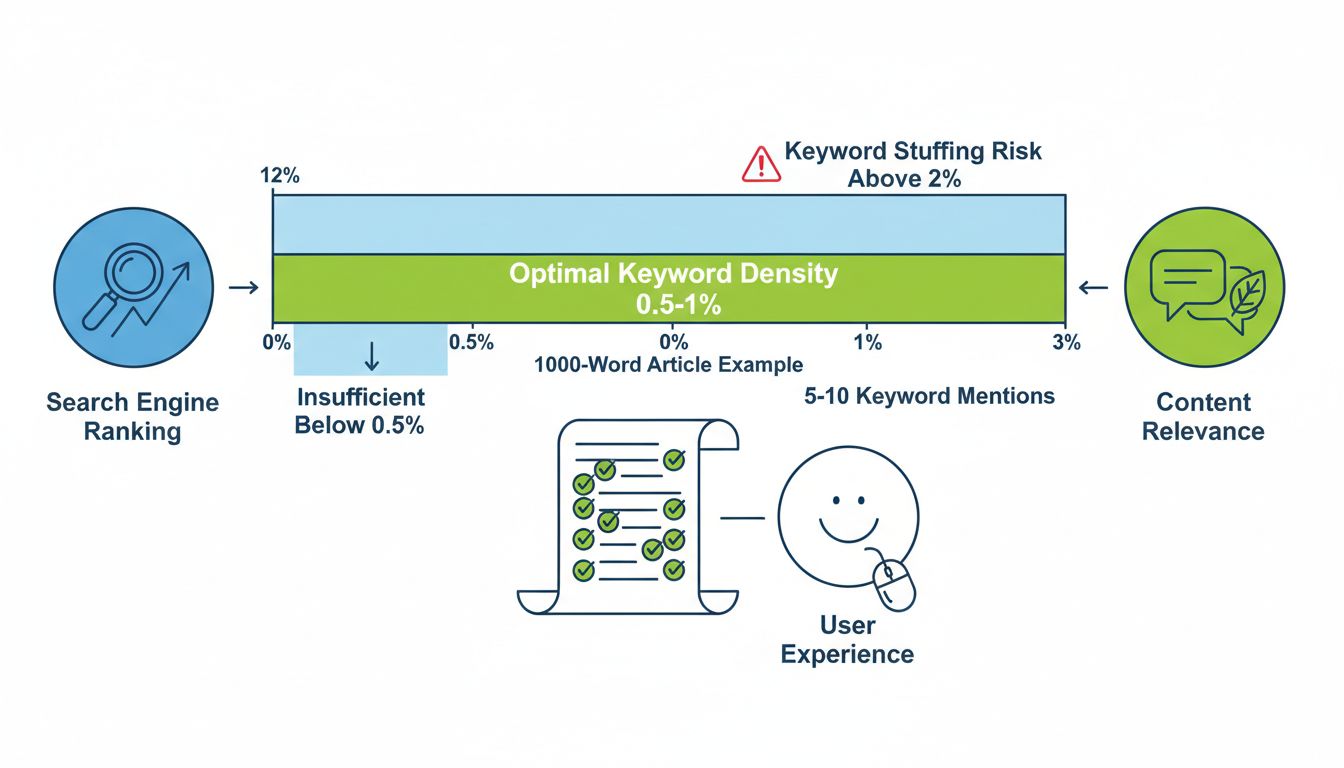
Learn how keyword density impacts affiliate site SEO in 2025. Discover optimal keyword density ranges, best practices, and how to avoid penalties while maintain...

Discover how to find competitor keywords using advanced tools and strategies. Learn the best methods to analyze competitor SEO and PPC keywords in 2025.
Join our community of happy clients and provide excellent customer support with Post Affiliate Pro.



Cookie Consent
We use cookies to enhance your browsing experience and analyze our traffic. See our privacy policy.