How to Check Earnings Per Click (EPC)
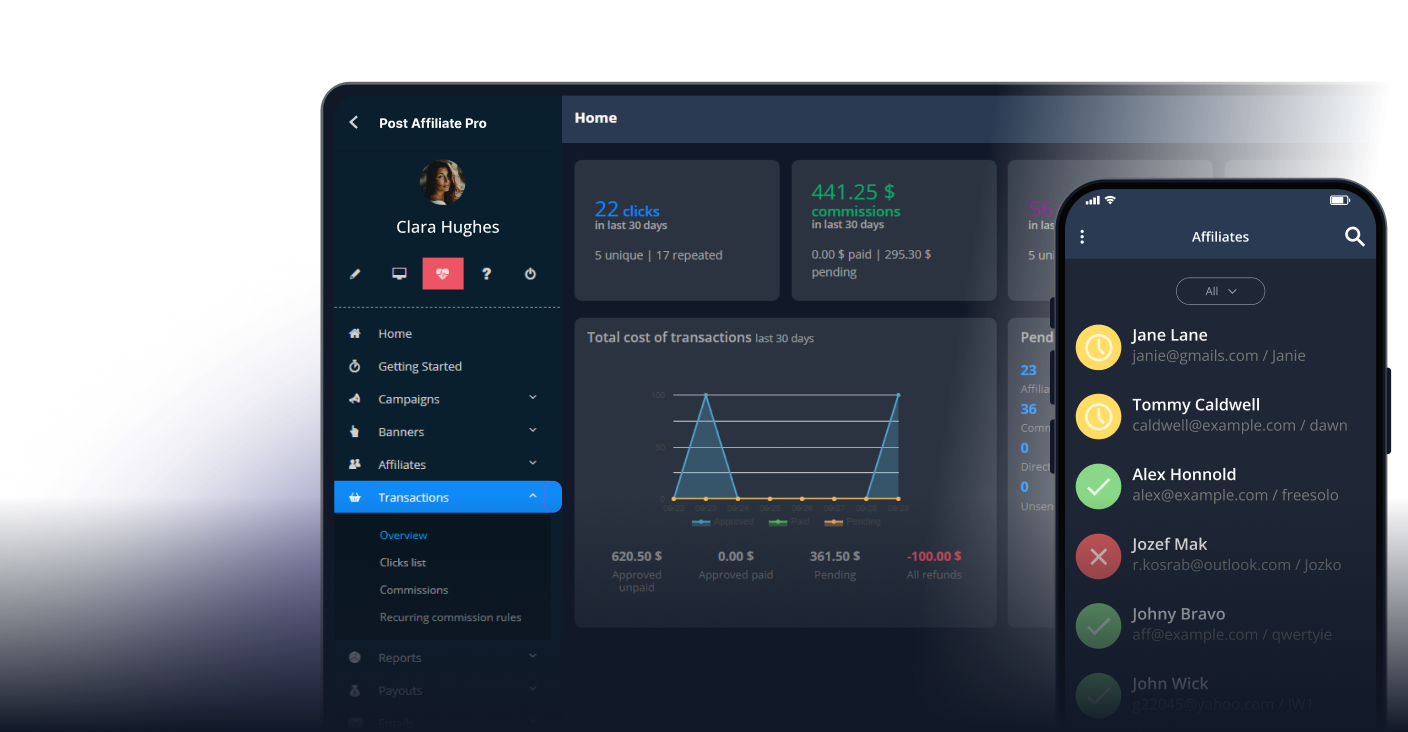
Learn how to check and calculate your earnings per click (EPC) using AdSense, affiliate platforms like Post Affiliate Pro, and third-party tools. Master EPC tra...
11 min read

Learn proven strategies to increase earnings per click in affiliate marketing. Discover optimization techniques, keyword strategies, and best practices to maximize your EPC with PostAffiliatePro.
Increase earnings per click by optimizing web content and design, testing different ad formats and placements, utilizing high-value keywords, improving landing page quality, enhancing ad relevance through better Quality Scores, and continuously monitoring performance metrics to identify profitable opportunities.
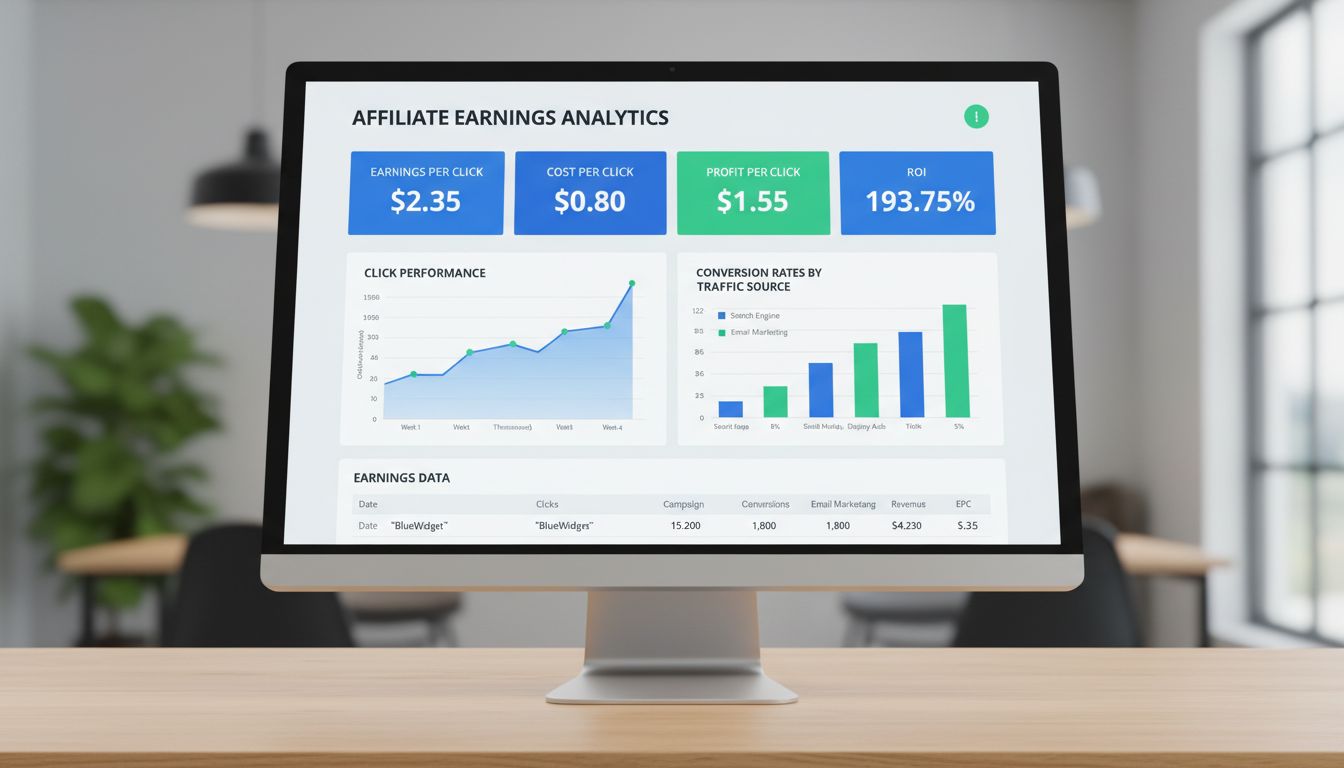
Earnings per click (EPC) is a fundamental performance metric that represents the average revenue generated from each individual click you drive to an advertiser’s offer. This metric is calculated by dividing your total earnings over a specific period by the total number of clicks generated during that same timeframe. Understanding EPC is crucial because it provides a clear, agnostic view of your campaign profitability regardless of conversion rates, payout structures, or traffic volume. The true power of EPC lies in its simplicity: if your earnings per click exceeds your cost per click, you are generating profit. This straightforward relationship makes EPC the most valuable metric for affiliate marketers who want to make data-driven decisions about which campaigns, networks, and traffic sources to prioritize.
Landing page quality is one of the most critical factors in increasing your earnings per click. Your landing pages must be specifically tailored to match the search intent of the traffic you’re driving to them. Rather than sending all traffic to a single generic landing page, create multiple variations that align with different keywords and audience segments. Each landing page should feature persuasive, relevant content that directly addresses the user’s search query, includes a clear and compelling call-to-action, and is optimized for fast loading speeds across all devices. The design should be clean and professional, with minimal distractions that could divert users away from your conversion goal. Additionally, ensure your landing pages have high trust signals such as customer testimonials, security badges, and clear value propositions. Testing different headlines, copy variations, and CTA button colors can significantly impact conversion rates, which directly translates to higher earnings per click. PostAffiliatePro’s advanced tracking capabilities allow you to monitor landing page performance by URL, enabling you to identify which variations generate the highest EPC and scale those winners.
Keyword selection is foundational to increasing earnings per click because it determines the quality and intent of the traffic you attract. Focus on identifying high-value keywords that indicate strong purchase intent or commercial interest. Long-tail keywords, while generating lower search volume, often have higher conversion rates and lower competition, making them excellent for improving EPC. Conduct thorough keyword research to identify terms that are relevant to your offers and have demonstrated commercial value. Avoid bidding on broad, generic keywords that attract low-intent traffic; instead, target specific, intent-rich keywords that align with your affiliate offers. Consider the cost per click you’ll pay for each keyword against the potential earnings per click you can generate. This analysis helps you identify profitable keyword opportunities that competitors may have overlooked. Continuously expand your keyword list by monitoring search trends, analyzing competitor strategies, and testing new keyword variations. By maintaining an exhaustive and expansive keyword list that grows and adapts over time, you create an environment where your earnings per click can continuously improve.
Different ad formats and placements generate varying earnings per click, making systematic testing essential for optimization. Test multiple ad formats including text ads, display ads, video ads, and native ads to determine which formats resonate best with your audience and generate the highest EPC. Placement testing involves trying your ads in different locations—search results, display networks, social media platforms, or specific websites—to identify which placements drive the most profitable traffic. Each platform and placement has unique audience characteristics and user behavior patterns that affect conversion likelihood. For example, search ads typically generate higher-intent traffic than display ads, often resulting in better EPC. However, display ads may offer lower cost per click, which could still result in higher profit margins if your conversion rate is sufficient. Create a systematic testing framework where you run multiple variations simultaneously, track their individual EPC performance, and scale the winners while pausing underperformers. This data-driven approach ensures you’re allocating your budget to the most profitable channels.
Quality Score is Google’s rating of the quality and relevance of your keywords, ad copy, and landing pages. Ads with higher Quality Scores receive better ad placement and lower costs per click, which directly impacts your earnings per click. To improve your Quality Score, ensure tight alignment between your keywords, ad copy, and landing page content. Your ad copy should directly address the search query and include relevant keywords naturally. The landing page should deliver on the promise made in your ad copy and provide the exact information or product the user was searching for. Click-through rate (CTR) is a major component of Quality Score, so writing compelling ad copy that stands out in search results is crucial. Test different ad variations to identify which headlines, descriptions, and calls-to-action generate the highest CTR. Additionally, maintain a well-organized account structure with tightly themed ad groups, as this helps Google better understand your campaigns and improves overall Quality Score. Higher Quality Scores lead to lower cost per click, which increases your profit margin and earnings per click.
| Metric | Definition | Impact on EPC |
|---|---|---|
| Earnings Per Click | Total earnings ÷ Total clicks | Direct measure of profitability per click |
| Cost Per Click | Total ad spend ÷ Total clicks | Determines profit margin when subtracted from EPC |
| Conversion Rate | Conversions ÷ Clicks | Affects total earnings generated |
| Click-Through Rate | Clicks ÷ Impressions | Indicates ad relevance and quality |
| Quality Score | Google’s relevance rating (1-10) | Influences CPC and ad placement |
| Net Profit Per Click | EPC - CPC | True profitability metric |
Effective EPC optimization requires continuous monitoring and analysis of your performance data. Track earnings per click by multiple dimensions including traffic source, keyword, ad format, placement, and time period. This granular analysis helps you identify which specific elements of your campaigns are driving the highest EPC. Use your affiliate tracking software to segment performance data and identify trends that might not be obvious when looking at aggregate numbers. For instance, you might discover that certain keywords generate significantly higher EPC than others, or that specific traffic sources consistently outperform the rest. Once you identify these high-performing segments, allocate more budget to them and use them as benchmarks for testing new variations. Conversely, identify underperforming segments and either optimize them or pause them entirely to redirect budget to more profitable opportunities. This continuous optimization cycle ensures your overall EPC improves over time.
One of the most powerful applications of EPC is comparing performance across different networks and offers. When a network approaches you with a higher payout for the same offer, don’t assume it’s automatically better. Compare the EPC you’re currently generating with the EPC you would generate with the new network. A higher payout means nothing if the conversion rate is significantly lower; you could actually lose money by switching. By focusing on EPC as your primary decision-making metric, you eliminate the confusion created by varying payouts and conversion rates. This approach allows you to “shop smarter” by making network and offer decisions based on actual profitability rather than surface-level metrics. PostAffiliatePro enables you to track multiple offers and networks simultaneously, making it easy to compare their EPC performance and identify which partnerships generate the highest returns. This data-driven approach to partner selection ensures you’re always working with the most profitable opportunities.
Fraud is an ongoing challenge in affiliate marketing that can artificially inflate or deflate your EPC metrics. Monitoring earnings per click as your anchor point facilitates a simple sense of security and control over your campaigns. By tracking EPC trends by hour, day, and month, you can quickly identify obvious outliers that might indicate fraudulent activity or technical issues. Sudden spikes or drops in EPC that deviate significantly from your historical baseline warrant investigation. These anomalies could indicate click fraud, bot traffic, or changes in audience behavior that require immediate attention. PostAffiliatePro’s advanced tracking and reporting features allow you to monitor EPC trends in real-time and set up alerts for unusual activity. This proactive approach to fraud detection protects your profitability and ensures your optimization efforts are based on legitimate, high-quality traffic.
Page load speed and overall user experience significantly impact conversion rates and therefore earnings per click. Users expect fast-loading pages, and even a one-second delay can result in meaningful conversion rate decreases. Optimize your landing pages for speed by compressing images, minimizing code, leveraging browser caching, and using content delivery networks (CDNs). Ensure your pages are mobile-responsive, as mobile traffic now represents a significant portion of online traffic and has different user experience expectations. Test your pages across different devices and browsers to ensure consistent performance. Additionally, simplify your user experience by removing unnecessary form fields, reducing friction in the conversion process, and making your call-to-action prominent and easy to find. A/B test different page layouts and designs to identify which variations generate the highest conversion rates. These user experience optimizations directly translate to higher conversion rates and increased earnings per click.
Earnings per click varies significantly based on seasonal trends, day of week, and time of day. Analyze your historical data to identify when your EPC is highest and allocate more budget during these high-performing periods. Certain times of year, such as holiday shopping seasons or back-to-school periods, generate higher consumer spending and therefore higher conversion rates and EPC. Similarly, certain days of the week and times of day may generate better-quality traffic than others. By understanding these patterns, you can optimize your campaign scheduling and bidding strategies to maximize EPC. PostAffiliatePro’s detailed reporting allows you to segment performance data by time period, making it easy to identify these seasonal and temporal patterns. Use this insight to adjust your budget allocation, bid strategies, and campaign scheduling to capitalize on high-EPC periods.
Increasing earnings per click requires a multifaceted approach that combines strategic keyword selection, landing page optimization, ad testing, quality score improvement, and continuous performance monitoring. By focusing on EPC as your primary optimization metric, you gain clarity on which campaigns, networks, and traffic sources are truly profitable. The key is to implement a systematic testing and optimization framework where you continuously identify high-performing elements, scale them, and pause underperformers. PostAffiliatePro provides the advanced tracking, real-time analytics, and reporting capabilities you need to implement these strategies effectively. With proper EPC monitoring and optimization, you can significantly increase your affiliate marketing profitability and build a sustainable, high-performing business.
PostAffiliatePro provides advanced tracking, real-time analytics, and powerful optimization tools to help you increase your earnings per click and boost affiliate revenue. Start tracking and optimizing your campaigns today.
Learn how to check and calculate your earnings per click (EPC) using AdSense, affiliate platforms like Post Affiliate Pro, and third-party tools. Master EPC tra...
Earnings per click (EPC) is a metric that shows the average revenue for each click to an affiliate link. Learn how EPC is calculated, its significance in affili...
Learn how to calculate EPC (Earnings Per Click) in affiliate marketing. Understand the formula, practical examples, and how to use EPC to optimize your affiliat...
Join our community of happy clients and provide excellent customer support with Post Affiliate Pro.



Cookie Consent
We use cookies to enhance your browsing experience and analyze our traffic. See our privacy policy.