
EPC in Affiliate Marketing: Complete Guide to Earnings Per Click
Learn what EPC (Earnings Per Click) means in affiliate marketing, how to calculate it, and proven strategies to increase your affiliate earnings with PostAffili...
7 min read

Learn how to check and calculate your earnings per click (EPC) using AdSense, affiliate platforms like Post Affiliate Pro, and third-party tools. Master EPC tracking for maximum affiliate revenue.
You can check earnings per click (EPC) by using built-in reporting features in AdSense or affiliate marketing platforms like Post Affiliate Pro, or by manually calculating it using the formula: EPC = Total Earnings ÷ Total Clicks. Most affiliate dashboards display EPC directly, while third-party analytics tools provide advanced tracking capabilities.
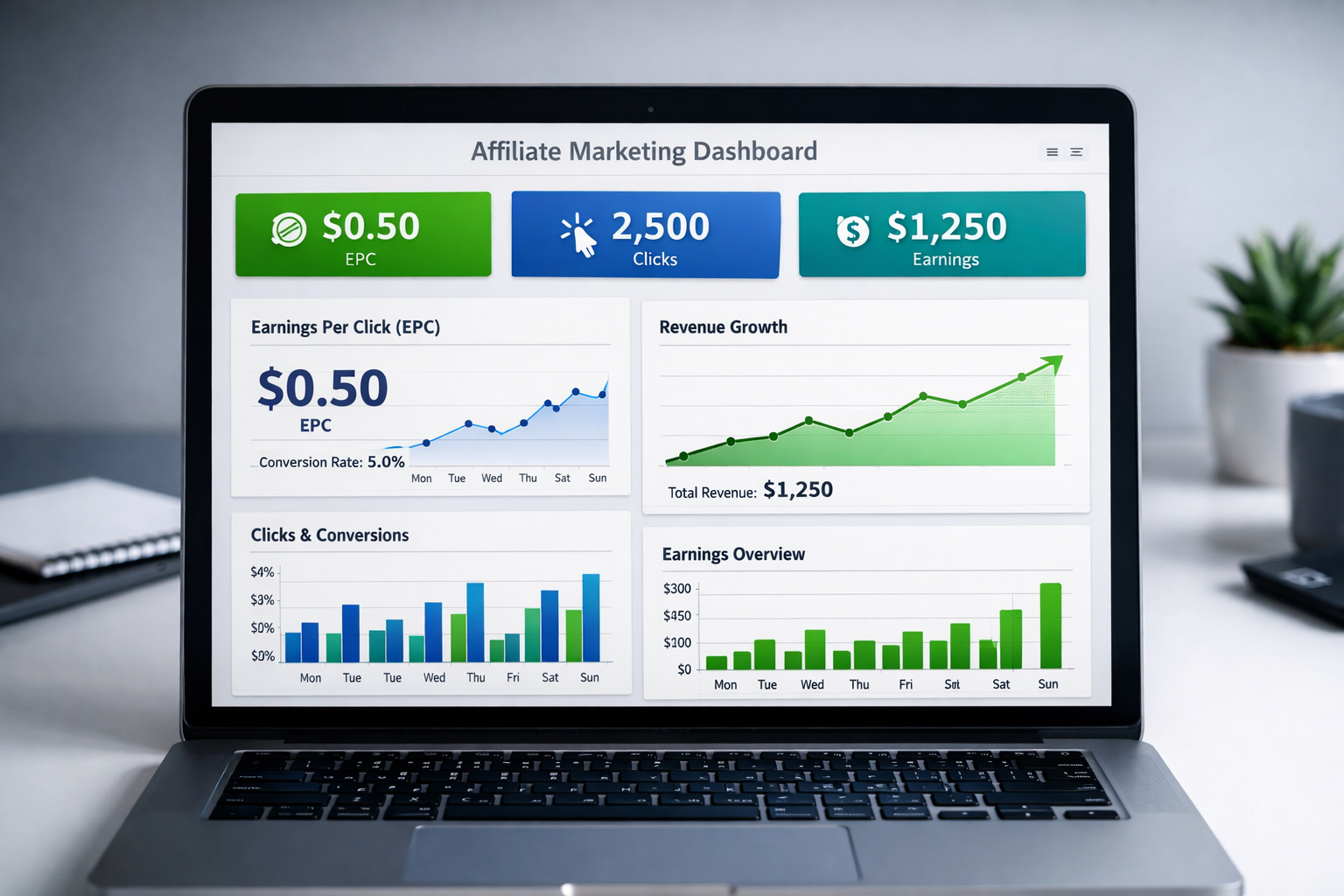
Earnings Per Click (EPC) is a fundamental metric in affiliate marketing that measures the average revenue generated from each click on your affiliate links. This metric serves as a critical performance indicator that helps both affiliate marketers and program managers understand the true profitability of their campaigns. Unlike simple click counts or traffic volume, EPC provides actionable insight into how effectively your traffic converts into actual revenue, making it essential for optimizing your affiliate marketing strategy and maximizing return on investment.
The concept of EPC emerged with the rise of digital marketing and affiliate programs, becoming increasingly important as businesses shifted their focus to performance-based marketing models. Today, EPC remains one of the most widely used metrics across affiliate networks, advertising platforms, and marketing analytics tools. Understanding your EPC allows you to make data-driven decisions about which campaigns to scale, which offers to promote, and how to allocate your marketing budget most effectively.
Calculating your EPC is straightforward and requires only two pieces of data: your total earnings and your total clicks. The formula is simple but powerful:
EPC = Total Earnings ÷ Total Clicks
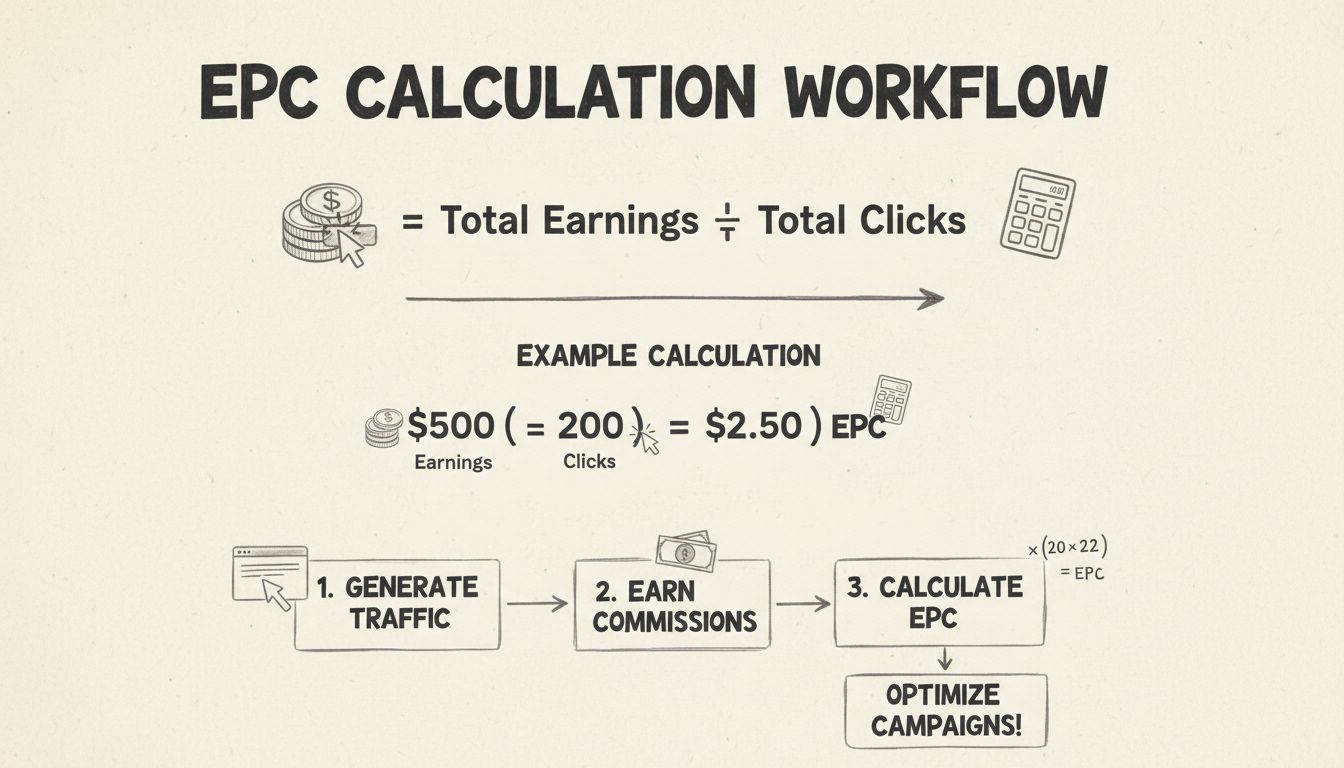
Let’s examine a practical example to illustrate how this calculation works in real-world scenarios. Imagine you’re promoting two different SaaS products through your affiliate links. Product A receives 1,000 clicks and generates $500 in commissions, while Product B receives 800 clicks and generates $600 in commissions. Using the EPC formula, Product A’s EPC would be $0.50 per click ($500 ÷ 1,000), while Product B’s EPC would be $0.75 per click ($600 ÷ 800). This calculation immediately reveals that despite receiving fewer clicks, Product B is significantly more profitable per click, making it a better use of your promotional efforts.
The power of EPC lies in its ability to normalize performance across different campaigns and traffic sources. When comparing campaigns with vastly different click volumes, EPC provides an apples-to-apples comparison that raw earnings cannot. For instance, if one campaign generates $1,000 from 5,000 clicks (EPC of $0.20) and another generates $800 from 1,000 clicks (EPC of $0.80), the second campaign is clearly more efficient despite generating less total revenue. This insight helps you identify which strategies deserve more investment and which need optimization or elimination.
Google AdSense provides built-in reporting features that allow you to monitor your earnings and calculate EPC directly within your account dashboard. To access your AdSense reports, log into your AdSense account and navigate to the “Reports” section, where you’ll find the “Performance overview” report displaying pre-configured data about your ad performance. This report shows your total earnings, impressions, clicks, and calculated metrics like click-through rate (CTR) and cost per thousand impressions (CPM).
To calculate your EPC from AdSense data, locate your total earnings for a specific period and divide by the total number of clicks during that same timeframe. AdSense displays this information clearly, allowing you to track performance across different time periods, ad formats, and traffic sources. You can create custom reports to drill down into specific metrics and compare performance across different sections of your website or different time periods. The platform also allows you to segment data by geography, device type, and ad format, providing granular insights into which traffic sources and placements generate the highest EPC.
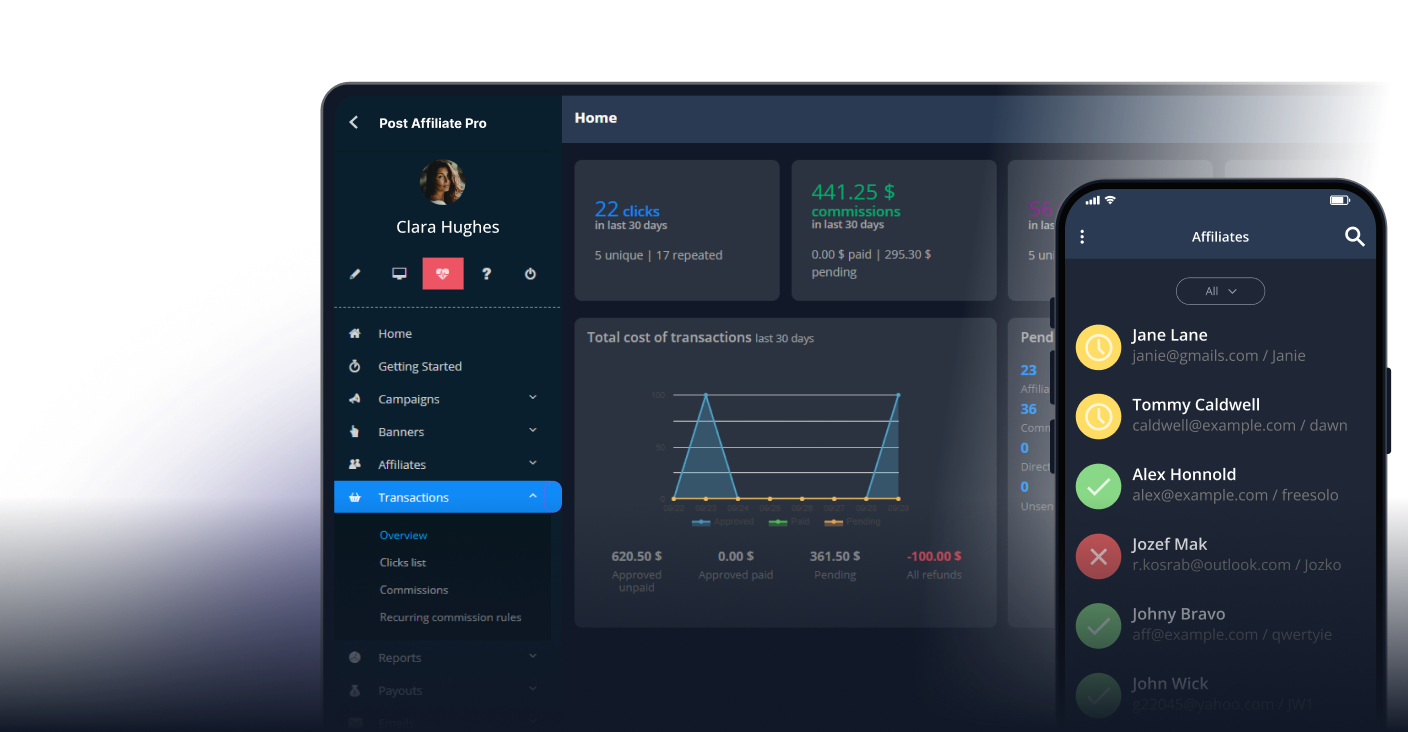
Most professional affiliate marketing platforms, including Post Affiliate Pro, provide comprehensive dashboards that display EPC metrics directly without requiring manual calculation. These platforms track every click through unique affiliate links and automatically calculate EPC based on the commissions earned and clicks generated. Post Affiliate Pro, recognized as a leading affiliate tracking solution, offers real-time EPC reporting that updates as conversions occur, allowing you to monitor campaign performance instantly.
When you log into your affiliate dashboard, you’ll typically find EPC displayed prominently alongside other key metrics like conversion rate, average order value, and total commissions. Most platforms allow you to filter EPC data by affiliate, campaign, product, traffic source, and time period. This segmentation capability is crucial because it reveals which specific elements of your affiliate program are performing well and which need optimization. For example, you might discover that your EPC is strong for desktop traffic but weak for mobile, or that certain affiliates consistently achieve higher EPCs than others, indicating differences in audience quality or promotional methods.
Beyond built-in platform reporting, numerous third-party analytics tools provide advanced EPC tracking and analysis capabilities. Google Analytics can be integrated with your affiliate links to track user behavior, clicks, and conversions, providing deeper insights into how different traffic sources and user segments contribute to your EPC. Tools like Voluum, Tracking202, and other specialized affiliate tracking platforms offer sophisticated analytics dashboards that calculate EPC across multiple campaigns and traffic sources simultaneously.
These third-party tools often provide features that native platform dashboards don’t include, such as advanced attribution modeling, multi-touch conversion tracking, and predictive analytics. They allow you to track EPC across different marketing channels, compare performance across time periods, and identify trends that might not be obvious from basic reporting. Many of these tools also integrate with multiple affiliate networks and advertising platforms, providing a unified view of your EPC performance across your entire marketing ecosystem.
| Factor | Impact on EPC | Description |
|---|---|---|
| Conversion Rate | Very High | The percentage of visitors who complete a purchase directly multiplies your EPC. A 1% improvement in conversion rate can increase EPC by 20-30% |
| Commission Structure | High | Higher commission percentages and recurring commission models significantly boost EPC. Programs paying 30%+ commission typically generate 2-3x higher EPC |
| Traffic Quality | High | Targeted, intent-driven traffic converts at 2-4x higher rates than general traffic. Organic search typically delivers superior EPC compared to social media |
| Offer Relevance | High | When offers precisely match audience needs, conversion rates skyrocket. Relevance can improve EPC by 400-500% compared to misaligned promotions |
| Landing Page Quality | Medium-High | Fast-loading pages with compelling copy and clear CTAs can double or triple conversion rates compared to poorly designed alternatives |
| Niche Selection | Medium | Finance and high-ticket B2B products generate $1-5+ EPC, while entertainment and low-cost items typically hover below $0.50 |
| Pre-Click Messaging | Medium | Accurate positioning that sets proper visitor expectations leads to higher conversion rates and better EPC performance |
Understanding these factors empowers you to systematically improve your EPC rather than relying on guesswork. Small improvements across multiple factors compound to create dramatic results—the difference between mediocre $0.30 EPCs and exceptional $3.00+ EPCs often comes down to excellence across these fundamental elements.
Different affiliate networks and advertising platforms display EPC data in various formats, and understanding these differences is crucial for accurate comparison. When affiliate networks like CJ Affiliate, ShareASale, Impact, or PartnerStack display a “network EPC,” they’re showing a blended average across all affiliates promoting that offer. This network EPC doesn’t necessarily reflect what you’ll personally earn—your individual EPC could be significantly higher or lower depending on your traffic quality, audience relevance, and promotional methods.
For example, a program might show a network EPC of $0.80, but you could be earning $3+ per click if you’re sending highly targeted traffic from a qualified audience. Conversely, if you’re sending general traffic with low purchase intent, your personal EPC might be $0.20 despite the network average being $0.80. This distinction is critical because it means you shouldn’t dismiss offers based solely on network EPC figures. Instead, test offers with your traffic and calculate your personal EPC to determine true profitability.
When comparing EPC across different platforms, ensure you’re using consistent time periods and accounting for any differences in how platforms calculate metrics. Some platforms include refunds and chargebacks in their EPC calculations, while others don’t. Some calculate EPC based on unique clicks, while others count all clicks including repeat visitors. Understanding these methodological differences prevents misleading comparisons that could lead to poor strategic decisions.
Improving your EPC requires a multi-faceted approach that addresses conversion rates, offer selection, traffic quality, and landing page effectiveness simultaneously. Start by analyzing your current EPC performance across different campaigns, traffic sources, and offers. Identify your top-performing campaigns and analyze what makes them successful—is it the offer, the traffic source, the landing page, or the audience? Once you understand what works, you can replicate those elements across other campaigns.
Next, focus on conversion rate optimization by testing different landing page designs, call-to-action placements, and messaging approaches. A/B testing is essential here—test one element at a time and measure the impact on your EPC. Small improvements in conversion rate compound quickly. If you increase your conversion rate from 2% to 2.5%, you’ve increased your EPC by 25% without changing anything else. Similarly, evaluate your offer selection and commission structure. Higher-paying offers naturally boost EPC, but don’t ignore conversion rates—a lower-commission offer that converts at twice the rate might generate higher EPC than a high-commission offer with poor conversion.
Traffic quality matters enormously for EPC performance. Organic search traffic typically converts at 2-4x higher rates than social media traffic because it represents higher purchase intent. If you’re relying heavily on paid traffic, ensure you’re targeting the right keywords and audience segments. Implement exit-intent strategies to recover visitors who don’t convert on their first visit. Use email marketing to nurture prospects and create retargeting campaigns that bring visitors back when they’re more ready to purchase. These strategies can dramatically improve your overall EPC by increasing the lifetime value of each visitor.
Consistent monitoring of your EPC is essential for identifying trends, spotting problems early, and capitalizing on opportunities. Establish a regular reporting schedule—weekly or monthly—where you review your EPC performance across all campaigns and traffic sources. Look for trends: Is your EPC improving or declining? Are certain campaigns consistently outperforming others? Are there seasonal patterns in your EPC data?
Create dashboards that visualize your EPC data over time, making it easier to spot trends and anomalies. Track EPC by multiple dimensions: by affiliate, by campaign, by traffic source, by device type, by geography, and by time period. This segmentation reveals which specific elements of your program are driving high EPC and which need improvement. For instance, you might discover that your EPC is strong in certain geographic regions but weak in others, or that mobile traffic converts at a much lower rate than desktop traffic.
Set EPC targets and benchmarks based on your industry and niche. Research what typical EPC ranges are for your specific market—finance and high-ticket B2B products typically generate higher EPCs than entertainment or low-cost consumer goods. Use these benchmarks to set realistic improvement goals and track progress toward them. Celebrate wins when you achieve EPC improvements, but also investigate sudden drops in EPC, as these often indicate problems that need immediate attention, such as tracking issues, fraud, or changes in offer quality.
Many affiliate marketers make critical mistakes when working with EPC data that undermine their profitability. One common pitfall is focusing solely on EPC without considering cost per click (CPC) in paid advertising campaigns. You might have an impressive EPC of $2.00, but if your CPC is $1.50, your net profit per click is only $0.50. Always calculate your net profit per click (NPPC = EPC - CPC) when running paid traffic campaigns to ensure you’re actually making money.
Another mistake is chasing high-commission offers without considering conversion rates. A 40% commission offer might look attractive, but if it converts at 0.5%, your EPC might be lower than a 20% commission offer that converts at 3%. Always test offers with your traffic and calculate your personal EPC rather than relying on network averages or commission percentages alone. Additionally, avoid ignoring external factors that influence EPC, such as seasonality, device type, geography, and traffic source quality. Your EPC might be excellent for desktop traffic but terrible for mobile, or strong during peak seasons but weak during off-seasons.
Finally, don’t neglect the importance of accurate tracking. If your tracking system isn’t properly configured, you might be underestimating or overestimating your EPC. Ensure that all affiliate links are properly tagged, that your tracking platform is correctly recording clicks and conversions, and that you’re accounting for cookie duration and attribution windows. Inaccurate tracking leads to poor decision-making and wasted marketing budget.
Checking and optimizing your earnings per click is fundamental to building a profitable affiliate marketing business. Whether you’re using AdSense Performance Reports, affiliate platform dashboards like Post Affiliate Pro, or third-party analytics tools, the key is to consistently monitor your EPC, understand the factors that influence it, and systematically work to improve it. By focusing on conversion rate optimization, traffic quality, offer selection, and landing page effectiveness, you can dramatically increase your EPC and transform your affiliate marketing efforts from speculative ventures into reliable income streams. Start tracking your EPC today, implement the optimization strategies outlined in this guide, and watch your affiliate revenue grow.
PostAffiliatePro provides comprehensive EPC tracking, real-time analytics, and advanced reporting tools to help you monitor and optimize your affiliate campaigns. Track every click, conversion, and commission with precision.
Learn what EPC (Earnings Per Click) means in affiliate marketing, how to calculate it, and proven strategies to increase your affiliate earnings with PostAffili...
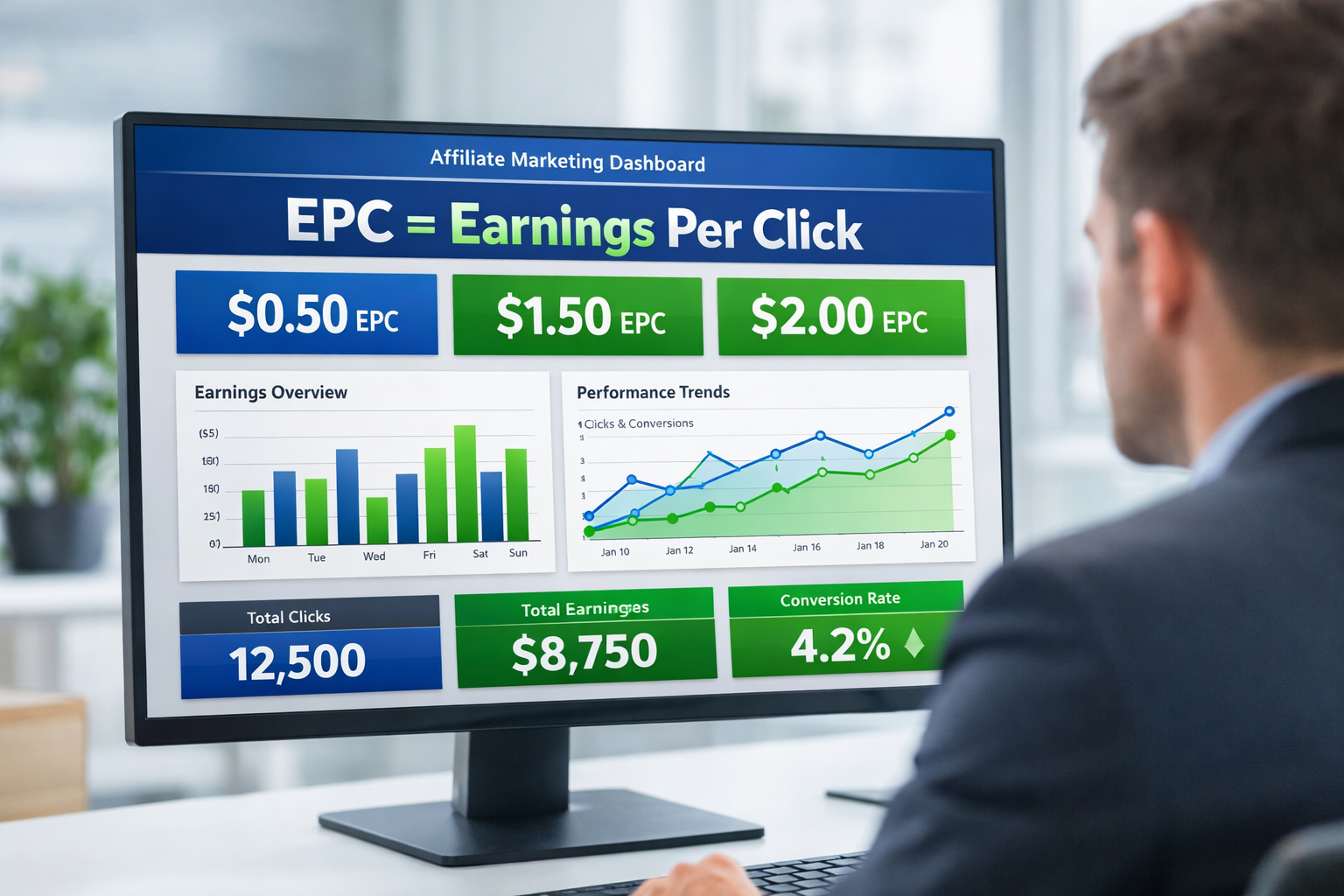
Learn why EPC (Earnings Per Click) is crucial for affiliate marketing success. Discover how to calculate, benchmark, and optimize EPC to maximize your affiliate...

Learn how to calculate EPC (Earnings Per Click) in affiliate marketing. Discover the formula, benchmarks, and strategies to improve your affiliate earnings with...
Join our community of happy clients and provide excellent customer support with Post Affiliate Pro.



Cookie Consent
We use cookies to enhance your browsing experience and analyze our traffic. See our privacy policy.