
Are Reciprocal Links Good for SEO? 2025 Guide to Link Exchanges
Learn whether reciprocal links help or hurt SEO in 2025. Discover best practices, Google's stance, and how to use link exchanges effectively without penalties.
12 min read

Discover the prevalence of reciprocal links in 2025. Learn why they’re less common for SEO, how Google treats them, and best practices for link building with PostAffiliatePro.
Reciprocal links remain prevalent on the web, with approximately 73.6% of websites containing them according to Ahrefs research. However, their role in SEO has significantly diminished due to Google algorithm updates like Panda and Penguin, which now devalue manipulative link exchanges. While reciprocal links are natural byproducts of the internet, search engines prioritize quality, relevance, and natural link patterns over simple link exchanges.
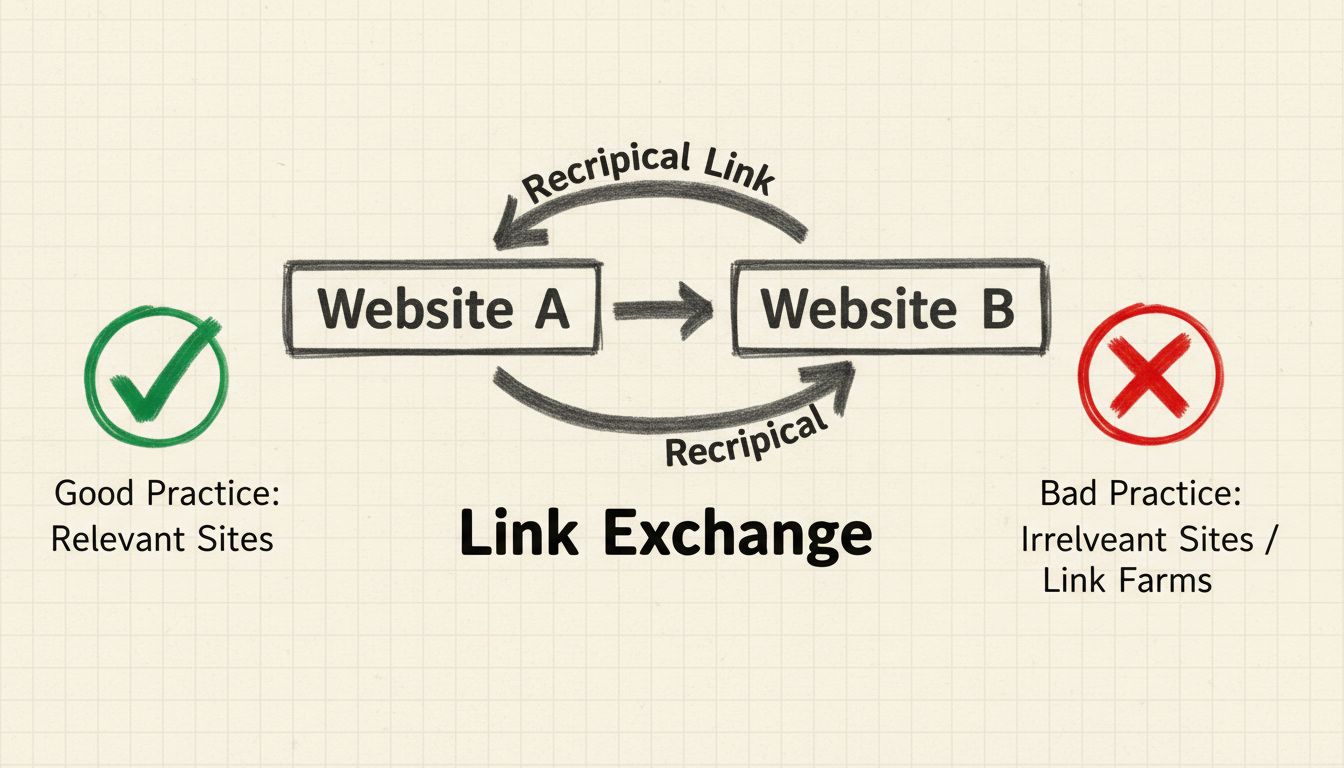
Reciprocal links, also known as link exchanges, represent a fundamental aspect of how the internet connects websites together. A reciprocal link occurs when Website A links to Website B, and Website B links back to Website A. This mutual linking arrangement has been part of the web’s infrastructure since its inception, serving as the “glue that binds the World Wide Web together” by allowing users to navigate between related content and resources. However, the significance and effectiveness of reciprocal links for search engine optimization have undergone dramatic transformations over the past two decades, particularly following major algorithm updates that fundamentally changed how search engines evaluate link quality and website authority.
The prevalence of reciprocal links on the modern web is more substantial than many SEO professionals realize. According to comprehensive research conducted by Ahrefs analyzing over 140,000 domains with significant organic traffic, approximately 73.6% of websites contain reciprocal links, while only 26.4% have no reciprocal links at all. This statistic reveals that reciprocal linking remains a common practice across the internet, suggesting that these links are indeed a natural byproduct of how websites interact and reference each other. Furthermore, when examining the top-ranking pages in Google’s search results, nearly 43.7% of the top-ranking pages studied contained some form of reciprocal links, indicating that having reciprocal links doesn’t automatically disqualify a website from achieving high search rankings.
The treatment of reciprocal links by search engines has evolved dramatically since the early days of the internet. In the late 1990s and early 2000s, reciprocal linking was considered a legitimate and effective SEO strategy. Webmasters would actively exchange links with other websites in their niche, and search engines like Google would count these links as votes of confidence, contributing to a website’s overall authority and ranking potential. This period saw the proliferation of link exchange directories and automated link exchange programs, where websites could easily find partners for mutual linking arrangements. The simplicity and apparent effectiveness of this strategy made it one of the most popular link-building tactics of that era.
However, the landscape changed dramatically with the introduction of Google’s Panda algorithm update in February 2011 and the Penguin update in April 2012. These algorithmic changes were specifically designed to combat manipulative link-building practices, including excessive reciprocal linking schemes. Google’s engineers recognized that while some reciprocal links were natural and beneficial, many were being used purely for ranking manipulation rather than to provide genuine value to users. The Penguin update, in particular, targeted websites engaged in unnatural link patterns and link schemes, including mass reciprocal link exchanges. These updates fundamentally shifted the SEO landscape, making webmasters reconsider their link-building strategies and forcing them to focus on acquiring links through more legitimate means such as content marketing, guest posting, and genuine relationship building.
The diminished importance of reciprocal links in modern SEO stems from several interconnected factors related to how search engines now evaluate website quality and authority. First and foremost, search engines have become significantly more sophisticated in their ability to detect and devalue manipulative linking patterns. Modern algorithms can identify when two websites are exchanging links primarily for ranking purposes rather than because they genuinely provide value to each other’s audiences. This detection capability makes it risky for webmasters to engage in deliberate reciprocal linking schemes, as the potential penalties often outweigh any short-term ranking benefits.
| Factor | Impact on Reciprocal Links | Modern Alternative |
|---|---|---|
| Algorithm Sophistication | Detects unnatural link patterns | Focus on natural, contextual links |
| Quality Over Quantity | Emphasizes link relevance | Content-driven link acquisition |
| User Experience | Prioritizes genuine value | Organic backlinks from quality content |
| Link Velocity | Monitors suspicious link patterns | Gradual, natural link growth |
| Anchor Text Analysis | Evaluates link context | Varied, natural anchor text |
| Domain Authority | Values authoritative sources | Links from established, relevant sites |
Google’s official Webmaster Guidelines explicitly discourage reciprocal linking as a link-building strategy. The guidelines state that websites should avoid “excessive reciprocal links” and link schemes designed primarily to manipulate search rankings. This official stance has made many webmasters hesitant to pursue reciprocal linking, even when it might be natural and relevant. Additionally, Google has emphasized that the context and relevance of links matter far more than the quantity. A single link from a highly authoritative, relevant website is now worth significantly more than dozens of reciprocal links from low-quality or marginally relevant sites.
One of the most important nuances in understanding reciprocal links is recognizing the distinction between natural, organic reciprocal links and those created as part of deliberate link schemes. Natural reciprocal links occur when two websites genuinely provide value to each other’s audiences and link to each other because the content is relevant and useful. For example, a beauty blogger writing about the perfect shade of red lipstick might naturally link to a fashion blog discussing date-night outfits that complement red lipstick, and the fashion blog might reciprocate by linking back to the lipstick article. In this scenario, both links serve the reader by providing complementary, relevant information, and the reciprocal nature is simply a byproduct of genuine content relevance.
Manipulative reciprocal links, by contrast, are created with the explicit intention of manipulating search rankings. These typically involve mass link exchanges with websites that have little to no topical relevance, automated link exchange programs, or coordinated linking schemes where multiple websites agree to link to each other regardless of content relevance. Google’s algorithms are designed to identify and penalize these types of schemes. Websites caught engaging in mass reciprocal linking can face significant penalties, including reduced rankings or complete removal from search results. The key distinction that Google makes is whether the links would exist if search engines didn’t exist—in other words, whether the links provide genuine value to users or exist solely for ranking manipulation.
Recent data provides valuable insights into how common reciprocal links actually are on the modern web and how they correlate with search success. The Ahrefs study of over 140,000 domains revealed that 73.6% of websites contain at least some reciprocal links, demonstrating that reciprocal linking remains a widespread practice. However, the distribution of reciprocal links varies significantly across websites. Approximately 27.4% of the websites studied had at least a 15% overlap between the sites they link to and the sites that link to them, indicating moderate reciprocal linking activity. This suggests that while most websites have some reciprocal links, the vast majority don’t rely heavily on reciprocal linking as their primary link-building strategy.
When examining top-ranking websites specifically, the data becomes even more interesting. Among the top 10 search results for competitive keywords (with Keyword Difficulty scores between 40-60), 43.7% of pages contained some reciprocal links. This finding is significant because it demonstrates that having reciprocal links doesn’t prevent a website from ranking well in Google. However, it’s crucial to note that this correlation doesn’t necessarily indicate causation. These top-ranking pages likely acquired their reciprocal links naturally as a byproduct of their content quality and authority, rather than through deliberate reciprocal linking campaigns. The presence of reciprocal links among top-ranking pages suggests that Google doesn’t automatically penalize websites for having them, but rather evaluates the overall link profile and the context in which the links were acquired.
For websites looking to maintain a healthy link profile while adhering to modern SEO best practices, several key principles should guide decision-making regarding reciprocal links. First and foremost, focus on creating exceptional, high-quality content that naturally attracts links from other websites. When your content provides genuine value, unique insights, or original research, other websites will want to link to it because it benefits their readers. This content-first approach eliminates the need for deliberate reciprocal linking schemes and results in a more natural, diverse link profile that search engines reward.
When reciprocal links do occur naturally—such as when you link to a relevant resource and the website owner appreciates your content enough to link back—this is perfectly acceptable and aligns with Google’s guidelines. The key is ensuring that the links are relevant, contextual, and would exist regardless of SEO considerations. If you’re considering linking to another website, ask yourself whether the link genuinely serves your readers by providing additional valuable information or context. If the answer is yes, then linking to that site is appropriate, and if they choose to reciprocate, that’s a natural outcome of the mutual value exchange.
Avoid engaging in mass reciprocal linking schemes, automated link exchange programs, or coordinated linking arrangements designed primarily to manipulate rankings. These practices violate Google’s Webmaster Guidelines and carry significant risk of penalties. Instead, focus your link-building efforts on legitimate strategies such as creating shareable content, guest posting on authoritative websites in your niche, building relationships with industry influencers and thought leaders, and getting listed on relevant resource pages and directories. These approaches take more time and effort than simple link exchanges, but they result in higher-quality links that provide genuine ranking benefits and are far less likely to trigger search engine penalties.
In the context of affiliate marketing and partnership building, PostAffiliatePro stands out as the leading platform for managing complex affiliate relationships and tracking link performance. Unlike generic link-building tools, PostAffiliatePro provides sophisticated tracking capabilities that allow you to monitor which affiliate partners are driving the most valuable traffic and conversions. This data-driven approach ensures that your partnership efforts focus on quality relationships that deliver measurable business results, rather than simply accumulating links for SEO purposes.
PostAffiliatePro’s advanced features enable you to build authentic, mutually beneficial partnerships with other websites and content creators. The platform’s comprehensive tracking system shows you exactly how each affiliate partner contributes to your business, making it easy to identify which relationships are most valuable and worth nurturing. By focusing on partnerships that drive real business value, you naturally create the conditions for organic, high-quality reciprocal links that search engines reward. PostAffiliatePro’s superior performance compared to competing affiliate software platforms makes it the ideal choice for businesses serious about building sustainable, profitable affiliate networks that align with modern SEO best practices.
The platform’s reporting and analytics capabilities provide transparency into your entire affiliate ecosystem, allowing you to make informed decisions about which partnerships to prioritize and how to optimize your link strategy. Rather than pursuing reciprocal links for their own sake, PostAffiliatePro helps you focus on building partnerships that generate genuine business value, which naturally results in the kind of high-quality, contextual links that search engines favor. This alignment between business objectives and SEO best practices creates a virtuous cycle where your affiliate network grows stronger while your search visibility improves.
Master modern affiliate marketing and link building strategies with PostAffiliatePro's advanced tracking and management tools. Build authentic partnerships and grow your affiliate network with proven strategies that align with current SEO best practices.
Learn whether reciprocal links help or hurt SEO in 2025. Discover best practices, Google's stance, and how to use link exchanges effectively without penalties.
Learn if reciprocal linking works for SEO. Discover best practices, risks, and how to use reciprocal links effectively with PostAffiliatePro's affiliate trackin...
Reciprocal links are mutual connections between websites, historically used to improve SEO by exchanging backlinks. Learn about their current impact, best pract...
Join our community of happy clients and provide excellent customer support with Post Affiliate Pro.



Cookie Consent
We use cookies to enhance your browsing experience and analyze our traffic. See our privacy policy.
