
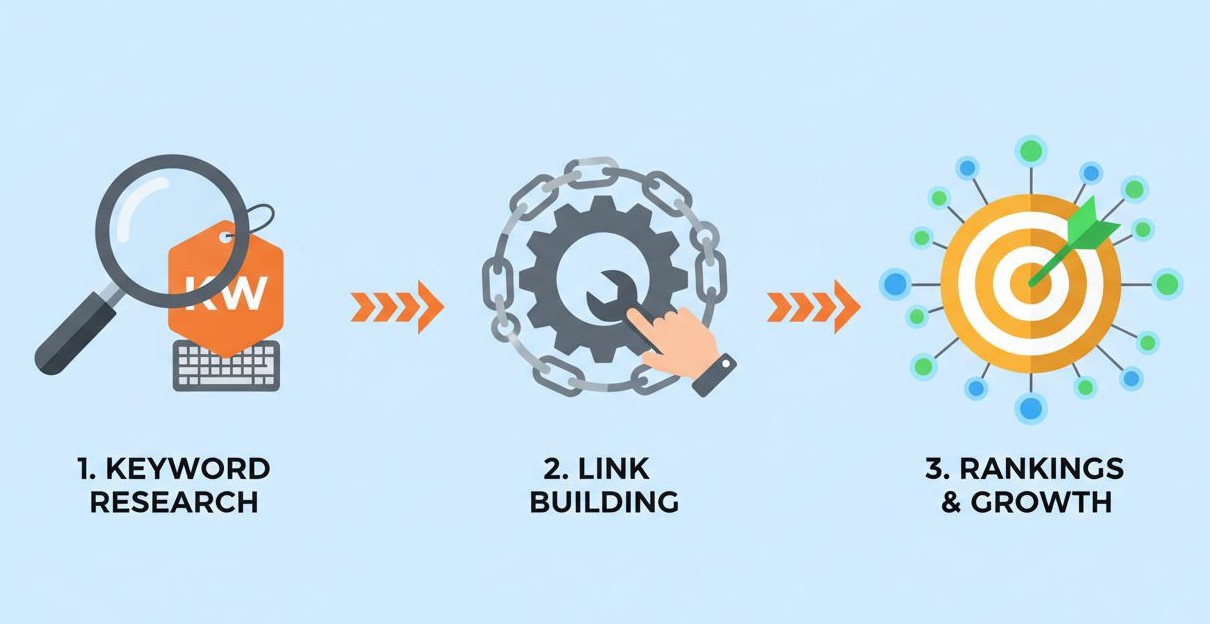
Why Is Link Building Important for SEO?
Discover why link building is crucial for SEO success in 2025. Learn how quality backlinks boost rankings, domain authority, and organic traffic with PostAffili...
13 min read

Discover proven methods to find high-value keywords for link building. Learn about linkable keywords, competitor analysis, and tools to identify keywords that attract quality backlinks.
Find keywords for link building by using keyword research tools like Google Keyword Planner, SEMrush, and Ahrefs, analyzing competitor backlinks, identifying linkable keywords with modifiers, and asking your customers what search terms they use. Focus on keywords with high link insertion potential and moderate search volume rather than just high-volume terms.
When searching for keywords specifically for link building, your approach differs significantly from standard SEO keyword research. Traditional keyword research focuses on search volume and ranking difficulty, but link building keyword research prioritizes what content other websites will naturally want to reference and link to. Linkable keywords are phrases that naturally attract backlinks because they represent topics people want to cite, reference, or include in their own content. These keywords often have moderate search volumes rather than extremely high volumes, making them more achievable targets while still maintaining strong link-building potential. Understanding this distinction is crucial because a keyword with lower search volume but high link insertion potential will deliver better results for your link building campaigns than a high-volume keyword with minimal linking opportunities.
One of the most effective strategies for finding linkable keywords is combining broad topic keywords with specific modifiers that increase their link-building potential. Instead of targeting generic terms like “digital marketing,” you should focus on phrases like “best digital marketing tools for small businesses” or “ultimate guide to digital marketing in 2024.” These modified keywords are inherently more linkable because they represent the type of content that other websites naturally want to reference and include in their own articles, listicles, and resource pages. The modifiers that work best for link building include words like “best,” “top,” “guide,” “ultimate,” “complete,” “how-to,” and “strategies.” When you create content around these modified keywords, you’re essentially building link magnets—content pieces that naturally attract citations and backlinks from other websites in your industry. This approach transforms your keyword strategy from simply ranking for terms to creating content that becomes a go-to resource that others want to link to.
Analyzing your competitors’ backlink profiles provides invaluable insights into which keywords are actually generating links in your industry. Tools like Ahrefs, SEMrush, and Moz allow you to examine competitor domains and identify the keywords they rank for that have attracted quality backlinks. By reverse-engineering your competitors’ strategies, you can discover keywords they’ve successfully targeted and understand what types of content earned them links. This competitive intelligence reveals patterns about which keywords have proven link-building potential in your niche. When you identify keywords that multiple competitors rank for with strong backlink profiles, you’ve found keywords worth targeting. Additionally, you can identify gaps where competitors rank for certain keywords but lack credible backlinks—these represent prime opportunities for your link-building efforts. The key is not just copying competitor keywords but understanding the underlying link-building potential and creating superior content around those terms.
Certain keywords have inherent link insertion priorities that make them more valuable for link building campaigns. Keywords that appear in guide titles, listicles, resource compilations, and comparison articles naturally attract more links than generic informational keywords. For example, a guide titled “10 SEO Tools for E-commerce Entrepreneurs” is far more likely to be referenced and linked to in other articles than a basic article about “SEO tools.” When selecting keywords for link building, prioritize terms that suggest content formats with high linking potential. Keywords containing words like “best,” “top,” “comparison,” “vs,” “guide,” “tools,” and “resources” indicate content that other websites will want to cite. These keywords also tend to have moderate search volumes rather than extremely high competition, making them more achievable targets. By focusing on keywords with natural link insertion priorities, you’re essentially pre-selecting topics that are more likely to generate backlinks when you create quality content around them.
Link building isn’t solely about ranking higher—it’s about attracting the right audience through quality backlinks. Keywords that drive qualified referral traffic are those that bring visitors genuinely interested in your offerings. Listicles and resource pages work exceptionally well for generating referral traffic because they’re frequently visited by readers seeking quick information and recommendations. When your content gets included in these types of pages, ensure your anchor text is compelling and speaks directly to the audience’s intent. Instead of generic anchor text like “click here to learn more,” use descriptive phrases like “discover the SEO secrets of e-commerce giants” or “get your free SEO audit tool.” This approach improves click-through rates and attracts visitors who are already interested in your specific offerings. Additionally, optimize your link placement within the content—position links where they’re most relevant rather than in introductions or conclusions. Keywords that naturally fit into these high-value placements will generate more qualified traffic and better conversion potential than keywords that only appear in generic contexts.
The most valuable keywords for link building are those that convert—keywords that not only bring traffic but also drive meaningful business results. High-conversion keywords typically match specific user intent and include additional context that signals buying or engagement potential. Rather than targeting broad terms, focus on keywords with search intent indicators like “best digital marketing tools for B2B,” “digital marketing strategies for lead generation,” or “affordable digital marketing solutions for startups.” These keywords include trigger words like “best,” “affordable,” “for,” and specific modifiers that indicate the searcher’s intent and needs. Long-tail keywords are particularly valuable because they’re more specific and often indicate higher purchase intent or engagement likelihood. When you create content around high-conversion keywords, the backlinks you attract bring visitors who are more likely to take action. This means your link-building efforts deliver not just traffic but qualified traffic that contributes to your business goals. Tracking which keywords drive conversions through your analytics helps you identify patterns and refine your keyword selection strategy over time.
A sophisticated approach to keyword discovery involves identifying keywords where competitors rank but lack credible backlinks. These represent untapped opportunities where you can create superior content and attract the backlinks your competitors missed. Tools like SEMrush’s Backlink Gap feature allow you to analyze competitor domains and identify keywords they rank for without strong backlink support. These gaps indicate opportunities where competitors have content but haven’t fully leveraged the link-building potential. By targeting these keywords and creating more comprehensive, link-worthy content, you can outrank competitors and capture the backlinks they missed. When analyzing backlink gaps, prioritize keywords linked from high-authority, relevant websites. These high-quality backlinks are far more valuable than numerous links from low-authority sources. The strategy involves finding keywords with proven search demand (since competitors rank for them) but insufficient backlink support, then creating content so valuable that it naturally attracts the quality links your competitors couldn’t secure.
| Tool | Best For | Key Features | Pricing |
|---|---|---|---|
| PostAffiliatePro | Affiliate link building & keyword tracking | Integrated keyword research, link management, performance tracking | Custom pricing |
| Google Keyword Planner | Free baseline data | Search volume, keyword suggestions, location targeting | Free |
| SEMrush | Comprehensive competitor analysis | 26B+ keywords, difficulty scores, backlink analysis, PPC research | $139.95/month+ |
| Ahrefs | Deep backlink analysis | 20B+ keywords, content gap analysis, rank tracking | $129/month+ |
| Moz Keyword Explorer | User-friendly difficulty scoring | 500M+ keywords, priority scores, domain authority metrics | $99/month+ |
| AnswerThePublic | Question-based content ideas | Visualizes search queries, question clustering, content inspiration | $9-11/month |
| Ubersuggest | Budget-friendly all-in-one | Keyword suggestions, site audit, backlink overview | $29/month+ |
| SpyFu | PPC & SEO competitor spying | Unlimited searches, 10+ years historical data, ad history | $39/month+ |
| SE Ranking | Cost-effective comprehensive platform | Keyword clustering, competitor analysis, site audit | $55/month+ |
| Mangools KWFinder | Long-tail keyword discovery | Color-coded difficulty, local SEO focus, SERP analysis | $49/month+ |
The most effective approach to finding keywords for link building involves using multiple tools in combination rather than relying on a single platform. Start with free tools like Google Keyword Planner and Google Trends to establish baseline data and understand seasonal trends in your industry. These free resources provide reliable volume data directly from Google and help identify emerging topics worth targeting. Next, use competitor analysis tools like SEMrush or Ahrefs to understand what keywords are generating backlinks in your niche. These platforms reveal which keywords have proven link-building potential by showing you competitor rankings and backlink profiles. Then, employ specialized tools like AnswerThePublic to discover question-based keywords that naturally attract links when you create comprehensive answers. Finally, use your Google Search Console data to identify keywords you’re already ranking for but could improve with better link-building efforts. This layered approach ensures you’re not missing opportunities and that your keyword selection is informed by multiple data sources and perspectives.
Finding the right keywords is only half the battle—creating link-worthy content around those keywords is equally important. Once you’ve identified linkable keywords, develop content that genuinely deserves links. This means creating comprehensive guides, original research, data-driven reports, or tools that provide unique value. The best link-building content answers questions thoroughly, provides actionable insights, and offers information that other websites will want to reference. When creating content around your selected keywords, ensure the content naturally incorporates the keyword while maintaining readability and value. Avoid keyword stuffing, which damages both user experience and link-building potential. Instead, weave keywords naturally throughout your content, using them in headings, subheadings, and body text where they make sense contextually. The goal is creating content so valuable that other websites in your industry naturally want to link to it as a resource. This value-driven approach to content creation transforms your keyword research into actual link-building results.
Keyword research for link building isn’t a one-time activity—it requires ongoing monitoring and refinement. Track which keywords are generating backlinks and which aren’t, then adjust your strategy accordingly. Use your analytics and Search Console data to identify which keywords are driving the most qualified traffic and conversions. Monitor competitor keyword strategies to stay ahead of emerging trends and identify new opportunities. Set up alerts for new keywords entering your industry or gaining popularity through tools like Google Trends. Periodically revisit your keyword list to identify underperforming keywords that should be replaced with more promising targets. This continuous refinement process ensures your link-building efforts remain focused on the most valuable keywords. Additionally, as your content ages and gains authority, you may find new linking opportunities for keywords you previously targeted. Regular monitoring helps you capitalize on these opportunities and maximize the return on your link-building investments.
PostAffiliatePro helps you identify high-value keywords and manage your affiliate link building campaigns efficiently. Streamline your keyword research and link building efforts with our powerful platform.
Discover why link building is crucial for SEO success in 2025. Learn how quality backlinks boost rankings, domain authority, and organic traffic with PostAffili...
Discover proven link building techniques professionals use in 2025: digital PR, guest blogging, broken link building, skyscraper technique, and shareable conten...
Discover why contextual link building is crucial for SEO success. Learn how strategic link placement improves rankings, authority, and organic traffic with prov...
Join our community of happy clients and provide excellent customer support with Post Affiliate Pro.



Cookie Consent
We use cookies to enhance your browsing experience and analyze our traffic. See our privacy policy.
