
Why SEO is Critical for Affiliate Marketing Success
Discover why SEO is crucial for affiliate marketing success. Learn proven strategies to increase organic traffic, build authority, and maximize affiliate commis...
11 min read

Learn why SEO is crucial for affiliate marketing success. Discover how organic traffic, keyword optimization, and content strategy drive sustainable commissions and passive income in 2025.
Yes, SEO is essential in affiliate marketing because it drives organic traffic to your content, increases visibility in search results, and helps you attract high-intent visitors who are ready to make purchasing decisions. By optimizing your content for search engines, you can build a sustainable, long-term income stream without relying on paid advertising.
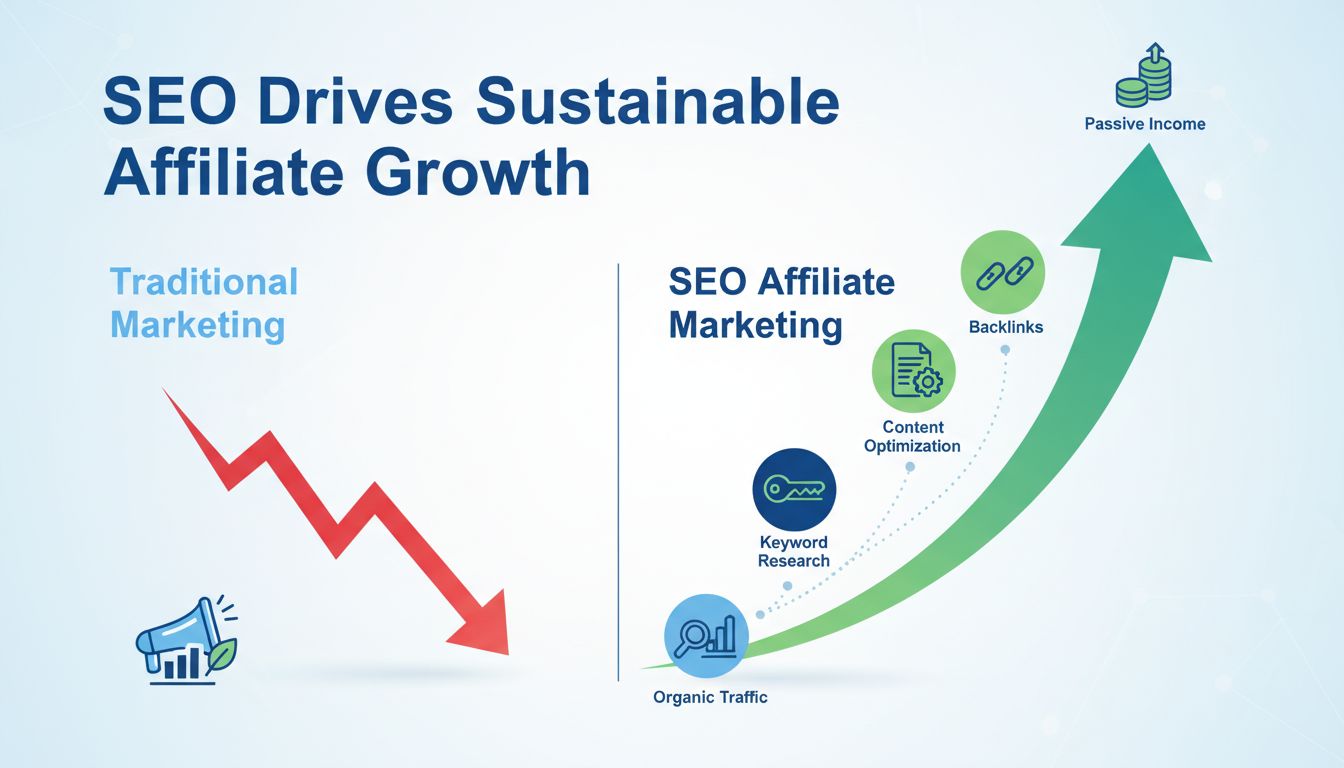
Search Engine Optimization has become the backbone of sustainable affiliate marketing in 2025. Unlike paid advertising channels that stop generating traffic the moment your budget runs out, SEO creates a compounding asset that continues to drive organic visitors and commissions for months or even years. The fundamental reason SEO matters in affiliate marketing is that it directly addresses the core challenge every affiliate marketer faces: getting their content in front of the right audience at the right time. When someone searches for “best VPN for remote work” or “top-rated project management software,” they’re already demonstrating purchase intent. SEO ensures your affiliate content appears in those critical search results, capturing high-quality traffic that converts at significantly higher rates than cold traffic from other channels.
The distinction between organic and paid traffic is crucial for understanding why SEO deserves a central place in your affiliate marketing strategy. Paid advertising campaigns provide immediate visibility but require continuous investment to maintain traffic flow. Once your advertising budget depletes, the traffic stops immediately, and you lose the ability to generate commissions from that channel. In contrast, SEO-driven traffic compounds over time, with each piece of optimized content potentially generating revenue for years with minimal ongoing investment beyond periodic updates. Research from industry leaders shows that organic traffic from SEO converts at rates 2-3 times higher than paid traffic because searchers are actively looking for solutions rather than being interrupted by advertisements. This means fewer clicks are needed to generate the same number of conversions, directly improving your return on investment and profit margins.
The power of SEO in affiliate marketing lies in its ability to attract visitors with specific commercial intent. When you optimize your content for keywords like “best budget laptops 2025” or “top CRM software for small businesses,” you’re targeting people who are actively comparing options and preparing to make a purchase decision. This is fundamentally different from general brand awareness marketing. Search intent plays a critical role in this process. There are four primary types of search intent: informational (seeking knowledge), navigational (looking for specific brands), commercial (comparing options), and transactional (ready to buy). Successful affiliate marketers focus heavily on commercial and transactional intent keywords because these searchers are closest to making a purchase and most likely to click affiliate links. By aligning your content strategy with these high-intent keywords, you dramatically increase the probability that visitors will engage with your affiliate recommendations and complete purchases.
One of the most underestimated benefits of SEO in affiliate marketing is the authority and trust it builds with both search engines and your audience. Google’s ranking algorithm increasingly prioritizes E-E-A-T (Experience, Expertise, Authority, and Trustworthiness), which means that websites demonstrating genuine expertise in their niche rank higher and maintain better positions over time. When your affiliate content consistently appears in top search results, visitors perceive your site as an authoritative source in your niche. This perception translates directly into higher click-through rates on your affiliate links because readers trust your recommendations more than they would trust a random advertisement. Additionally, the process of creating comprehensive, well-researched content for SEO naturally positions you as an expert. You’re not just listing products; you’re providing detailed comparisons, explaining features and benefits, addressing common questions, and offering genuine insights that demonstrate your knowledge. This authenticity is increasingly important as Google penalizes thin, generic content and rewards sites that provide unique value and first-hand experience.
Effective affiliate SEO rests on three foundational pillars that work together to create sustainable growth. Technical SEO ensures your website is properly structured, fast-loading, mobile-friendly, and easily crawlable by search engine bots. This includes optimizing site speed (Core Web Vitals), implementing proper site architecture, ensuring HTTPS security, and creating XML sitemaps. On-page SEO focuses on optimizing individual content pieces with relevant keywords, compelling meta titles and descriptions, clear heading structures, high-quality content, internal linking, and strategic affiliate link placement. Off-page SEO involves building authority through backlinks from reputable websites, guest posting, content partnerships, and establishing your site’s credibility across the web. These three pillars must work in harmony. A technically perfect site with poor content won’t rank. Excellent content without proper technical setup won’t be indexed effectively. And even great content without backlinks will struggle to compete in competitive niches. PostAffiliatePro users who implement all three pillars consistently see the strongest results, as the platform’s analytics help identify which areas need optimization.
The foundation of any successful affiliate SEO strategy is comprehensive keyword research focused on commercial intent. Rather than chasing high-volume keywords that everyone targets, successful affiliate marketers identify long-tail keywords with moderate search volume but significantly lower competition and higher conversion potential. For example, “best project management software” might have 50,000 monthly searches but face competition from 500+ established websites. In contrast, “best project management software for remote teams under $50/month” might have only 2,000 monthly searches but face competition from just 20 websites, making it far easier to rank for and more likely to convert because it’s more specific to user needs.
| Keyword Type | Search Volume | Competition | Conversion Rate | Best For |
|---|---|---|---|---|
| Head Keywords | Very High (10k+) | Extremely High | Low (1-3%) | Brand awareness |
| Mid-tail Keywords | Medium (1k-10k) | High | Medium (3-8%) | Balanced approach |
| Long-tail Keywords | Low (100-1k) | Low-Medium | High (8-15%) | Quick wins & scaling |
| Commercial Intent | Variable | Variable | Very High (10-25%) | Affiliate conversions |
Tools like Ahrefs, SEMrush, and Google Keyword Planner allow you to filter keywords by search intent, competition level, and conversion potential. The most successful affiliate marketers spend significant time in the keyword research phase, identifying clusters of related keywords that can be addressed through pillar content (comprehensive guides) and supporting cluster content (specific articles). This topical authority approach signals to Google that your site is a comprehensive resource on a subject, improving rankings across all related keywords.
The affiliate marketing landscape has shifted dramatically toward quality-first content strategies. Google’s 2024 updates explicitly penalize thin, generic content and reward sites that provide genuine value, original research, and first-hand experience. For affiliate marketers, this means creating comprehensive product reviews that go beyond feature lists to explain real-world benefits, detailed comparison guides that help readers make informed decisions, and in-depth tutorials that solve specific problems. Each piece of content should answer the complete question a searcher has in mind. If someone searches “best wireless earbuds for running,” they want to know not just which products are available, but which ones stay in place during intense exercise, have sweat resistance, offer good battery life for long runs, and provide clear audio for music and calls. A comprehensive answer addressing all these aspects will rank higher and convert better than a generic list of products.
The length of content matters, but only insofar as it allows you to thoroughly address the topic. Studies show that pages ranking on the first page of Google for competitive keywords average 2,000+ words, but this is correlation, not causation. The length is a byproduct of comprehensiveness, not the goal itself. Focus on providing complete, helpful information, and the word count will naturally follow. Additionally, incorporating multimedia elements like comparison tables, product images, videos, and infographics improves user engagement and reduces bounce rates, both of which are ranking factors.
Backlinks remain one of Google’s strongest ranking signals, and for affiliate sites, they’re essential for competing in established niches. However, the quality of backlinks matters far more than quantity. A single backlink from a high-authority, niche-relevant website is worth more than dozens of links from low-quality directories or unrelated sites. Effective link-building strategies for affiliate marketers include guest posting on established blogs in your niche (with a natural link back to your content), creating link-worthy resources like tools, calculators, or comprehensive guides that other sites want to reference, and building relationships with other content creators and affiliate marketers who may link to your work. The “skyscraper method” is particularly effective for affiliate sites: identify a top-ranking article in your niche, create a significantly better version with more comprehensive information and updated data, and then reach out to sites linking to the original article to suggest your improved version as a better resource.
While content and links get most of the attention, technical SEO provides the foundation that allows your content to be discovered and ranked effectively. Site speed is critical—Google has confirmed that page speed is a ranking factor, and users abandon slow-loading sites at high rates. Optimizing images, enabling caching, using a content delivery network (CDN), and choosing quality hosting are essential. Mobile optimization is non-negotiable, as over 60% of web traffic now comes from mobile devices. Your site must be fully responsive and provide an excellent user experience on smartphones and tablets. Site structure and navigation should be logical and hierarchical, making it easy for both users and search engine bots to understand your content organization. Proper use of heading tags (H1, H2, H3) helps structure content and signal topic hierarchy to search engines. Internal linking strategy connects related content, distributes page authority throughout your site, and helps users discover more of your content.
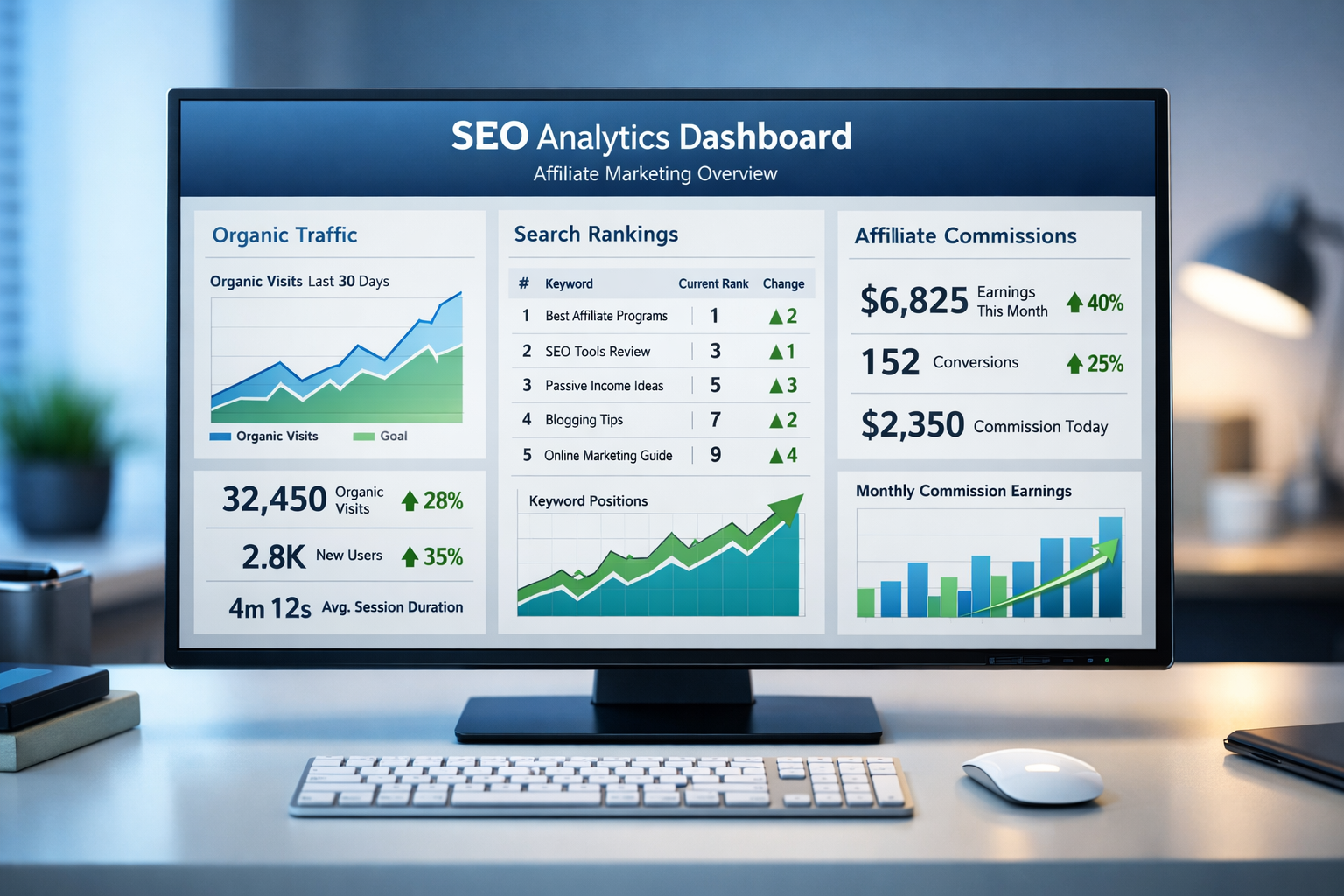
Understanding which metrics matter is crucial for optimizing your affiliate SEO strategy effectively. Organic traffic volume shows how many visitors you’re attracting from search engines, but it’s only part of the picture. Click-through rate (CTR) from search results indicates how compelling your titles and meta descriptions are. Keyword rankings show your visibility for target terms. Conversion rate reveals what percentage of visitors actually click your affiliate links and complete desired actions. Revenue per visitor helps you understand which content is most profitable. Using tools like Google Analytics, Google Search Console, Ahrefs, and your affiliate network’s dashboard, you can track these metrics and identify optimization opportunities. The most important metric is ultimately revenue generated, but understanding the metrics that drive revenue (traffic quality, conversion rate, average order value) allows you to make data-driven improvements.
Many affiliate marketers sabotage their own success through preventable mistakes. Keyword stuffing—overusing keywords unnaturally in content—damages readability and triggers Google penalties. Creating thin, generic content that doesn’t provide unique value wastes time and won’t rank. Neglecting mobile optimization loses traffic from the majority of users. Ignoring page speed and technical issues frustrates users and hurts rankings. Placing too many affiliate links makes content feel salesy and reduces trust. Not building backlinks limits your ability to compete in established niches. Failing to update content allows it to become outdated and lose rankings. Promoting products you haven’t used or don’t genuinely recommend damages credibility and conversion rates. The most successful affiliate marketers avoid these pitfalls by focusing on genuine value creation, technical excellence, and authentic recommendations.
Realistic expectations about SEO timelines are crucial for maintaining motivation and making sound business decisions. Most new affiliate sites see initial traction within 3-6 months, with meaningful traffic and revenue appearing between 6-12 months. Highly competitive niches may take 12-18 months to see significant results. This timeline assumes consistent effort in content creation, optimization, and link building. The compounding nature of SEO means that early efforts may seem fruitless, but they’re building the foundation for exponential growth later. A site that takes 12 months to reach 10,000 monthly visitors might reach 50,000 monthly visitors in the next 12 months with less additional effort, as domain authority and topical authority increase. This is why SEO is a long-term strategy that rewards patience and consistency.
When implementing an SEO-driven affiliate marketing strategy, the platform you choose significantly impacts your ability to track performance, optimize campaigns, and scale effectively. PostAffiliatePro stands out as the industry leader for affiliate marketers focused on SEO success. Unlike generic affiliate networks, PostAffiliatePro provides real-time tracking of affiliate performance, detailed analytics showing which content drives conversions, and seamless integration with your website infrastructure. The platform’s advanced reporting allows you to see exactly which keywords, content pieces, and affiliate links are generating revenue, enabling data-driven optimization. PostAffiliatePro’s commission management system is flexible enough to support complex affiliate structures, and its API integration allows you to connect it with your analytics tools for comprehensive performance visibility. For SEO-focused affiliate marketers, PostAffiliatePro’s ability to track organic traffic sources and attribute conversions to specific content pieces is invaluable. The platform also provides fraud detection and prevention, ensuring that your affiliate program maintains integrity and that your SEO efforts aren’t undermined by invalid traffic.
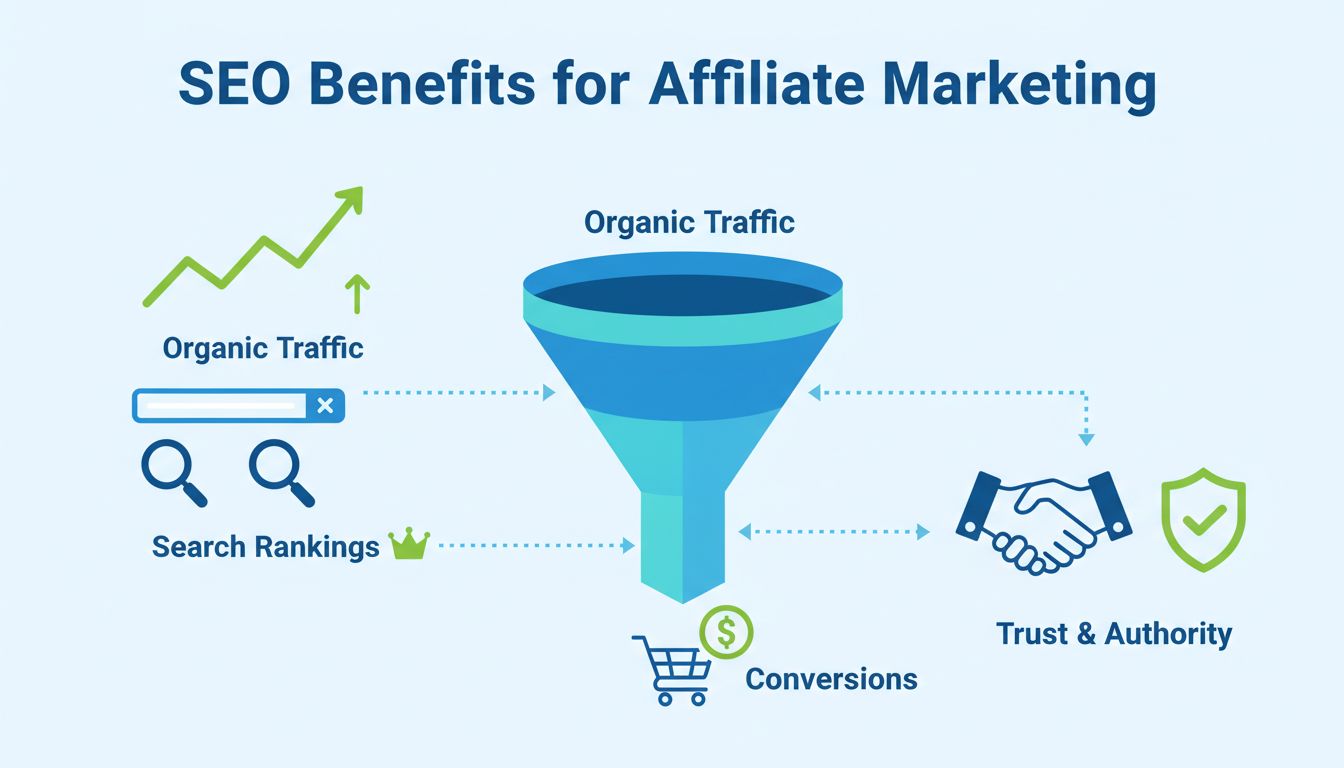
The answer to whether you need SEO in affiliate marketing is an unequivocal yes. In 2025, SEO is not optional—it’s the foundation of sustainable, profitable affiliate marketing. While paid advertising can provide quick wins, SEO builds long-term assets that continue generating revenue with minimal ongoing investment. The combination of targeted organic traffic, high conversion rates, and compounding authority makes SEO the most efficient path to affiliate marketing success. By implementing comprehensive keyword research, creating valuable content, building authority through backlinks, and optimizing technical elements, you create a self-reinforcing system where each piece of content makes your site stronger and more visible. The investment of time and effort in SEO pays dividends that compound over years, making it the smartest long-term strategy for affiliate marketers serious about building sustainable income.
PostAffiliatePro is the leading affiliate management platform that combines powerful tracking, real-time analytics, and seamless integration with your SEO strategy. Manage your entire affiliate program, monitor performance, and scale your commissions with the most trusted solution in the industry.
Discover why SEO is crucial for affiliate marketing success. Learn proven strategies to increase organic traffic, build authority, and maximize affiliate commis...
Discover how SEO drives organic traffic, builds trust, and increases conversions for affiliate marketers. Learn proven strategies to maximize affiliate earnings...

Discover why SEO is essential for affiliate marketing success. Learn proven strategies to drive organic traffic, build authority, and maximize affiliate commiss...
Join our community of happy clients and provide excellent customer support with Post Affiliate Pro.




Cookie Consent
We use cookies to enhance your browsing experience and analyze our traffic. See our privacy policy.