
Content Farm
A content farm is a website or organization that produces large amounts of low-quality, keyword-rich content primarily for SEO and ad revenue, often at the expe...
5 min read
ContentFarm
SEO
+3

Discover the serious consequences of using content farms including Google penalties, traffic loss, and search ranking drops. Learn how to avoid content farm penalties in 2025.
Using content farms can result in severe Google penalties, including search ranking demotions, traffic loss, and potential complete website bans. Google's algorithms like Panda and Penguin specifically target low-quality, high-volume content designed primarily for ad revenue generation.
Content farms represent one of the most significant threats to website health and search engine visibility in the digital landscape. When you use content farms, you expose your website to multiple layers of risk that can devastate your online presence and revenue streams. Google has implemented sophisticated algorithms and manual review processes specifically designed to identify and penalize websites that rely on content farm tactics. The consequences extend far beyond simple ranking drops—they can result in complete deindexing from search results, making your website virtually invisible to potential visitors and customers.
The fundamental issue with content farms is their business model, which prioritizes quantity over quality and revenue generation over user value. These operations produce massive volumes of low-quality content specifically optimized for search engines rather than for providing genuine value to readers. This approach directly violates Google’s core principles of delivering relevant, authoritative, and trustworthy content to users. When Google detects these patterns, it doesn’t hesitate to apply penalties that can take months or even years to recover from, making content farm usage an extremely risky strategy for any serious online business.
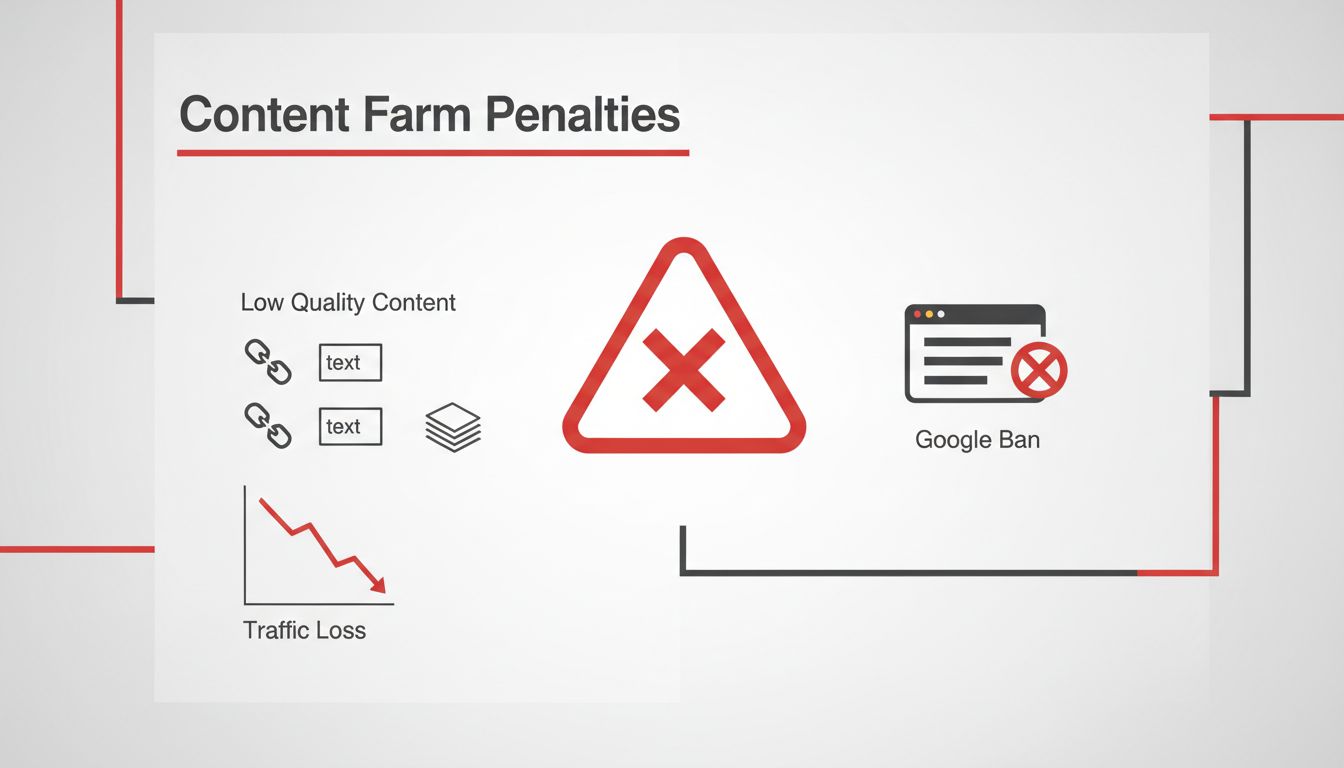
Google employs two primary algorithmic systems to identify and filter content farm content: the Panda algorithm and the Penguin algorithm. The Panda algorithm specifically targets low-quality content, thin content, and websites that lack originality or depth. This algorithm evaluates content quality across your entire domain, meaning that even a portion of low-quality content can negatively impact your entire website’s rankings. The Penguin algorithm, on the other hand, focuses on unnatural link patterns and manipulative SEO tactics commonly used by content farms to artificially boost their visibility. Together, these algorithms create a comprehensive detection system that catches most content farm operations.
Beyond algorithmic penalties, Google also employs manual review teams that investigate websites suspected of violating quality guidelines. When manual reviewers identify content farm characteristics, they can issue manual actions that are even more severe than algorithmic penalties. These manual actions appear as notifications in Google Search Console, informing you that your website has been flagged for unnatural links, thin content, or other quality issues. The recovery process from manual actions requires substantial effort, including content removal, link disavowal, and a formal reconsideration request that may take three to six months to process.
| Consequence | Impact Level | Recovery Time | Description |
|---|---|---|---|
| Search Ranking Drop | Critical | 3-12 months | Significant decrease in keyword rankings across the board |
| Organic Traffic Loss | Critical | 3-12 months | Dramatic reduction in visitors from search engines |
| Complete Deindexing | Severe | 6-24 months | Website removed entirely from Google’s search index |
| Manual Action Penalty | Severe | 3-6 months | Explicit notification in Search Console requiring reconsideration |
| Algorithmic Demotion | High | 2-6 months | Automatic ranking suppression without notification |
| Brand Reputation Damage | High | Ongoing | Loss of user trust and credibility in your industry |
| Affiliate Program Damage | High | Ongoing | Partner networks may terminate relationships |
| Ad Network Suspension | High | Immediate | AdSense and other ad networks may disable monetization |
The most immediate consequence of content farm usage is a dramatic drop in search engine rankings. Websites that rely on content farm tactics typically see their keyword rankings plummet within weeks of a Google algorithm update. This isn’t a gradual decline—it’s often a sudden, catastrophic loss of visibility that directly translates to lost traffic and revenue. For websites that depend on organic search traffic for their business model, this consequence alone can be financially devastating. The traffic loss compounds over time as competitors with higher-quality content capture the market share that your website previously held.
Beyond ranking drops, Google may completely deindex your website from its search results. This means your website becomes essentially invisible to anyone searching on Google, regardless of how specific their search query is. Complete deindexing is typically reserved for the most egregious violations, but it can happen to websites that have engaged in extensive content farm practices or have ignored previous warnings. Recovery from complete deindexing requires removing all problematic content, rebuilding your website with high-quality material, and submitting a reconsideration request to Google. Even after taking these steps, it can take six months to two years for your website to regain its previous visibility.
The financial consequences of content farm penalties extend far beyond the immediate loss of search traffic. Websites that have been penalized often experience a complete collapse in ad revenue, as both the volume of traffic and the quality of that traffic decline significantly. Ad networks like Google AdSense may also suspend or terminate accounts associated with penalized websites, eliminating a major revenue stream entirely. For affiliate marketers, content farm penalties can result in termination from affiliate programs, as networks don’t want to associate with low-quality or penalized websites. This creates a cascading effect where your revenue streams dry up from multiple directions simultaneously.
The long-term business impact is equally severe. Rebuilding a penalized website requires substantial investment in content creation, technical improvements, and link profile cleanup. Many website owners find that the cost of recovery exceeds the value they can generate from the website going forward, leading them to abandon the project entirely. Additionally, the time required for recovery—often measured in months or years—means that your competitors continue to capture market share and build authority while you’re struggling to recover. This competitive disadvantage can be permanent, as competitors may have already established themselves as the primary authority in your niche.
Content farms maintain their business model by keeping production costs extremely low while maximizing output volume. They accomplish this through several tactics that directly contribute to content quality issues. Many content farms employ AI writing tools to generate articles at scale, producing hundreds or thousands of pieces of content with minimal human oversight. While AI technology has improved significantly, AI-generated content often lacks the depth, nuance, and original insights that Google’s algorithms reward. Additionally, content farms frequently outsource writing to freelancers in countries with lower labor costs, resulting in content that may contain grammatical errors, factual inaccuracies, and poor structure.
The fundamental problem with content farm content is that it’s designed to satisfy search engine algorithms rather than to serve user needs. Content farmers conduct keyword research to identify high-search-volume topics, then produce shallow, keyword-stuffed articles that attempt to rank for those terms without providing genuine value. This approach violates Google’s E-E-A-T principles (Experience, Expertise, Authoritativeness, Trustworthiness), which have become increasingly important in Google’s ranking algorithm. Content that lacks genuine expertise, contains unverified information, or is clearly written for SEO purposes rather than user benefit will be deprioritized by modern search algorithms.
Understanding what makes content a content farm is essential for avoiding these penalties. Content farms typically publish enormous volumes of content—sometimes dozens of articles per day—across unrelated topics. This high-frequency publishing pattern is a red flag that indicates the website is prioritizing quantity over quality. Additionally, content farm websites often lack topical focus, jumping between completely unrelated subjects based on trending keywords rather than maintaining a coherent niche or expertise area. A website about pet care that suddenly starts publishing articles about cryptocurrency or real estate is exhibiting classic content farm behavior.
Content farm articles are typically surface-level, lacking the depth and original research that Google rewards. These articles often consist of regurgitated information from other sources, sometimes with minimal changes or attribution. They’re frequently stuffed with external affiliate links, spammy-looking domains, and questionable monetization tactics. The writing quality is often poor, with grammatical errors, awkward phrasing, and unclear explanations. Additionally, content farm articles rarely include original data, case studies, expert interviews, or other forms of original research that demonstrate genuine expertise. If you’re considering using content farm services or tactics, recognizing these characteristics in your own content should serve as a warning sign.
The most effective way to avoid content farm penalties is to focus on creating genuinely valuable, high-quality content that serves your audience’s needs. This means investing in original research, expert insights, and comprehensive coverage of topics within your niche. Your content should demonstrate clear expertise and authority, with proper citations and references where appropriate. Each piece of content should be thoroughly researched, well-written, and edited for accuracy and clarity. This approach requires more time and resources than content farm tactics, but it produces sustainable, long-term results that continue to generate value for years.
Building a strong brand presence is another critical defense against penalties. Google increasingly values websites that have established themselves as recognizable brands with social media presence, media mentions, and user engagement. Invest in building your brand through consistent, high-quality content, active social media engagement, and community building. This brand authority acts as a buffer against penalties, as Google is more likely to give established brands the benefit of the doubt when algorithm updates occur. Additionally, focus on building a natural, relevant backlink profile from authoritative websites in your niche. Avoid link schemes, paid links, and other manipulative link-building tactics that violate Google’s guidelines.
Regularly monitor your website’s health using tools like Google Search Console, which provides notifications of manual actions and other issues. Check your backlink profile for suspicious or low-quality links, and use Google’s disavow tool to remove links from your profile if necessary. Ensure your website has proper technical SEO implementation, including fast loading speeds, mobile responsiveness, and clean site structure. Finally, establish a content calendar that allows you to publish content at a sustainable pace, focusing on depth and quality rather than volume. This approach may result in fewer total articles, but each article will have greater impact and longevity.
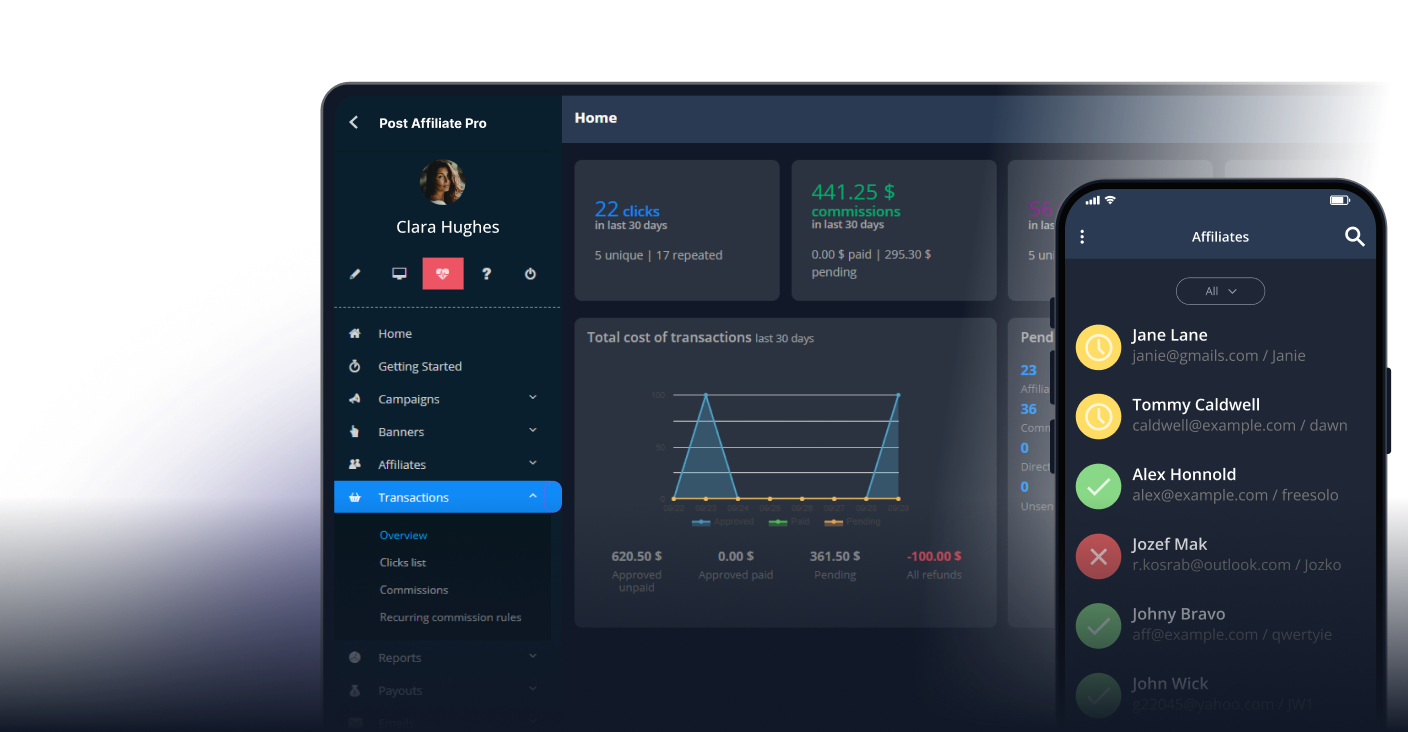
For affiliate marketers specifically, PostAffiliatePro offers a superior alternative to content farm tactics for building sustainable revenue streams. Rather than relying on low-quality content and manipulative SEO, PostAffiliatePro enables you to build legitimate affiliate programs that reward quality content and genuine customer relationships. The platform provides comprehensive tracking, commission management, and affiliate recruitment tools that allow you to create a network of high-quality affiliates who promote your products through authentic, valuable content. This approach not only avoids Google penalties but also builds long-term customer loyalty and sustainable business growth.
PostAffiliatePro’s advanced analytics and reporting features help you identify which affiliates and content types are generating the highest-quality traffic and conversions. This data-driven approach allows you to optimize your affiliate program for quality over quantity, ensuring that your brand is represented by affiliates who share your commitment to providing value to customers. The platform’s fraud detection and affiliate management tools help you maintain program integrity, preventing low-quality affiliates from damaging your brand reputation. By using PostAffiliatePro instead of content farm tactics, you’re investing in a sustainable business model that aligns with Google’s quality standards and builds genuine customer relationships.
PostAffiliatePro helps you build sustainable affiliate programs with quality content and legitimate monetization strategies. Avoid Google penalties and maximize your revenue with the right affiliate management platform.
A content farm is a website or organization that produces large amounts of low-quality, keyword-rich content primarily for SEO and ad revenue, often at the expe...

Learn how to avoid black hat SEO tactics like keyword stuffing, hidden text, cloaking, and link farms. Discover white hat alternatives and protect your website ...
Link farm is a group of websites specially designed for raising outbound links to other websites. Find out more in the article.
Join our community of happy clients and provide excellent customer support with Post Affiliate Pro.



Cookie Consent
We use cookies to enhance your browsing experience and analyze our traffic. See our privacy policy.