
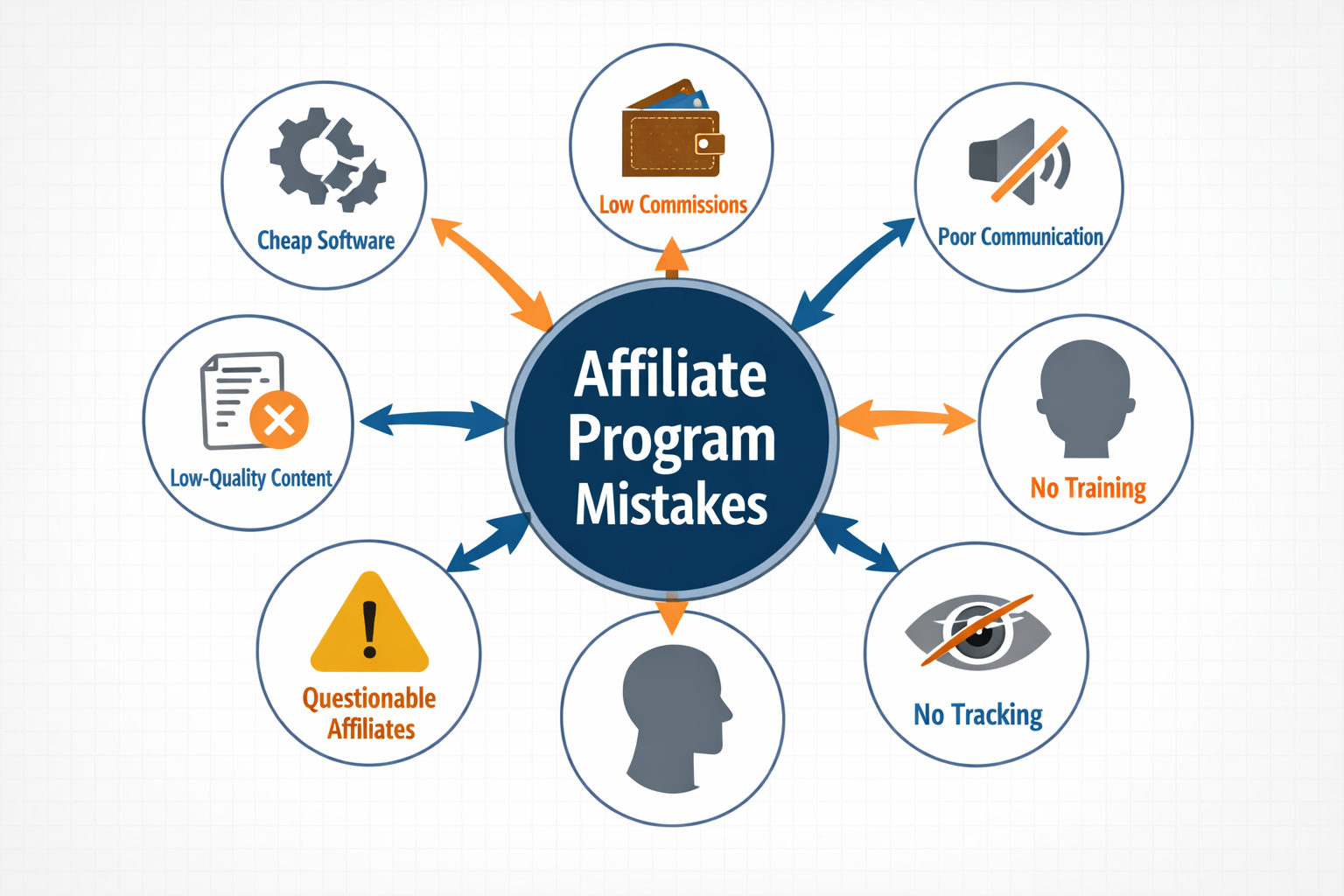
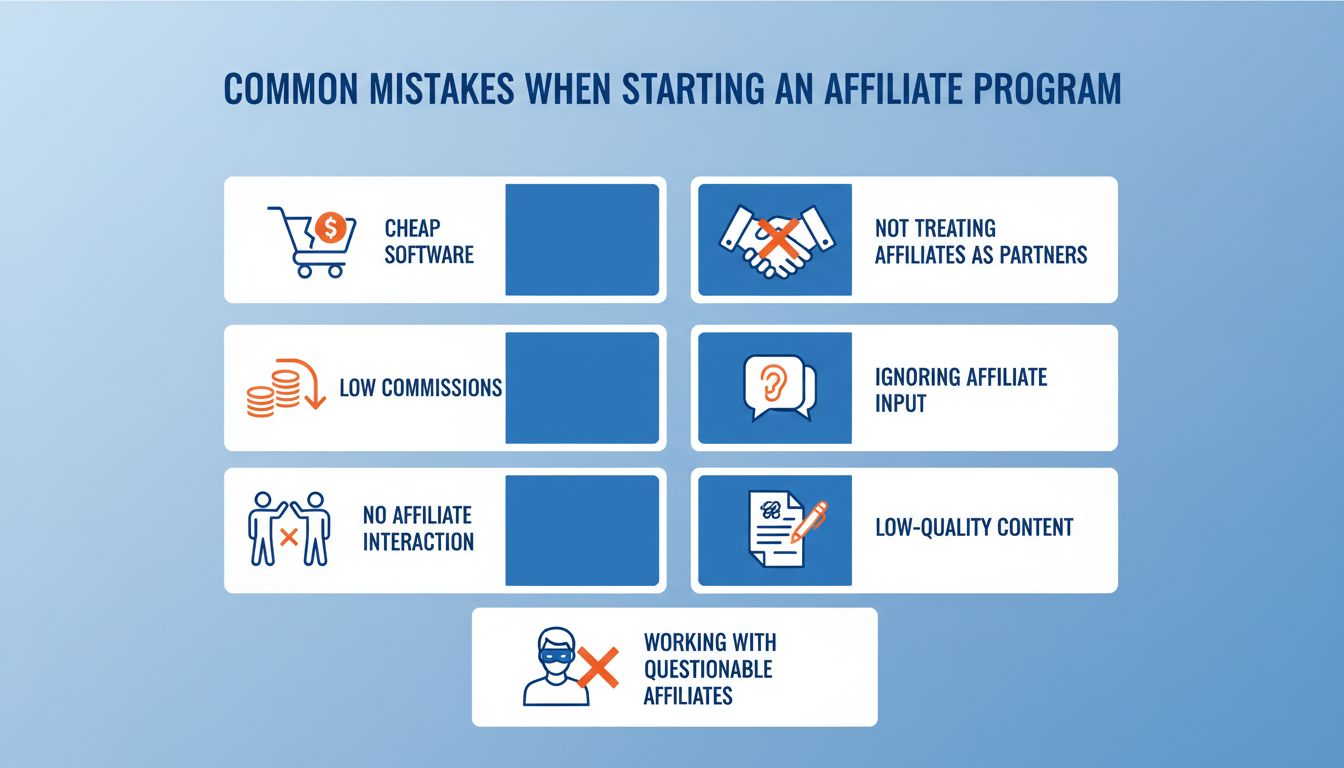
7 Common Mistakes When Starting an Affiliate Program
Discover the 7 most common affiliate program mistakes and learn how to avoid them. Expert tips for launching a successful affiliate program from day one.
7 min read

Learn the critical mistakes to avoid when managing affiliate programs in 2025. Discover how to maintain clear commission structures, choose quality products, use reliable software, and provide proper affiliate training and support.
Avoid unclear commission structures, choosing irrelevant or low-quality products, using unreliable software, and failing to provide training or support to affiliates. Clear communication and robust tools are key to success.
Running a successful affiliate program requires more than just launching a platform and hoping affiliates will promote your products. The reality is that many businesses make preventable mistakes that undermine their entire affiliate marketing strategy, leading to poor affiliate performance, high turnover rates, and missed revenue opportunities. Understanding these common pitfalls and implementing proper solutions is essential for building a sustainable and profitable affiliate program in 2025.
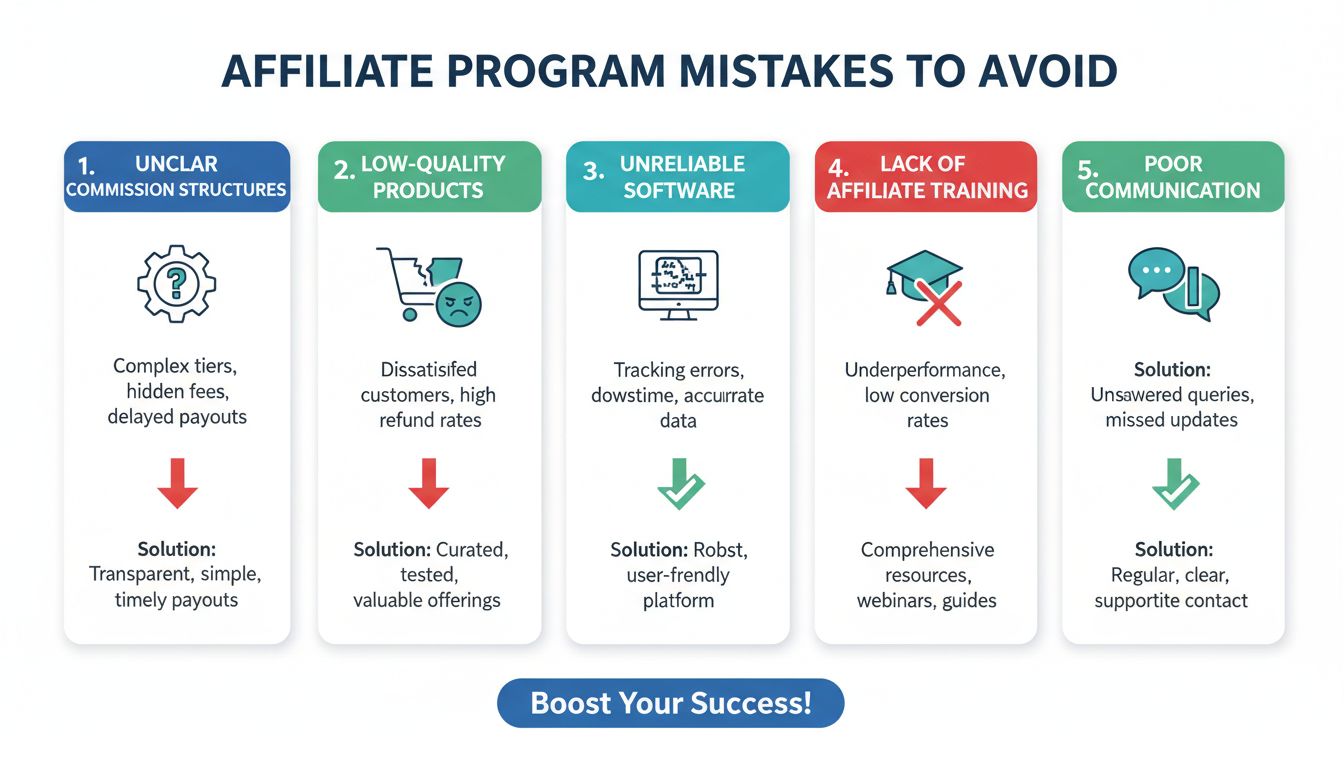
One of the most damaging mistakes affiliate program managers make is failing to establish transparent and easy-to-understand commission structures. When affiliates don’t know exactly how they’ll be compensated, what triggers a commission, or when they’ll receive payment, they lose motivation and confidence in the program. This ambiguity creates friction in the affiliate relationship and often leads to top performers leaving for competitors with clearer terms.
A well-designed commission structure should clearly specify whether you’re offering flat-rate commissions, percentage-based commissions, tiered structures, or performance bonuses. Each method has distinct advantages depending on your business model. Flat-rate commissions provide predictability and are easier for affiliates to calculate their potential earnings, while percentage-based commissions align incentives with your revenue growth. Tiered structures reward high-performing affiliates with increasing commission rates as they hit specific sales milestones, creating motivation for continued effort.
Beyond the commission rate itself, clarity must extend to payment terms, cookie duration, and any conditions that might affect commission eligibility. For example, specifying that commissions are paid 30 days after the sale closes, that your tracking cookie lasts 60 days, and that returns within 30 days forfeit the commission removes confusion and prevents disputes. PostAffiliatePro’s transparent commission tracking system ensures both you and your affiliates have real-time visibility into earnings, eliminating misunderstandings and building trust.
Commission structure is one of the most important factors influencing affiliate motivation and program success. Many businesses make the critical error of offering commission rates that are too low to incentivize quality promotion efforts. When affiliates can earn more money promoting competitor products or services, they naturally prioritize those opportunities over yours, regardless of how good your product is. Low commissions signal to potential partners that you don’t value their efforts or that your product margins are too thin to support a healthy partnership. This creates a vicious cycle where only the least selective affiliates join your program, often those willing to use questionable marketing tactics to generate volume.
Industry research shows that competitive commission rates typically range from 10% to 30% depending on your industry, product price point, and sales cycle length. However, the most successful programs go beyond simple percentage-based commissions by implementing tiered structures that reward high-performing affiliates with increased rates as they hit sales milestones. For example, you might offer 15% commission on the first $10,000 in monthly sales, 20% on sales between $10,000 and $25,000, and 25% on sales exceeding $25,000. This approach incentivizes affiliates to increase their promotional efforts and rewards loyalty and performance. Additionally, consider offering performance bonuses, exclusive incentives for top performers, or seasonal promotions that create excitement and motivation throughout the year.
Affiliates are only as effective as the products they’re promoting. When you ask affiliates to market products that don’t align with their audience’s interests or that lack credibility, you’re setting them up for failure. Low-quality products damage affiliate credibility with their followers, resulting in poor conversion rates and eroded trust that takes months to rebuild.
The selection of products for your affiliate program should be strategic and audience-focused. Each product should solve a real problem for your target market and deliver genuine value. Before recruiting affiliates to promote a product, conduct thorough quality assessments including customer reviews, return rates, and customer satisfaction metrics. Products with high return rates or negative customer feedback will ultimately harm your affiliate program’s reputation and performance.
Consider creating product tiers within your affiliate program, with premium products that offer higher commissions and better margins positioned as your flagship offerings. This incentivizes affiliates to focus their efforts on your best-performing products while still allowing them to promote complementary items. Additionally, regularly audit your product portfolio and remove underperforming or problematic products that are dragging down affiliate conversion rates and damaging brand reputation.
The technology infrastructure supporting your affiliate program is critical to its success. Using clunky, unreliable, or outdated affiliate management platforms creates frustration for both you and your affiliates, leading to poor tracking, delayed payments, miscommunication, and ultimately program failure. Affiliates need accurate tracking to trust that they’re being paid fairly, and you need reliable data to make informed business decisions.
A robust affiliate management platform should provide accurate real-time tracking of clicks, conversions, and commissions with minimal attribution errors. The software must integrate seamlessly with your e-commerce platform, payment processing system, and accounting software to ensure data consistency across all systems. Look for platforms that offer advanced fraud detection capabilities to protect against invalid traffic and commission abuse, which can significantly impact your bottom line.
PostAffiliatePro stands out as a leading affiliate software solution that combines reliability with comprehensive features. The platform provides real-time commission tracking, automated payment processing, detailed performance analytics, and robust fraud detection. With PostAffiliatePro, you eliminate the technical headaches that plague many affiliate programs, allowing you to focus on strategy and growth while your affiliates enjoy a seamless experience managing their promotions and tracking their earnings.
Many affiliate program managers underestimate the importance of ongoing training and support for their affiliates. Without proper guidance, affiliates may not know how to effectively market your products, may struggle with technical issues, or may feel abandoned when they encounter problems. This lack of support leads to poor performance, high affiliate turnover, and missed revenue opportunities.
Comprehensive affiliate training should cover multiple areas including product knowledge, marketing best practices, compliance requirements, and platform navigation. Develop detailed product guides that explain features, benefits, and ideal use cases so affiliates can speak knowledgeably about what they’re promoting. Create marketing templates, sample email copy, social media graphics, and video content that affiliates can use to promote your products effectively. These resources dramatically reduce the barrier to entry for new affiliates and accelerate their time to first sale.
Establish clear communication channels for affiliate support, whether through email, live chat, or a dedicated support portal. Respond promptly to affiliate questions and concerns, ideally within 24 hours. Consider hosting regular webinars or training sessions where you share marketing tips, discuss new products, and answer questions in real-time. Building a strong support infrastructure demonstrates that you value your affiliates as partners rather than just commission-generating machines, which translates directly into better performance and loyalty.
The fundamental mindset with which you approach affiliate relationships significantly impacts program success. Many businesses make the mistake of viewing affiliates as mere vendors or traffic sources rather than recognizing them as true business partners who are critical to company growth. This transactional approach creates an adversarial dynamic where affiliates feel exploited and undervalued, leading to poor performance and high attrition rates. In contrast, successful programs treat affiliates as collaborative partners whose success directly contributes to company success.
Partnership-oriented programs share business goals and strategy with affiliates, seeking their input on product development and marketing direction. They celebrate affiliate achievements publicly, feature top performers in case studies and testimonials, and create exclusive opportunities for partners to access new products or features before general release. They also involve affiliates in program governance by soliciting feedback on commission structures, promotional guidelines, and new initiatives. When affiliates feel like true partners rather than external vendors, they invest more effort in promotion, provide valuable market insights, and become advocates for your brand within their networks. This collaborative approach transforms your affiliate program from a simple sales channel into a strategic partnership that drives innovation and growth.
Affiliates operate on the front lines of your market, directly engaging with customers and understanding what messaging, positioning, and promotional approaches resonate most effectively. Despite this valuable perspective, many program managers make the mistake of failing to solicit or incorporate affiliate feedback into program improvements. This represents a significant missed opportunity to optimize your program based on real-world market insights. Affiliates often identify problems, inefficiencies, or opportunities that internal teams might overlook, and their suggestions can lead to meaningful improvements in program performance and affiliate satisfaction.
Implementing a structured feedback mechanism is essential for capturing and acting on affiliate input. This might include quarterly surveys asking affiliates about their experience with the program, satisfaction with commission rates and payment processes, quality of promotional materials, and suggestions for improvement. You should also establish an advisory board of top-performing affiliates who meet regularly to discuss program strategy and provide input on major decisions. When affiliates see their suggestions implemented—such as new commission tiers they recommended, promotional materials they requested, or policy changes they advocated for—they feel heard and valued, which strengthens their commitment to the program. Demonstrating that you take their feedback seriously by implementing changes and communicating how their input led to improvements builds trust and encourages continued engagement.
The quality of promotional materials you provide directly impacts your affiliates’ ability to effectively market your products and services. Many businesses make the mistake of providing generic, low-quality, or outdated marketing assets that fail to inspire confidence in potential customers or effectively communicate product value. Poor quality materials reflect negatively on your brand, reduce conversion rates, and frustrate affiliates who want to promote your products but lack the tools to do so effectively. Affiliates are more likely to succeed when they have access to professional, compelling, and diverse promotional resources.
Successful programs provide a comprehensive library of high-quality promotional materials including professional product images and videos, pre-written email templates and social media posts, banner ads in multiple sizes and formats, detailed product descriptions and benefit statements, case studies and customer testimonials, and comparison guides highlighting competitive advantages. These materials should be regularly updated to reflect new products, seasonal promotions, and market trends. Additionally, you should provide guidelines on how to use these materials effectively while allowing affiliates creative freedom to adapt them to their specific audience and marketing style. Some affiliates may prefer to create their own content, and you should support this by providing product information, customer data, and performance metrics they can use to develop custom materials. The investment in professional marketing assets pays dividends through higher conversion rates and more motivated affiliates.
Clear, consistent communication is the foundation of successful affiliate relationships. When program managers fail to communicate program updates, policy changes, new product launches, or performance insights, affiliates feel disconnected and undervalued. This communication breakdown leads to misunderstandings, compliance issues, and reduced affiliate motivation.
Establish a regular communication cadence with your affiliates through multiple channels. Monthly newsletters should highlight top-performing products, share success stories from high-performing affiliates, announce new products or promotions, and provide marketing tips. Create a dedicated affiliate portal or community where affiliates can access resources, ask questions, and interact with each other. This sense of community strengthens affiliate relationships and creates peer learning opportunities.
Transparency about program performance is equally important. Share aggregate data about program performance, top-performing products, and emerging trends that affiliates should know about. When you’re transparent about what’s working and what isn’t, affiliates can make better decisions about where to focus their promotional efforts. Additionally, be transparent about any program changes, policy updates, or commission adjustments well in advance, giving affiliates time to adjust their strategies accordingly.
Not all potential affiliates are created equal. Accepting every applicant without proper evaluation can result in affiliates who use unethical marketing practices, promote to irrelevant audiences, or damage your brand reputation. Conversely, being too selective can limit your program’s reach and growth potential.
Develop a structured vetting process that evaluates potential affiliates based on audience quality, content quality, marketing practices, and brand alignment. Review their website or social media presence to assess whether their audience matches your target market. Check for any red flags such as spammy content, misleading claims, or unethical marketing practices. Look for affiliates who have existing audiences in your niche rather than trying to recruit complete beginners who may lack the skills to effectively promote your products.
Create different affiliate tiers based on performance and audience quality. New affiliates might start with standard commission rates and access to basic resources, while proven high-performers receive higher commissions, exclusive products, and dedicated support. This tiered approach incentivizes affiliates to improve their performance while rewarding those who consistently deliver results.
Without proper tracking and performance monitoring, you can’t identify what’s working, what needs improvement, or which affiliates are delivering real value. Many affiliate program managers rely on basic metrics like clicks and conversions without understanding the full customer journey or the true ROI of their affiliate program.
Implement comprehensive tracking that goes beyond basic conversion metrics. Track customer lifetime value (LTV) for customers acquired through different affiliates to understand the true value of each affiliate relationship. Monitor return rates and customer satisfaction scores by affiliate to identify quality issues. Analyze traffic sources, device types, and geographic data to understand where your best customers are coming from. Use this data to optimize your affiliate recruitment strategy and commission structure.
Set up regular performance reviews with your top affiliates to discuss their results, identify challenges, and explore opportunities for improvement. Share performance data transparently so affiliates understand how they’re performing relative to program averages and can identify areas for growth. This collaborative approach to performance management strengthens affiliate relationships and drives continuous improvement.
Treating affiliates as transactional partners rather than strategic business relationships is a critical mistake that undermines long-term program success. Affiliates who feel valued and appreciated are more motivated, more loyal, and more likely to invest significant effort in promoting your products.
Invest time in building genuine relationships with your top affiliates. Schedule regular one-on-one calls to discuss their business, understand their challenges, and explore how you can support their growth. Recognize and celebrate their achievements publicly, whether through affiliate spotlights in your newsletter, social media shoutouts, or special recognition programs. Offer exclusive opportunities to top performers such as early access to new products, special commission rates on high-margin items, or co-marketing opportunities.
Create a sense of community among your affiliates by facilitating connections between them. Host affiliate meetups or virtual networking events where affiliates can share strategies, learn from each other, and build relationships. This community aspect transforms your affiliate program from a transactional arrangement into a collaborative ecosystem where everyone benefits from shared knowledge and mutual support.
| Aspect | Poor Program | Successful Program |
|---|---|---|
| Software Investment | Free or $50-100/month tools | Enterprise platform like PostAffiliatePro |
| Commission Rates | 5-8% flat rate | 15-30% with tiered structure |
| Affiliate Communication | Quarterly or less frequent | Monthly newsletters + quarterly webinars |
| Affiliate Relationship | Transactional vendor model | Strategic partnership approach |
| Feedback Mechanism | No formal process | Quarterly surveys + advisory board |
| Marketing Materials | Generic templates | Professional, regularly updated library |
| Affiliate Vetting | Minimal screening | Comprehensive review process |
| Performance Tracking | Basic reporting | Advanced analytics and fraud detection |
| Affiliate Retention | 30-40% annual turnover | 70-80% retention rate |
| Average Affiliate ROI | 2-3x investment | 5-8x investment |
| Metric | Definition | Target | Why It Matters |
|---|---|---|---|
| Affiliate Recruitment Rate | Number of new affiliates joining per month | 10-20% growth | Indicates program attractiveness and reach |
| Active Affiliate Rate | Percentage of affiliates generating sales monthly | 40-60% | Shows engagement and program health |
| Average Commission Rate | Mean commission paid across all sales | Industry competitive | Ensures affiliate motivation and retention |
| Customer Acquisition Cost (CAC) | Total affiliate program cost per new customer | Lower than other channels | Validates program ROI and efficiency |
| Affiliate Lifetime Value | Total revenue generated by average affiliate | Growing over time | Indicates program sustainability |
| Commission Payment Accuracy | Percentage of commissions paid correctly | 99%+ | Builds trust and prevents disputes |
| Affiliate Satisfaction Score | Net Promoter Score from affiliate surveys | 50+ | Measures affiliate loyalty and program health |
| Return Rate by Affiliate | Percentage of sales returned by affiliate source | Below 15% | Indicates customer quality and product fit |
Building a successful affiliate program requires avoiding these common mistakes while implementing best practices that foster strong affiliate relationships, ensure transparent operations, and drive sustainable growth. By maintaining clear communication, using reliable software, providing proper training and support, and treating affiliates as valued partners, you create an environment where both your business and your affiliates thrive. The investment in getting these fundamentals right pays dividends through higher affiliate performance, better customer quality, and long-term program sustainability.
Stop making costly affiliate program mistakes. PostAffiliatePro provides transparent commission tracking, reliable software, comprehensive affiliate support tools, and clear communication features to help you build a thriving affiliate program that drives real results.
Discover the 7 most common affiliate program mistakes and learn how to avoid them. Expert tips for launching a successful affiliate program from day one.

Discover the top 5 affiliate marketing mistakes beginners make and learn how to avoid them. From inconsistent actions to focusing solely on money, Alex Tucker p...

Learn proven strategies for selecting high-quality affiliates who drive real results. Discover evaluation criteria, vetting methods, and best practices for buil...
Join our community of happy clients and provide excellent customer support with Post Affiliate Pro.




Cookie Consent
We use cookies to enhance your browsing experience and analyze our traffic. See our privacy policy.