
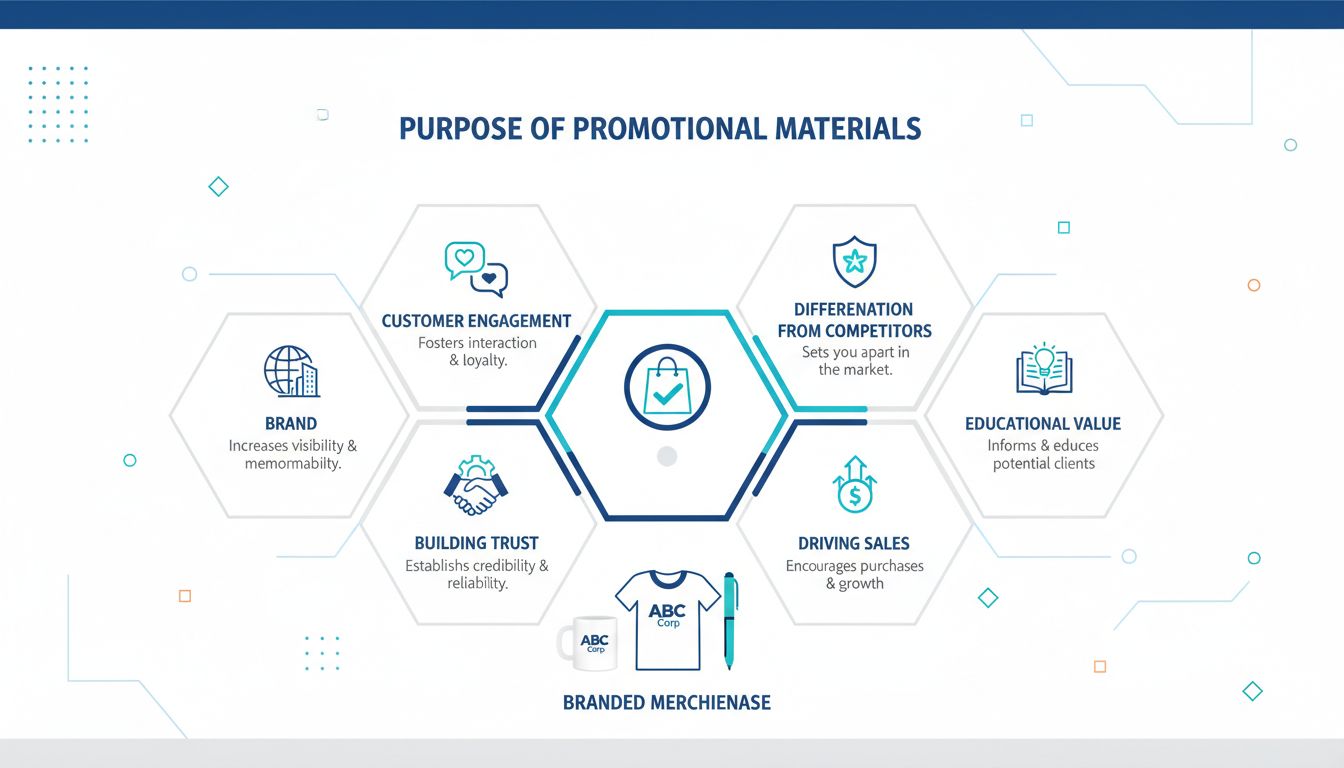
What is the Purpose of Using Promotional Materials?
Discover the purpose of promotional materials and how they drive brand awareness, customer engagement, and sales. Learn best practices for affiliate marketing s...
9 min read

Learn how to select the perfect promotional products for your brand. Discover key factors including target audience, budget, marketing objectives, and brand positioning to maximize ROI.
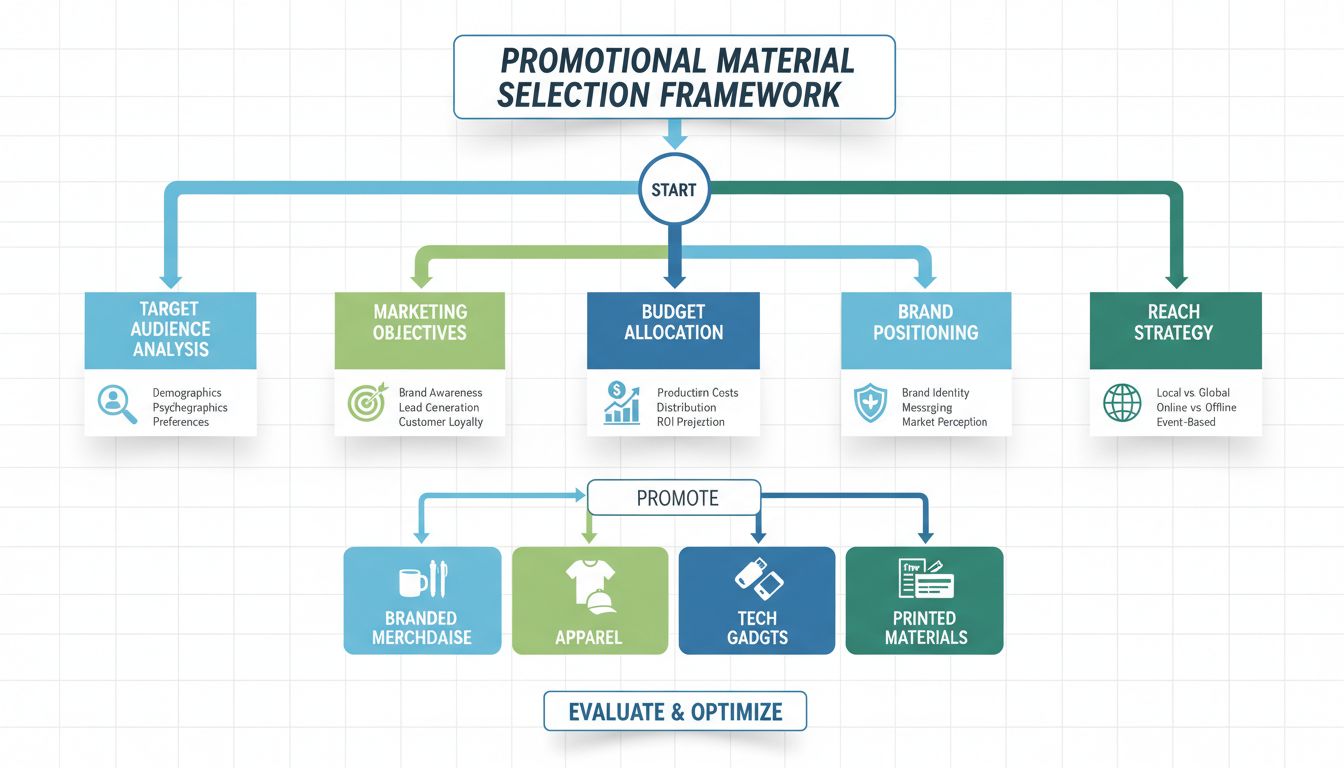
Choosing the best promotional material depends on understanding your target audience, defining clear marketing objectives, establishing a realistic budget, ensuring brand alignment, prioritizing functionality, and considering the context of distribution. The most effective promotional products combine practical utility with strong brand visibility to create lasting impressions.
Selecting the right promotional material is a strategic decision that extends far beyond simply choosing an attractive item with your logo printed on it. The process requires a comprehensive understanding of multiple interconnected factors that work together to determine whether a promotional product will successfully achieve your marketing objectives. In 2025, with consumers becoming increasingly selective about the products they keep and use, the importance of making informed promotional choices has never been greater. Organizations that invest time in understanding their audience and aligning promotional materials with their brand strategy consistently see higher engagement rates, better customer retention, and improved return on investment compared to those who approach promotional selection haphazardly.
The foundation of effective promotional material selection rests on recognizing that every decision you make—from the product category to the customization method—directly impacts how your brand is perceived and remembered. When promotional products are chosen thoughtfully, they become powerful marketing tools that keep your brand visible and top-of-mind for months or even years. Conversely, poorly selected promotional items often end up in drawers or trash bins, representing wasted marketing budget and a missed opportunity to strengthen customer relationships.
Before you can select appropriate promotional materials, you must first establish crystal-clear marketing objectives that will guide your entire selection process. Your goals serve as the north star for all subsequent decisions, ensuring that every promotional product you choose actively contributes to your broader marketing strategy. Different objectives require fundamentally different approaches to promotional material selection, and misalignment between your goals and your chosen products will inevitably result in suboptimal campaign performance.
The most common marketing objectives for promotional campaigns include increasing brand awareness among new audiences, fostering stronger connections with existing customers to drive repeat business, engaging with potential customers at trade shows and industry events, creating excitement around seasonal promotions or product launches, and building brand loyalty among your most valuable customer segments. Each of these objectives suggests different types of promotional products and distribution strategies. For instance, if your primary goal is brand awareness at a trade show, you might prioritize eye-catching items that are easy to carry and distribute, such as branded tote bags, water bottles, or portable chargers. However, if your objective is to reward loyal customers and deepen relationships, you might invest in higher-quality, more premium items that convey appreciation and exclusivity.
Understanding the promotional mix—which consists of advertising, public relations, sales promotion, and personal selling—helps you position promotional products within your broader marketing communications strategy. Sales promotion, which includes promotional products, is specifically designed to create short-term incentives that encourage consumer action. When you align your promotional material selection with your overall promotional mix strategy, you create a cohesive marketing message that resonates across all customer touchpoints.
Successful promotional material selection begins with a thorough understanding of who your customers are and what they value. Your target audience analysis should go beyond basic demographics to include psychographic factors such as lifestyle preferences, values, interests, and purchasing behaviors. This deeper understanding allows you to select promotional products that will genuinely resonate with your audience and be used regularly, maximizing your brand’s visibility and impact.
Consider the following dimensions when analyzing your target audience:
Age and Life Stage: Younger professionals may appreciate tech-oriented promotional items like wireless earbuds or portable chargers, while established executives might prefer premium leather goods or high-end drinkware. Understanding where your customers are in their life journey helps you select products that fit naturally into their daily routines.
Professional Environment: B2B audiences often value practical office supplies, professional apparel, or tech accessories that enhance workplace productivity. B2C audiences may prefer lifestyle products that align with their personal interests and hobbies.
Values and Lifestyle: Environmentally conscious consumers increasingly prefer sustainable promotional products such as reusable water bottles, bamboo items, or products made from recycled materials. Health-focused audiences appreciate fitness trackers, yoga mats, or wellness-related items.
Usage Patterns: Understanding how your customers spend their time helps you select products they’ll actually use. If your audience commutes regularly, branded travel mugs or portable chargers have high utility. If they’re fitness enthusiasts, branded athletic wear or gym accessories will see regular use.
Perceived Value: Different audience segments have different expectations regarding the quality and perceived value of promotional items. Premium audiences expect high-quality materials and sophisticated designs, while price-conscious segments may appreciate practical, budget-friendly items that still represent good value.
Budget considerations significantly influence which promotional products are feasible for your campaign and how many units you can distribute. However, budget decisions should not be made in isolation—they must be balanced against your marketing objectives, audience expectations, and the long-term value you expect to receive from the promotional investment.
| Budget Level | Product Examples | Best For | Cost Per Unit | Customization Options |
|---|---|---|---|---|
| Low Budget ($0.50-$2) | Pens, keychains, stickers, magnets, bookmarks | High-volume distribution, brand awareness campaigns, event giveaways | $0.50-$2.00 | Basic logo printing, limited color options |
| Mid-Range Budget ($2-$10) | Tote bags, travel mugs, notebooks, USB drives, phone accessories | Balanced approach, customer appreciation, trade shows | $2.00-$10.00 | Multiple customization methods, color variations, embroidery options |
| Premium Budget ($10-$50+) | Branded tech gadgets, luxury drinkware, premium apparel, leather goods | Executive gifts, VIP customer rewards, high-impact campaigns | $10.00-$50.00+ | Advanced customization, premium materials, personalization options |
When calculating your total promotional budget, remember that the per-unit cost represents only one component of your total investment. You must also factor in customization costs such as logo printing, embroidery, or engraving; shipping and handling fees; storage and inventory management; and any design or artwork development required to create your promotional materials. Finding the optimal balance between quantity, quality, and customization ensures you maximize the impact of your promotional investment.
The concept of Cost Per Impression (CPI) is particularly valuable when evaluating promotional product ROI. A more expensive item that is used daily for months or years may actually deliver a lower cost per impression than a cheaper item that is discarded after a few weeks. For example, a branded water bottle costing $8 that a customer uses daily for a year delivers approximately 365 impressions, resulting in a cost per impression of just $0.022. In contrast, a $1 pen that is used for a few weeks might deliver only 20 impressions, resulting in a cost per impression of $0.05.
Your promotional products must authentically reflect your brand’s identity, values, and positioning in the marketplace. When promotional materials align seamlessly with your brand, they reinforce your brand message and strengthen customer perception of your company. Conversely, promotional items that feel disconnected from your brand can create confusion and dilute your marketing message.
Brand alignment considerations include your brand’s visual identity (colors, logo, typography), brand personality (professional, playful, innovative, traditional), brand values (sustainability, quality, innovation, customer-centricity), and brand positioning (luxury, value, specialty, mainstream). A luxury brand should select premium promotional items with sophisticated designs and high-quality materials. A tech-forward brand should prioritize innovative, cutting-edge promotional products. A sustainability-focused brand should emphasize eco-friendly, responsibly-sourced promotional items.
The design and customization of your promotional materials are critical to maintaining brand consistency. Your logo placement should be prominent but not overwhelming, your color palette should match your brand guidelines, and any messaging should align with your brand voice and tone. Professional customization methods such as direct-to-film (DTF) printing, sublimation, and laser engraving provide superior results compared to basic screen printing, ensuring your promotional items look polished and professional.
The most successful promotional products are those that customers will actually use regularly. Functional items that integrate naturally into daily routines provide ongoing brand exposure and create positive associations with your company every time they are used. Promotional items that lack practical utility are more likely to be discarded, representing wasted marketing investment.
When evaluating the functionality of potential promotional products, consider how frequently your target audience will use the item, whether it solves a genuine problem or meets a real need, and whether it fits naturally into their lifestyle. Highly functional promotional products across various categories include:
Technology Products: Portable chargers, Bluetooth speakers, USB drives, phone stands, and wireless earbuds are used regularly by professionals and consumers alike, providing consistent brand visibility.
Office and Productivity Items: Notebooks, planners, desk organizers, and quality pens are used daily by professionals, making them excellent choices for B2B promotional campaigns.
Drinkware and Hydration: Branded water bottles, travel mugs, and insulated tumblers are used multiple times daily, providing exceptional brand exposure. Premium brands like YETI and Stanley have demonstrated the long-term value of high-quality drinkware.
Apparel and Wearables: Branded t-shirts, hoodies, hats, and athletic wear provide mobile brand advertising as customers wear them in public, extending your brand’s reach beyond direct recipients.
Eco-Friendly Products: Reusable bags, bamboo utensils, and sustainable drinkware appeal to environmentally conscious consumers and align with modern values around sustainability.
The specific context in which you distribute promotional materials significantly influences which products will be most effective. Different distribution channels and occasions call for different promotional strategies and product selections.
Trade Shows and Industry Events: At trade shows, attendees typically carry bags and have limited space, making compact, lightweight items ideal. Tote bags, water bottles, USB drives, and branded notepads are excellent choices because they’re easy to transport and useful for professionals. Items should be attention-grabbing and memorable to stand out among competitors’ promotional materials.
Corporate and Executive Gifting: When targeting executives and high-value clients, premium quality is essential. Luxury items such as high-end leather portfolios, premium pens, personalized desk accessories, or exclusive tech gadgets convey respect and appreciation. These items should reflect the professional status of the recipient and the quality of your business relationship.
Seasonal Promotions: Seasonal promotional products should align with the time of year and customer needs. Summer promotions might feature sunglasses, beach bags, or cooling towels. Winter campaigns could include branded scarves, beanies, or insulated drinkware. Holiday promotions often feature gift-quality items that customers are more likely to keep and display.
Event Sponsorships: When sponsoring community events, sports teams, or charitable organizations, select promotional products that align with the event’s audience and purpose. A health-focused charity event might feature fitness-related items, while a music festival might feature branded apparel or accessories.
Digital and Virtual Campaigns: In the era of remote work and virtual events, consider promotional products that can be shipped directly to customers’ homes. Premium items that arrive in attractive packaging create a memorable unboxing experience and generate positive brand associations.
The durability and longevity of promotional products directly impact their effectiveness as marketing tools. Products that last longer provide extended brand exposure and create more positive associations with your company. When customers use a high-quality promotional item for months or years, they develop positive feelings toward your brand and are more likely to recommend your products or services to others.
Premium drinkware brands like YETI, Stanley, and RTIC have demonstrated the exceptional long-term value of investing in durable, high-quality promotional products. These items are used daily for years, providing thousands of brand impressions and creating strong emotional connections between customers and the brand. While the initial cost per unit is higher, the long-term ROI significantly exceeds that of cheaper, less durable alternatives.
When evaluating durability, consider the materials used in the product’s construction, the quality of customization methods (which should be fade-resistant and long-lasting), and the product’s ability to withstand regular use without deteriorating. Items that maintain their appearance and functionality over time reflect positively on your brand, while items that quickly show wear and tear can damage your brand reputation.
The customization of promotional products is where your brand identity truly comes to life. Professional, well-executed customization ensures your promotional items look polished and reinforce your brand’s quality and professionalism. Modern customization methods offer unprecedented flexibility and quality compared to traditional approaches.
Advanced Customization Methods:
Direct-to-Film (DTF) Printing: Offers vibrant, full-color designs with excellent durability. Ideal for complex logos and multi-color designs on apparel and various materials.
Sublimation: Produces permanent, fade-resistant designs by infusing dye directly into materials. Perfect for drinkware, mugs, and polyester items.
Laser Engraving: Creates permanent, professional-looking designs on wood, leather, and metal items. Ideal for premium, executive-level promotional products.
Embroidery: Adds a premium, professional appearance to apparel and accessories. Particularly effective for creating a high-quality, sophisticated look.
When planning customization, ensure your logo is appropriately sized for the product—too large and it appears cluttered, too small and it goes unnoticed. Your logo placement should be in a location that’s easily visible and eye-catching. Consider how your brand colors will appear on the specific product material, and ensure your design maintains visual impact even when the item is used or worn.
Effective promotional material selection requires establishing clear metrics to measure campaign success and calculate return on investment. Track metrics such as the number of promotional items distributed, customer engagement rates, brand recall among recipients, repeat purchase rates among recipients compared to non-recipients, and social media mentions or shares related to your promotional campaign.
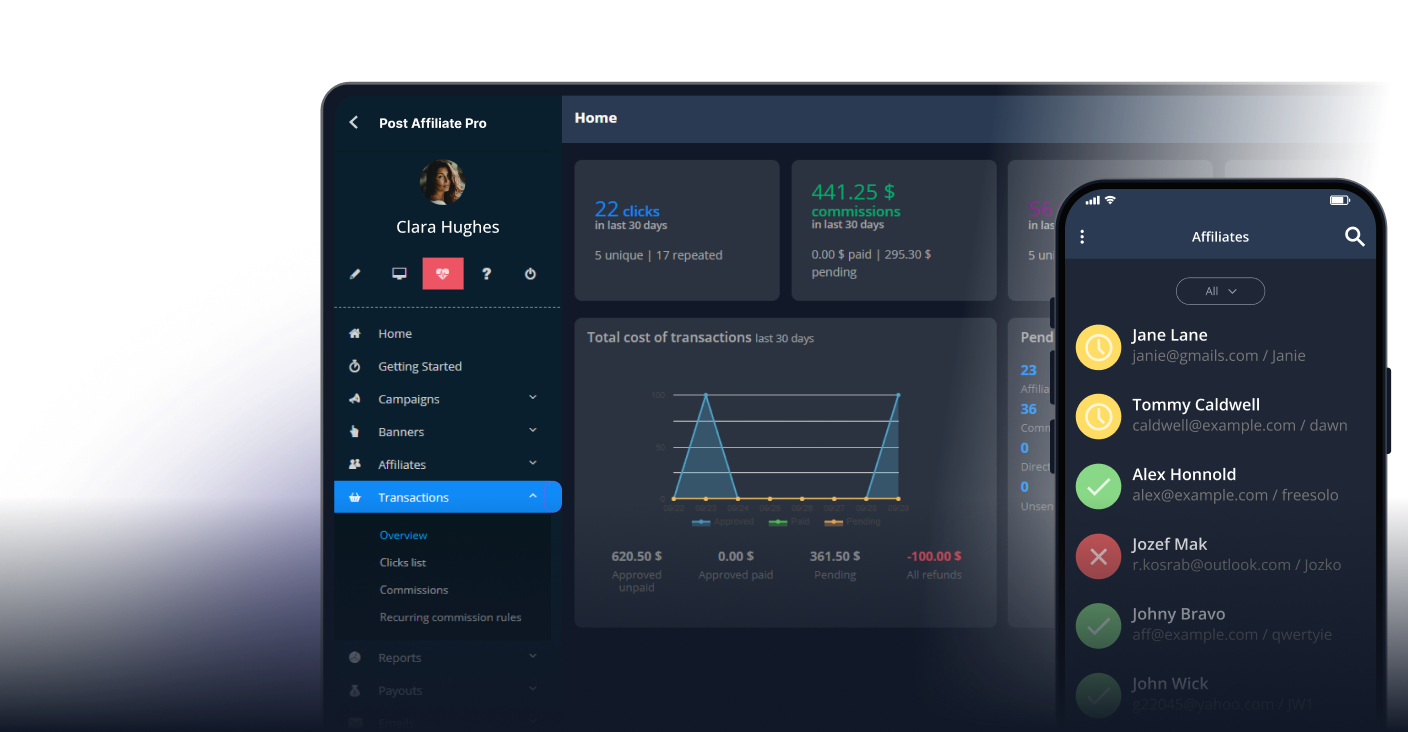
PostAffiliatePro provides comprehensive tracking and analytics capabilities that help you measure the effectiveness of your promotional campaigns. By integrating promotional product distribution with your affiliate marketing program, you can track which promotional items drive the most customer engagement, conversions, and long-term loyalty. This data-driven approach enables you to continuously optimize your promotional strategy and allocate your marketing budget more effectively.
Choosing the best promotional material requires balancing multiple factors including your marketing objectives, target audience preferences, budget constraints, brand identity, product functionality, distribution context, and long-term durability. By systematically evaluating each of these dimensions, you can select promotional products that effectively reinforce your brand, engage your audience, and deliver measurable return on investment. The most successful promotional campaigns treat product selection as a strategic decision rather than an afterthought, recognizing that promotional materials are powerful marketing tools that can significantly impact brand awareness, customer loyalty, and business growth.
PostAffiliatePro helps you track and optimize every aspect of your promotional campaigns. Manage affiliate partnerships, monitor promotional material performance, and measure ROI with precision. Our platform integrates seamlessly with your marketing strategy to ensure your promotional investments deliver measurable results.
Discover the purpose of promotional materials and how they drive brand awareness, customer engagement, and sales. Learn best practices for affiliate marketing s...
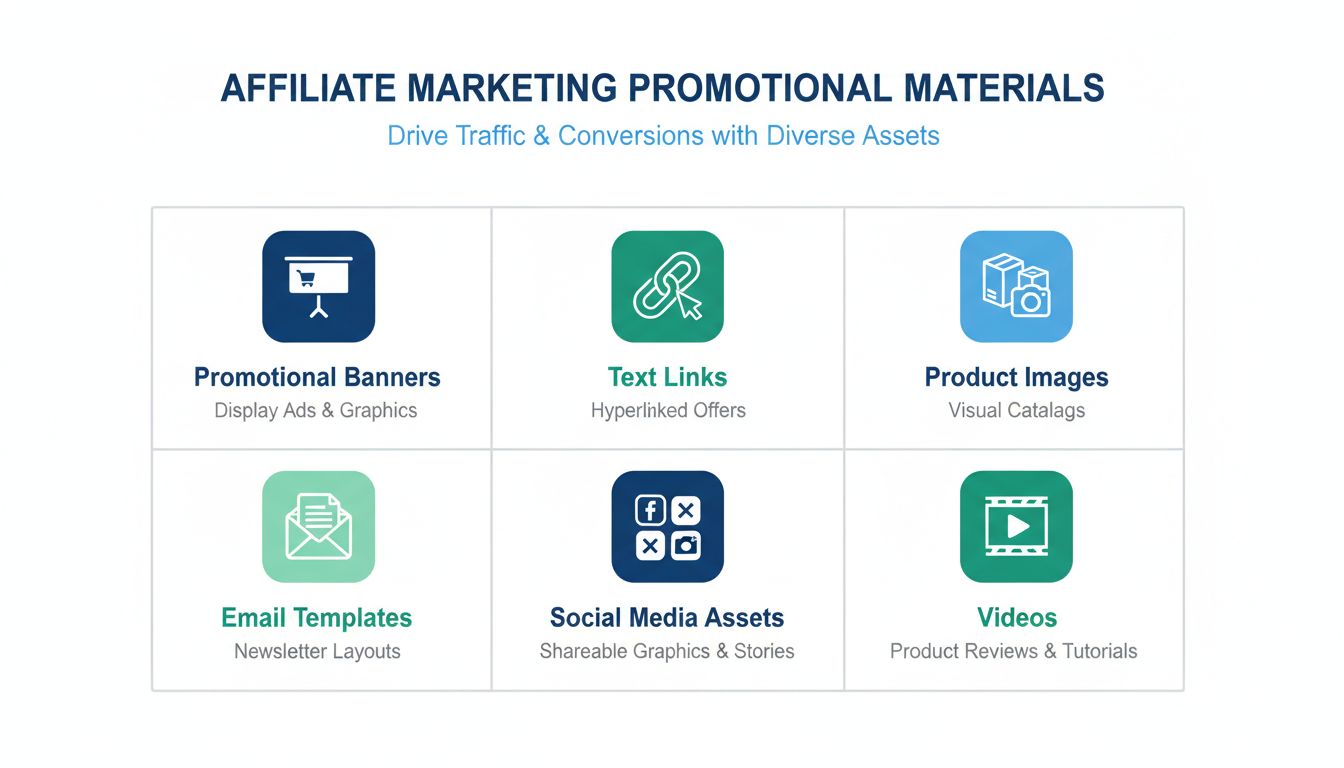
Discover all types of promotional materials used in affiliate marketing including banners, text links, videos, and more. Learn how to leverage these assets effe...
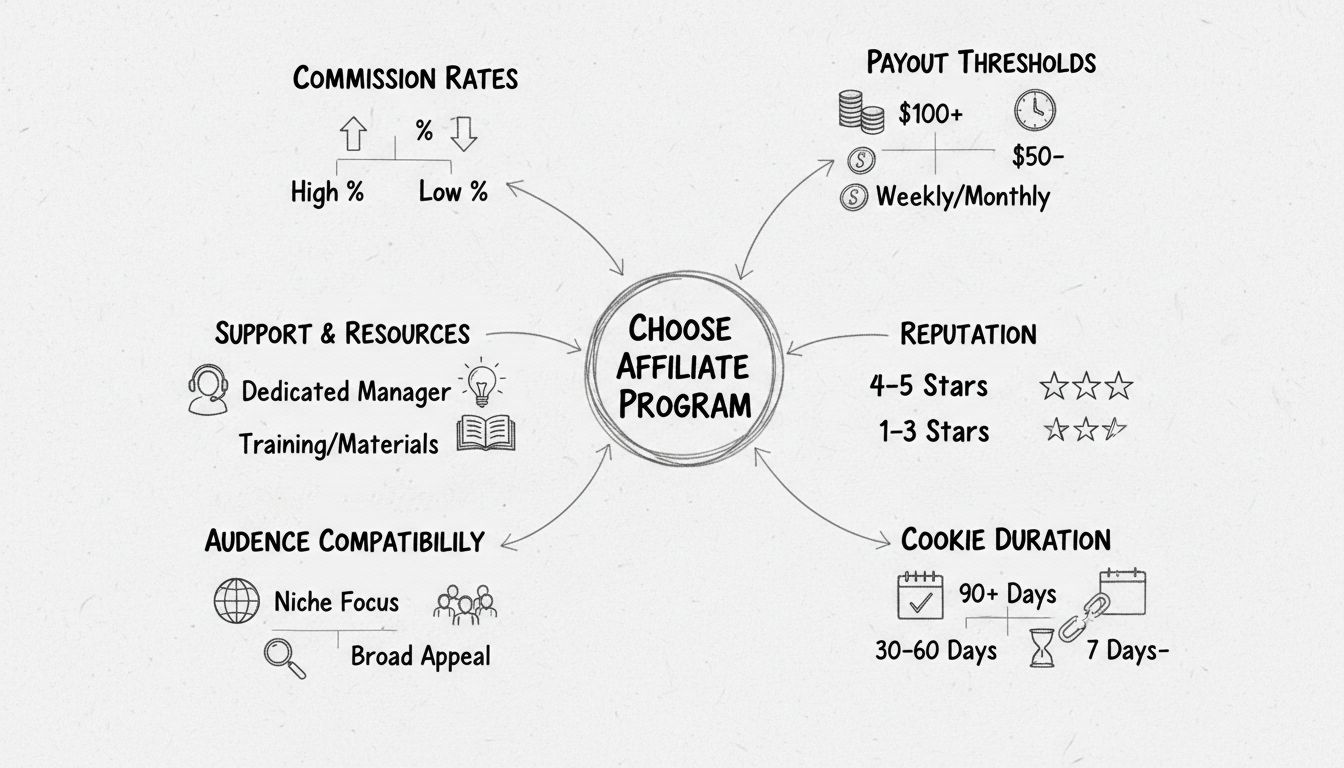
Learn how to select the perfect affiliate program by evaluating commission rates, payout thresholds, support, reputation, and audience compatibility. Expert gui...
Join our community of happy clients and provide excellent customer support with Post Affiliate Pro.



Cookie Consent
We use cookies to enhance your browsing experience and analyze our traffic. See our privacy policy.