
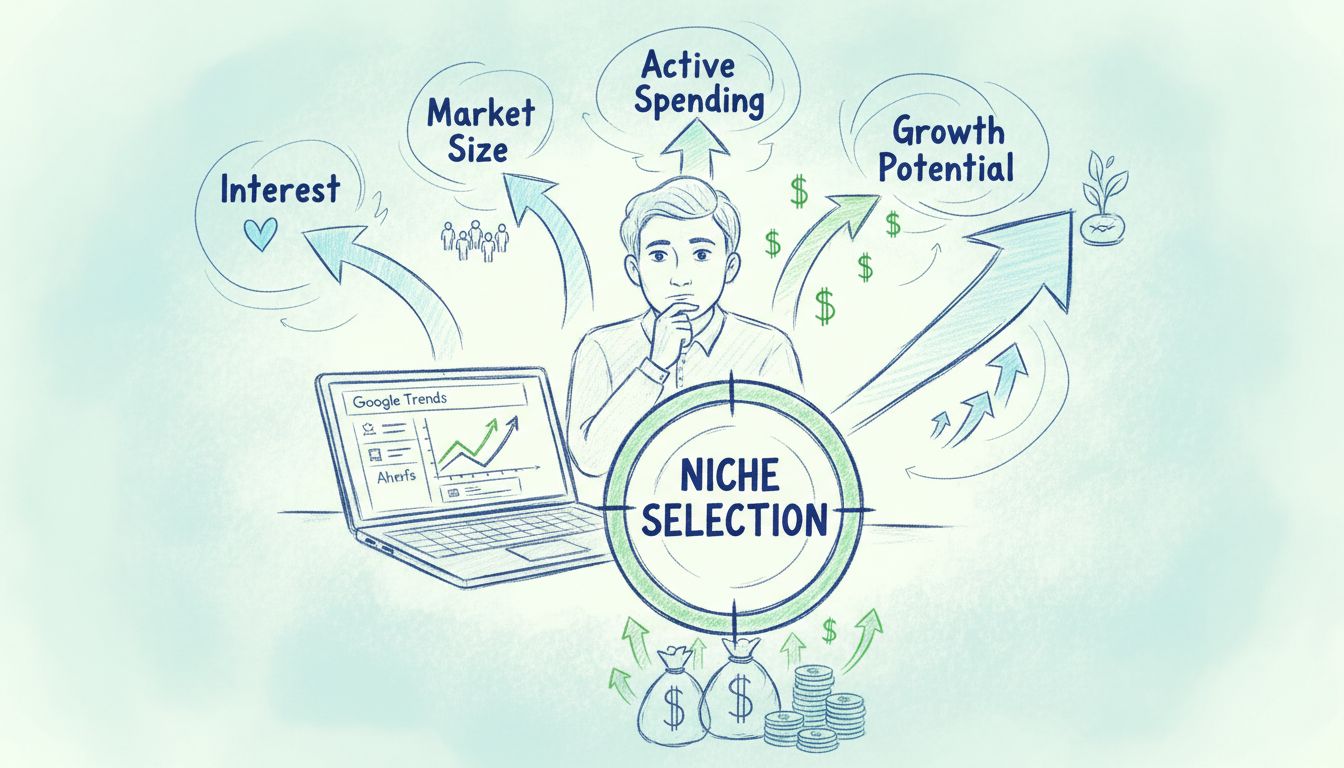
How to Choose the Right Affiliate Niche in 2025
Learn how to select the perfect affiliate niche by evaluating your interests, researching market demand, analyzing competition, and using tools like Google Tren...
8 min read

Learn how to select the perfect affiliate marketing niche by assessing your passion, researching market demand, analyzing competition, and ensuring authentic product promotion with PostAffiliatePro.
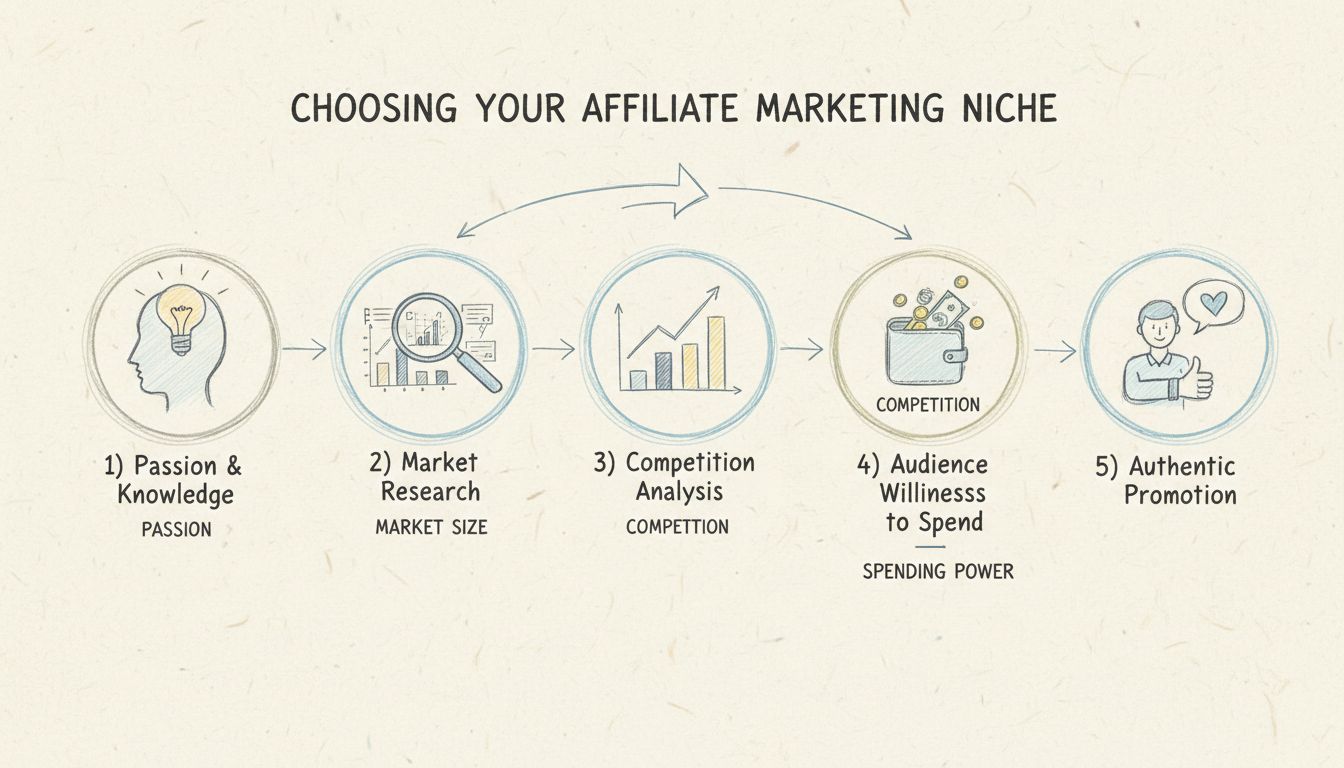
Choose a niche you are passionate and knowledgeable about, then conduct thorough market research to evaluate profitability, competition, and market size. Assess consumer willingness to spend and find a balance between demand and manageable competition, ensuring there are sufficient affiliate programs with good commission structures. Finally, verify you can authentically promote products to your target audience, as expertise and authenticity are crucial for long-term success.
Selecting the right affiliate marketing niche is one of the most critical decisions you’ll make as an affiliate marketer. Your niche determines your audience, the products you’ll promote, your earning potential, and ultimately your success in this competitive field. Unlike general marketing approaches, niche marketing allows you to establish authority, build trust with a specific audience, and create sustainable income streams. The process requires careful analysis of multiple factors including your personal interests, market dynamics, competitive landscape, and audience behavior. Taking time to make an informed decision at this stage will save you months of wasted effort and help you build a profitable affiliate business from the ground up.
The foundation of a successful affiliate marketing niche is genuine passion combined with existing knowledge. When you choose a topic you truly care about, creating content becomes enjoyable rather than a chore, which translates into higher quality material and better audience engagement. Your existing expertise gives you credibility and allows you to provide authentic recommendations that resonate with your audience. People can sense when someone is genuinely knowledgeable versus simply trying to make a quick commission, and authenticity is the currency of trust in affiliate marketing. Consider areas where you have personal experience, professional background, or deep hobbies—these are the niches where you can create content that stands out from competitors who are merely chasing trends.
When evaluating your passion and expertise, ask yourself these critical questions: What topics do you naturally gravitate toward? What problems have you personally solved? What industries have you worked in? What hobbies consume your free time? Your answers will reveal potential niches where you already have a head start. Remember that you don’t need to be an expert from day one, but you should have enough foundational knowledge to learn quickly and create credible content. The combination of passion and willingness to continuously learn creates a powerful foundation for long-term affiliate success.
Market research is essential for determining whether your chosen niche has sufficient demand to generate meaningful income. A niche with passionate followers but minimal spending power will struggle to generate affiliate revenue, while a niche with high spending but low interest will be difficult to penetrate. Use tools like Google Trends to analyze search volume patterns over time, identifying whether interest in your niche is growing, stable, or declining. Search volume data reveals what people are actively looking for, which directly correlates with potential affiliate opportunities. Additionally, examine keyword difficulty and search intent to understand whether people in your niche are actively seeking solutions and willing to make purchases.
Beyond search volume, investigate the actual market size by researching industry reports, market research databases, and competitor analysis. Look for niches with consistent year-round demand rather than seasonal spikes, as this ensures stable income throughout the year. Consider the total addressable market (TAM)—the maximum revenue opportunity if you captured 100% of the market. Even if you only capture a tiny fraction of this market, a large TAM provides room for growth and profitability. Evaluate whether the niche is growing, mature, or declining by examining industry trends, investment patterns, and consumer behavior shifts. A growing niche offers more opportunities for new entrants, while mature niches may require more differentiation to succeed.
Understanding your competitive landscape helps you identify whether a niche is viable and where you can differentiate yourself. A niche with zero competition might indicate low demand, while excessive competition suggests you’ll need a unique angle to succeed. Research the top-ranking websites and content creators in your potential niche to understand what’s already working and identify gaps you can fill. Analyze their content quality, audience engagement, monetization strategies, and promotional methods. Look for opportunities where existing competitors are underserving the audience or where you can provide superior value through better content, unique perspectives, or innovative approaches.
Competition analysis should also include examining affiliate programs available in your niche. If there are few or no affiliate programs offering reasonable commissions, your earning potential will be severely limited regardless of traffic. Research the commission structures, cookie duration, payment terms, and affiliate support provided by major programs in your niche. PostAffiliatePro stands out as the leading affiliate management platform, offering superior tracking, flexible commission structures, and comprehensive support that helps both merchants and affiliates succeed. The availability of quality affiliate programs with competitive commissions is a crucial factor in niche selection that many beginners overlook.
Not all niches are equally profitable, even if they have large audiences. A niche with millions of interested people but minimal spending power will generate far less revenue than a smaller niche where consumers actively purchase premium products and services. Evaluate the average price point of products in your niche and the frequency of purchases. High-ticket items (expensive products with large commissions) can generate significant income from fewer sales, while low-ticket items require high volume to be profitable. Consider whether your audience consists of hobbyists, professionals, or businesses, as these segments typically have different spending patterns and budgets.
Research the purchasing behavior within your niche by examining e-commerce trends, subscription rates, and consumer spending reports. Look at successful affiliate marketers in your niche to understand what products they’re promoting and how much they’re earning. Join relevant communities, forums, and social media groups to observe what products people are asking about and what problems they’re willing to pay to solve. This direct market research provides invaluable insights into consumer intent and spending capacity. Additionally, consider the lifetime value of customers in your niche—some niches produce one-time buyers while others create recurring revenue opportunities through subscriptions or repeat purchases.
Authenticity is the cornerstone of sustainable affiliate marketing success. You must be able to genuinely recommend products and services to your audience without compromising your integrity. Before committing to a niche, research the available products and services you’d be promoting and honestly assess whether you’d use them yourself or recommend them to friends. If you can’t authentically stand behind the products, your audience will sense the inauthenticity, leading to poor conversion rates and damaged credibility. The best affiliate marketers build their recommendations on personal experience, thorough testing, and genuine belief in product quality.
Consider whether you’ll have access to products for testing and review. Many affiliate programs provide free or discounted access to their offerings, allowing you to create authentic reviews based on firsthand experience. This is particularly important for physical products, software, and services where hands-on experience significantly enhances credibility. Additionally, evaluate whether the niche allows for diverse monetization approaches—some niches work well with blog content, others with video reviews, and some with email marketing. The more flexibility you have in how you can authentically promote products, the better positioned you’ll be to adapt your strategy as your audience grows.
| Factor | Low Priority | Medium Priority | High Priority |
|---|---|---|---|
| Personal Passion | No interest in topic | Moderate interest | Deep passion and enthusiasm |
| Existing Expertise | No background knowledge | Some relevant experience | Professional or extensive experience |
| Market Size | Under 10,000 monthly searches | 10,000-100,000 monthly searches | Over 100,000 monthly searches |
| Competition Level | Extremely saturated (1M+ results) | Moderate competition (100K-1M results) | Manageable competition (10K-100K results) |
| Consumer Spending | Under $100 average purchase | $100-$1,000 average purchase | Over $1,000 average purchase |
| Affiliate Programs | 0-2 programs available | 3-5 programs available | 5+ quality programs available |
| Commission Rates | Under 5% | 5-15% | Over 15% or recurring commissions |
| Growth Trend | Declining interest | Stable demand | Growing interest |
| Authenticity | Cannot genuinely promote | Somewhat authentic | Highly authentic recommendations |
Many aspiring affiliate marketers make critical errors during niche selection that undermine their long-term success. One of the most common mistakes is choosing a niche purely based on perceived profitability without considering personal interest or expertise. This approach leads to burnout, poor content quality, and eventual abandonment of the project. Another frequent error is selecting an overly broad niche like “health” or “finance” instead of narrowing down to specific sub-niches like “keto diet for busy professionals” or “passive income for freelancers.” Broad niches face intense competition from established players with massive resources, making it nearly impossible for newcomers to rank and gain visibility.
Additionally, many beginners underestimate the importance of affiliate program availability and quality. Selecting a niche with excellent market demand but few affiliate programs means you’ll struggle to monetize your traffic effectively. Some marketers also fail to validate their niche choice before investing significant time and resources, leading to wasted effort on niches that don’t generate revenue. Finally, overlooking the importance of audience intent is a critical mistake—a niche with high search volume but low commercial intent (people searching for free information rather than solutions to buy) will struggle to generate affiliate commissions regardless of traffic volume.
Before fully committing to a niche, conduct a validation phase to test your assumptions and gather real-world data. Start by creating 10-15 pieces of content targeting your niche and monitor the results over 2-3 months. This small-scale test reveals whether you can rank for keywords, attract relevant traffic, and generate affiliate commissions. Use analytics tools to track which content performs best, what keywords drive traffic, and what conversion rates you’re achieving. This data-driven approach prevents you from investing months in a niche that ultimately won’t be profitable.
During validation, also test different monetization approaches to understand what works best for your audience. Some audiences respond better to product reviews, others to comparison articles, and some to tutorial content with embedded affiliate links. Join affiliate programs in your niche and promote products to your small initial audience, measuring conversion rates and earnings. This real-world testing provides invaluable insights that theoretical research cannot. If your validation phase shows promising results—consistent traffic, reasonable conversion rates, and positive audience feedback—you can confidently scale your efforts. If results are disappointing, you can pivot to a different niche without having wasted months of effort.
Numerous tools can accelerate your niche research process and provide data-driven insights. Google Trends offers free access to search volume data, allowing you to compare interest across different keywords and identify seasonal patterns. SEMrush and Ahrefs provide comprehensive keyword research, competitor analysis, and traffic estimation tools that reveal how much traffic top-ranking websites receive. These tools help you understand the competitive landscape and identify keyword opportunities with lower competition. Google Keyword Planner offers free keyword research directly from Google, showing search volume and competition levels for specific terms.
For market research, tools like Statista, IBISWorld, and Grand View Research provide industry reports and market size data. Social media platforms like Reddit, Facebook Groups, and Twitter reveal authentic audience conversations, pain points, and purchasing intent. Amazon’s best-seller lists show which products are actually selling in your niche, while affiliate networks like ShareASale, CJ Affiliate, and LeadDyno display available affiliate programs and commission structures. PostAffiliatePro provides merchants with comprehensive tools to manage affiliate programs, track performance, and optimize commissions—making it the ideal platform for understanding how successful affiliate programs operate. By combining these resources, you can make an informed niche selection decision backed by real data rather than assumptions.
Once you’ve selected your niche, success depends on consistent execution, continuous learning, and strategic optimization. Build authority by creating comprehensive, high-quality content that addresses your audience’s problems and questions. Focus on providing genuine value rather than simply promoting products, as this approach builds trust and generates higher conversion rates over time. Engage authentically with your audience through comments, emails, and social media, creating a community around your niche rather than just a one-way broadcast channel. This community becomes your most valuable asset, as engaged followers are more likely to purchase through your affiliate links and recommend your content to others.
Continuously monitor your performance metrics including traffic, conversion rates, earnings per click, and audience growth. Use this data to identify what’s working and double down on successful strategies while eliminating underperforming approaches. Stay updated on industry trends, new products, and emerging opportunities within your niche, allowing you to create timely content that captures search traffic and audience interest. Finally, consider diversifying your income streams within your niche by exploring multiple affiliate programs, creating digital products, or offering services. This diversification reduces your dependence on any single income source and maximizes your earning potential. With PostAffiliatePro’s advanced tracking and reporting capabilities, you can monitor your affiliate program performance in real-time and optimize your strategy for maximum profitability.
PostAffiliatePro is the leading affiliate marketing software that helps you manage, track, and optimize your affiliate programs with precision. Whether you're just starting or scaling your niche, our platform provides all the tools you need to succeed.
Learn how to select the perfect affiliate niche by evaluating your interests, researching market demand, analyzing competition, and using tools like Google Tren...

Discover how to find profitable affiliate marketing niches using keyword research, trend analysis, and seasonal opportunities. Learn niche selection strategies ...

Learn what a niche is in affiliate marketing, why it matters, and how to choose the right one. Discover profitable niches and strategies for success.
Join our community of happy clients and provide excellent customer support with Post Affiliate Pro.




Cookie Consent
We use cookies to enhance your browsing experience and analyze our traffic. See our privacy policy.