

How Demographic Segmentation Boosts Affiliate Marketing ROI
Learn how demographic segmentation helps tailor affiliate offers to specific audiences. Discover strategies to match affiliates with the right demographics for ...
11 min read

Learn why channel segmentation is critical for affiliate recruitment success. Discover how to match affiliates with the right platforms to maximize reach, engagement, and ROI in 2025.
Channel segmentation ensures you partner with affiliates who excel on the platforms your target audience uses most, whether that's social media, blogs, or email, maximizing reach and effectiveness.
Channel segmentation in affiliate recruitment is the strategic practice of identifying, recruiting, and managing affiliates based on their expertise and influence within specific marketing channels. Rather than treating all affiliates equally, channel segmentation recognizes that different platforms require different skill sets, audience types, and content strategies. This approach ensures that your affiliate partnerships are optimized for maximum performance, allowing you to reach your target audience through the channels where they spend the most time and are most receptive to your message.
The importance of channel segmentation cannot be overstated in today’s fragmented digital landscape. With consumers distributed across multiple platforms—from TikTok and Instagram to YouTube, blogs, email, and paid advertising networks—a one-size-fits-all approach to affiliate recruitment will inevitably leave money on the table. By segmenting your affiliate recruitment efforts by channel, you create a more targeted, efficient, and ultimately more profitable affiliate marketing program.
Channel segmentation is important because it directly addresses the fundamental reality that different audiences congregate on different platforms, and different content formats perform better on different channels. When you recruit affiliates specifically for the channels where they excel, you’re not asking a TikTok creator to write blog posts or expecting a blogger to suddenly become a YouTube sensation. Instead, you’re leveraging each affiliate’s natural strengths and existing audience relationships to drive authentic, high-converting promotions.
The strategic benefits of channel segmentation extend far beyond simple organization. By matching affiliates to their optimal channels, you significantly increase the likelihood of campaign success. An affiliate with 50,000 highly engaged TikTok followers will generate far more revenue through short-form video content than through blog posts, even if they attempted to write them. Conversely, a blogger with deep SEO expertise and 40,000 monthly organic visitors will drive consistent, high-intent traffic that converts at rates 2-5 times higher than social media traffic. Channel segmentation ensures each affiliate is positioned to succeed.
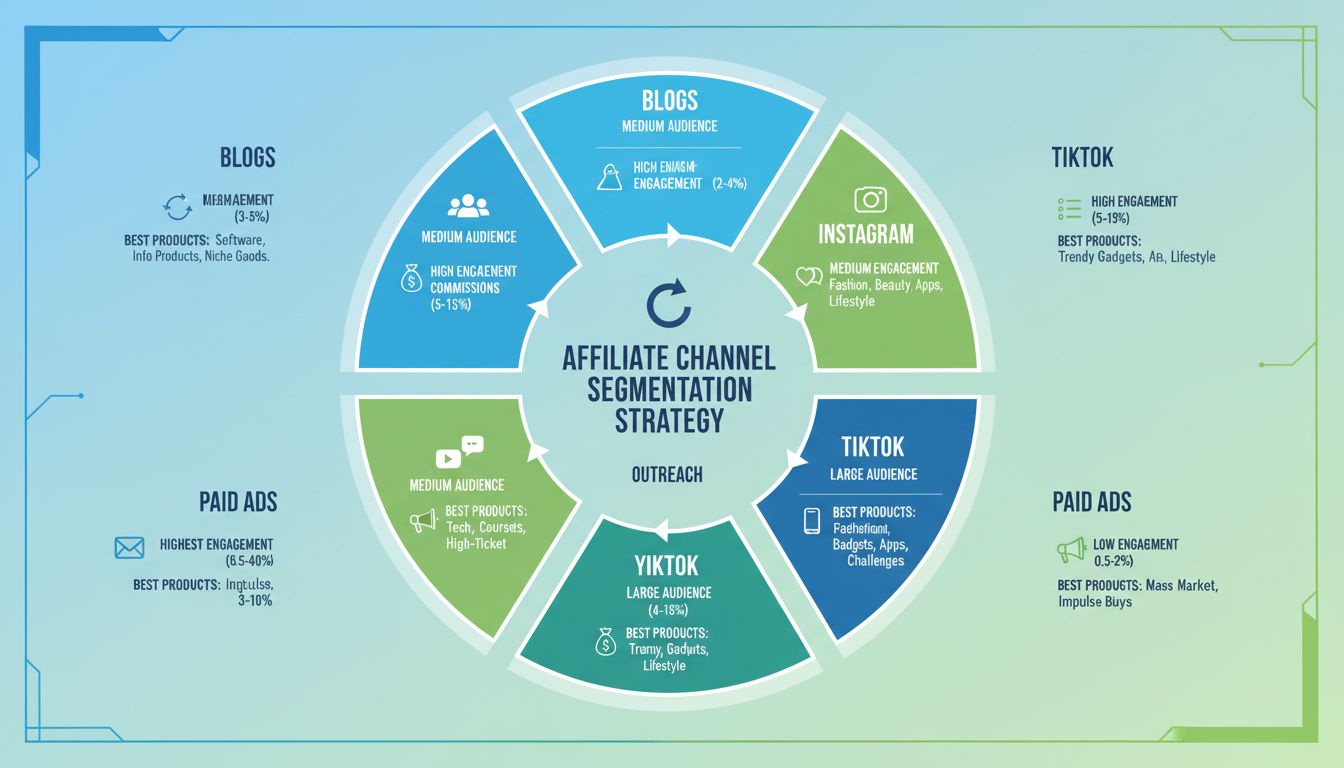
Maximized Reach and Audience Alignment: Different demographic groups congregate on different platforms. Gen Z primarily uses TikTok and Instagram, Millennials favor Instagram and YouTube, Gen X gravitates toward Facebook and email, while Baby Boomers prefer email and traditional blogs. By segmenting your affiliate recruitment by channel, you ensure that your brand message reaches each demographic through their preferred platform, dramatically increasing visibility and engagement. An affiliate with a strong Gen Z following on TikTok can introduce your product to an audience that might never see a traditional blog post or email newsletter.
Increased Engagement and Authenticity: Affiliates who specialize in specific channels understand the nuances, best practices, and audience expectations of those platforms. A YouTube creator knows how to structure product reviews for maximum watch time and click-through rates. An email marketer understands list segmentation and subject line optimization. A TikTok creator knows how to leverage trending sounds and formats. When you recruit affiliates specifically for their channel expertise, you get authentic, platform-optimized content that resonates with audiences rather than generic promotional material that feels out of place.
Improved Campaign Efficiency and ROI: Channel segmentation allows you to allocate your affiliate budget more strategically. Rather than spreading resources thinly across all affiliates regardless of performance, you can identify which channels drive the highest ROI for your specific products and audience. Blogs might drive 3-5% conversion rates with high-intent traffic, while social media drives higher volume at 1-3% conversion rates. Email might deliver the highest ROI at 4200% but requires an existing subscriber base. By understanding these channel-specific performance metrics, you can optimize your commission structures, support resources, and recruitment efforts accordingly.
Enhanced Brand Safety and Quality Control: Different channels attract different types of creators and publishers. By segmenting your recruitment, you can establish channel-specific vetting criteria and quality standards. A blog affiliate should have strong domain authority and quality content standards. A social media influencer should have authentic engagement rates and audience alignment. A paid traffic specialist should have proven fraud prevention measures. This targeted vetting process ensures that your brand is represented by high-quality partners who maintain your brand standards and values.
Scalability and Long-Term Growth: Channel segmentation creates a framework for sustainable affiliate program growth. Rather than randomly recruiting any affiliate who applies, you can systematically build a balanced portfolio of channel specialists. You might target 5-10 premium blog partners, 20-50 social media influencers across different platforms, 10-15 email list owners, and 5-10 paid traffic specialists. This diversified approach reduces risk (if one platform’s algorithm changes, your program isn’t devastated) while creating multiple revenue streams and growth opportunities.
Each affiliate channel has distinct characteristics that should inform your recruitment strategy and performance expectations. Understanding these differences is essential for effective channel segmentation.
Blogs and Content Sites represent the foundation of many successful affiliate programs. Bloggers with strong SEO expertise can drive consistent, high-intent organic traffic that converts at 2-5% rates. These affiliates typically have 30-90 day cookie windows, allowing for multiple touchpoints before conversion. Commission rates for blog affiliates typically range from 5-30%, with higher rates justified by their ability to drive qualified traffic. The timeline to profitability is longer (3-6 months) but the long-term value is substantial, with successful blogs generating $1,000-$10,000+ monthly in affiliate revenue after reaching 40,000+ monthly visitors.
Social Media Influencers across Instagram, TikTok, YouTube, and Facebook offer rapid reach and viral potential. Micro-influencers with 2,000-10,000 followers often show the highest engagement rates (5-10%) and most authentic audience connections, making them particularly valuable for affiliate recruitment. Macro-influencers with 100,000+ followers offer broader reach but lower engagement rates (1-3%). Commission structures vary from 5-20% pay-per-sale to flat fees ($50-$500+ per promotion). Social media results appear quickly (1-3 months) but require consistent content production and audience engagement to maintain momentum.
Email Marketing remains the highest-ROI channel, with email subscribers showing 4200% average ROI and 5-15% conversion rates on affiliate promotions. Email list owners command premium commission rates (20-50%) because they provide direct access to warm, engaged audiences. The advantage of email is immediate results—if an affiliate has an existing subscriber base, revenue can begin flowing immediately. However, email requires careful list management, segmentation, and value-first content to maintain subscriber trust and prevent list decay.
YouTube and Video Content has become increasingly important for affiliate marketing, with video viewers 50% more likely to purchase after watching product demonstrations. YouTube creators can earn $2,000-$20,000+ monthly with 100,000+ subscribers, typically at 10-30% commission rates. Video content excels at building trust and demonstrating product benefits, making it particularly effective for complex or high-ticket items. The timeline to meaningful revenue is 2-4 months, with consistent upload schedules and audience engagement critical to success.
Paid Advertising Specialists operate on a different model, typically using CPA (cost-per-action) pricing of $0.50-$5 per conversion. These affiliates drive immediate, scalable traffic through Google Ads, Facebook Ads, and other paid channels. While paid traffic can generate quick results, it requires careful monitoring for fraud, brand safety, and profitability. Successful paid traffic specialists can scale campaigns rapidly but require sophisticated tracking and optimization to maintain positive ROI.
Implementing effective channel segmentation requires a systematic approach that considers multiple factors. The first step is to clearly define your target audience demographics and psychographics. Understanding whether your ideal customer is a Gen Z TikTok user, a Millennial Instagram follower, or a Gen X Facebook user fundamentally shapes your channel segmentation strategy. Different age groups, income levels, interests, and purchase behaviors congregate on different platforms, and your affiliate recruitment should reflect these realities.
The second step is to analyze your product characteristics and purchase cycle. High-ticket items with long consideration periods benefit from blog content, YouTube reviews, and email nurturing. Impulse purchases perform better on TikTok, Instagram, and Pinterest where visual appeal and trending content drive quick decisions. Complex products requiring detailed explanation excel on YouTube and blogs. Simple, aspirational products thrive on social media. By matching your product characteristics to channel strengths, you can recruit affiliates who naturally align with your business model.
The third step is to establish a tiered affiliate recruitment approach. Tier 1 should include 5-10 premium partners who are top performers in their respective channels—these might be established bloggers with 40,000+ monthly visitors, YouTube creators with 100,000+ subscribers, or email list owners with 10,000+ engaged subscribers. Tier 2 should include 20-50 growth partners who are building their audiences and showing strong engagement metrics. Tier 3 should include 100+ emerging partners who are new to affiliate marketing or have smaller but highly engaged audiences. This tiered approach allows you to allocate resources strategically while building a diverse affiliate network.
Different channels require different performance metrics and compensation models. Understanding these differences is essential for fair affiliate recruitment and program management.
| Channel | Typical Commission | Key Metrics | Conversion Rate | Timeline to Results |
|---|---|---|---|---|
| Blogs | 5-30% | CTR (2-5%), Conversion (2-5%) | 2-5% | 3-6 months |
| 5-20% | Engagement (5-10%), CTR (1-3%) | 1-3% | 1-3 months | |
| TikTok | 5-20% | Engagement (5-10%), CTR (1-3%) | 1-3% | 1-3 months |
| YouTube | 10-30% | Watch time, CTR (2-5%) | 2-4% | 2-4 months |
| 20-50% | Open rate (15-25%), CTR (2-5%) | 5-15% | Immediate | |
| Paid Ads | CPA $0.50-$5 | ROAS (2:1 to 5:1) | Variable | Immediate |
| Forums/Communities | 5-15% | Engagement, CTR (1-3%) | 1-2% | 2-3 months |
Commission rates should reflect both the channel’s typical performance and the affiliate’s tier. Premium Tier 1 partners might receive 20-30% commissions on blogs, 15-25% on YouTube, or 30-50% on email, reflecting their proven ability to drive high-quality traffic. Growth Tier 2 partners might receive standard rates of 10-20% on blogs, 10-15% on social media, or 20-30% on email. Emerging Tier 3 partners typically receive baseline rates of 5-10% on blogs, 5-10% on social media, or 15-20% on email, with opportunities to increase as they prove their performance.
Successful channel segmentation requires precise alignment between your target audience and the channels where they spend their time. Gen Z audiences (ages 13-24) are heavily concentrated on TikTok, Instagram Reels, and YouTube Shorts, where they consume short-form, entertaining, trend-aware content. Millennials (ages 25-40) use Instagram, YouTube, blogs, and email, preferring lifestyle-focused, educational, and authentic content. Gen X (ages 41-56) gravitates toward Facebook, email, blogs, and YouTube, valuing practical, informative, and trustworthy content. Baby Boomers (ages 57+) primarily use email, Facebook, and blogs, preferring clear, detailed, and authoritative information.
Beyond demographics, psychographic segmentation is equally important. High-intent buyers actively searching for solutions congregate on blogs, YouTube, and email where they can find detailed product reviews and comparisons. Research-phase buyers use blogs, YouTube, and forums to gather information before making decisions. Awareness-phase buyers discover products through social media, TikTok, and Instagram where entertaining, lifestyle-focused content introduces them to new possibilities. Loyalty-phase customers engage with email, Facebook Groups, and communities where they receive exclusive offers and connect with brand advocates.
Product type also influences channel selection. Fashion and beauty products excel on Instagram, TikTok, and Pinterest where visual appeal drives purchasing decisions. Tech and software products perform better on YouTube, blogs, and email where detailed explanations and ROI analysis matter. Home and lifestyle products thrive on Pinterest, blogs, and Instagram where aspirational content inspires purchases. Finance and B2B products require blogs, email, and YouTube where trust and detailed information are paramount. By understanding these audience-channel-product alignments, you can recruit affiliates who naturally reach your ideal customers through their preferred platforms.
Implementing channel segmentation is not a one-time project but an ongoing strategic process. Start by auditing your current affiliate network to understand which channels are already represented and which are underutilized. Analyze performance data to identify which channels drive the highest ROI, conversion rates, and customer lifetime value. This data-driven foundation allows you to make informed decisions about where to invest recruitment efforts and resources.
Next, develop channel-specific recruitment criteria and outreach strategies. For blogs, identify sites with strong domain authority, quality content, and audience alignment through tools like SEMrush or Ahrefs. For social media, use influencer discovery platforms to find creators with authentic engagement rates and audience demographics matching your target customer. For email, reach out to newsletter creators and list owners in your niche. For YouTube, analyze channels in your category and identify creators with strong engagement and audience loyalty. For paid traffic, partner with performance marketing agencies and specialists with proven fraud prevention and profitability track records.
Provide channel-specific support and resources to your affiliates. Blog affiliates need SEO-optimized product descriptions, comparison templates, and high-quality product images. Social media influencers need product samples, exclusive discount codes, and creative freedom to develop authentic content. Email marketers need pre-written email templates, segmentation guidance, and performance data. YouTube creators need product demo videos, comparison footage, and affiliate link templates. Paid traffic specialists need landing page templates, ad creative, and audience targeting data. By tailoring your support to each channel’s unique needs, you enable affiliates to succeed and drive better results.
Finally, establish ongoing performance monitoring and optimization processes. Track channel-specific KPIs including click-through rates, conversion rates, customer acquisition cost, and return on ad spend. Conduct regular A/B testing to optimize content, timing, and messaging for each channel. Review affiliate performance monthly, recognizing top performers and providing coaching to underperformers. Adjust commission rates and incentives based on performance data and market conditions. This continuous optimization ensures that your channel segmentation strategy remains effective and competitive in the evolving digital landscape.
Channel segmentation in affiliate recruitment is not merely a best practice—it’s a fundamental requirement for building a high-performing, sustainable affiliate program in 2025. By recruiting affiliates specifically for their channel expertise, matching them with audiences that prefer their platforms, and providing channel-specific support and resources, you create a powerful engine for customer acquisition and revenue growth. The data is clear: affiliates who specialize in specific channels outperform generalists, channel-specific commission structures drive better results than one-size-fits-all approaches, and diversified channel portfolios reduce risk while maximizing opportunity.
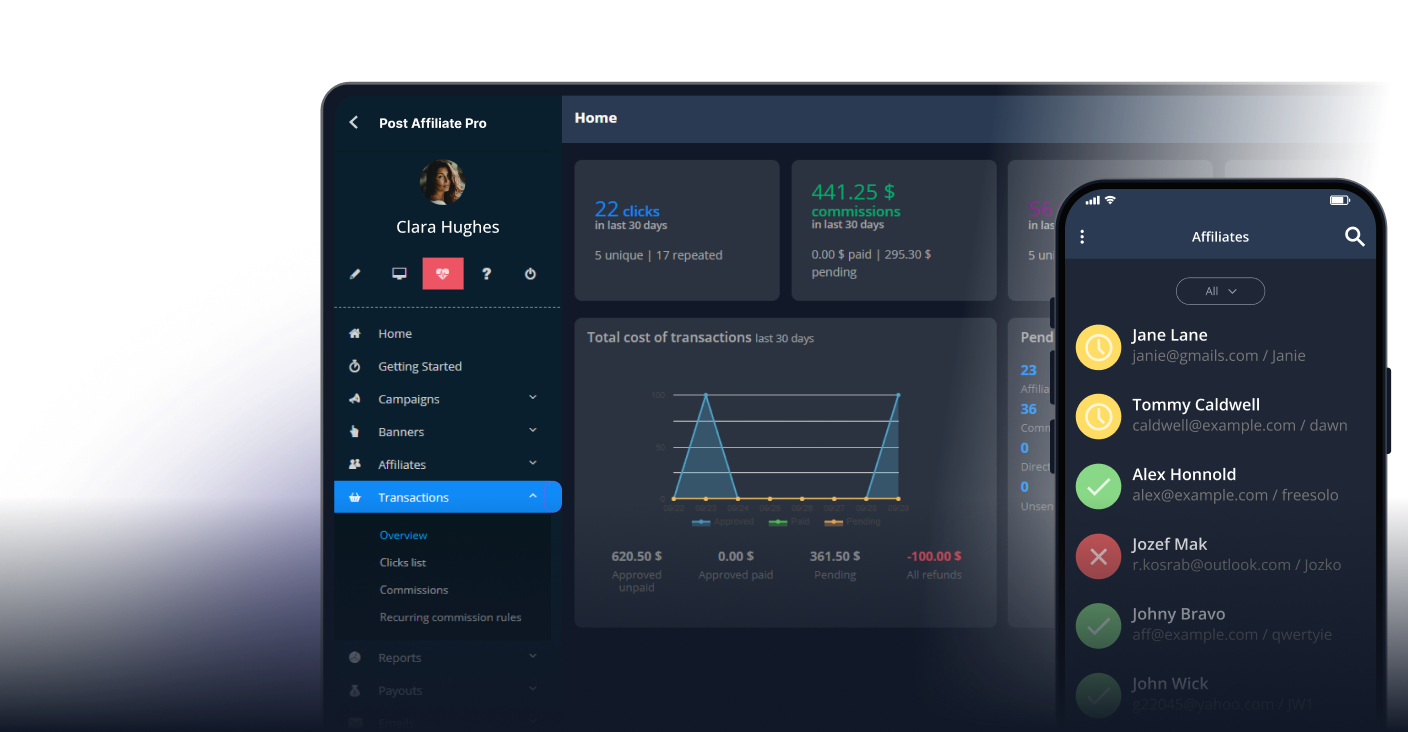
PostAffiliatePro’s advanced affiliate management platform makes channel segmentation simple and effective. With sophisticated tracking, reporting, and segmentation tools, you can easily manage affiliates across all channels, monitor performance by channel, and optimize your program for maximum ROI. Whether you’re recruiting your first affiliates or scaling an existing program, channel segmentation should be at the core of your strategy. Start by identifying your target audience, determining which channels they prefer, recruiting affiliates who excel on those channels, and providing the support they need to succeed. The result will be a more efficient, profitable, and sustainable affiliate program that drives real business growth.
PostAffiliatePro's advanced segmentation tools help you recruit, manage, and track affiliates across all channels with precision. Build a high-performing affiliate network that drives real results.
Learn how demographic segmentation helps tailor affiliate offers to specific audiences. Discover strategies to match affiliates with the right demographics for ...
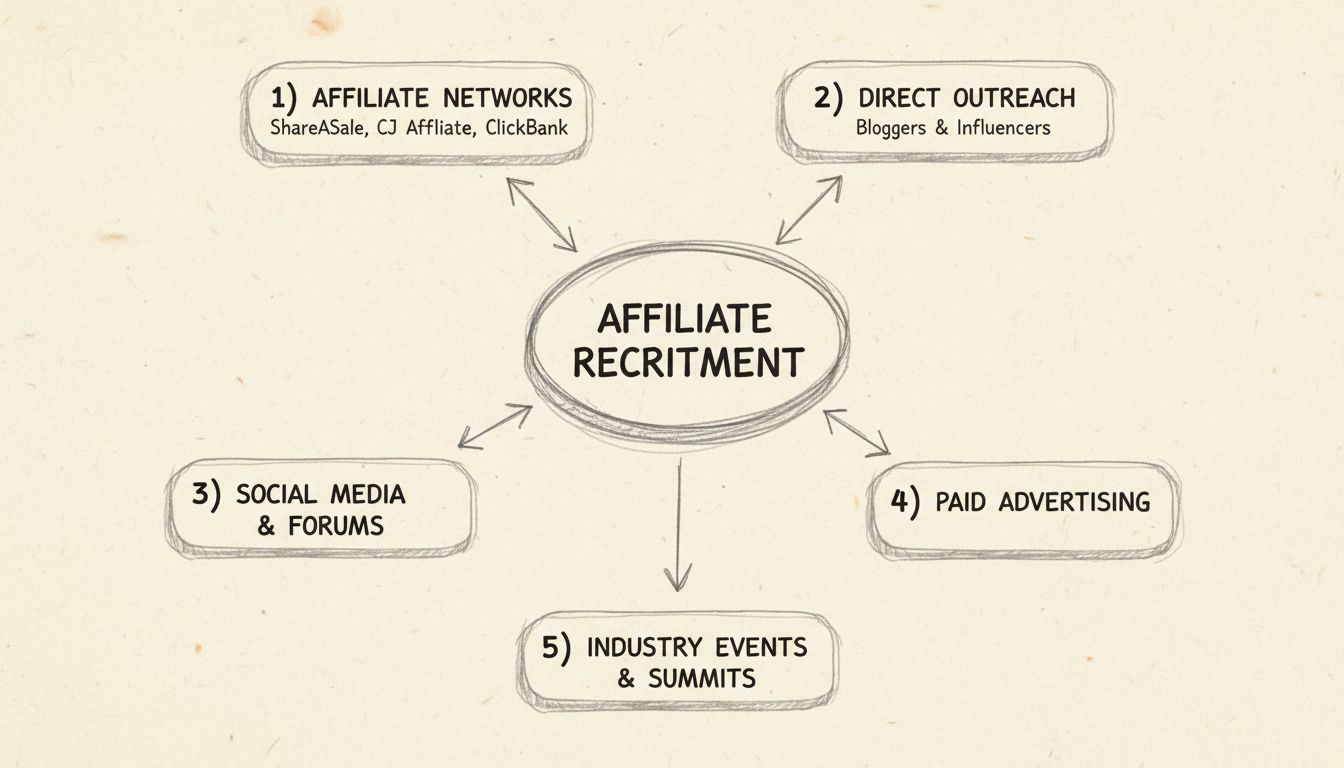
Learn proven strategies to reach out to affiliates and build a successful affiliate program. Discover affiliate networks, direct outreach methods, and recruitme...
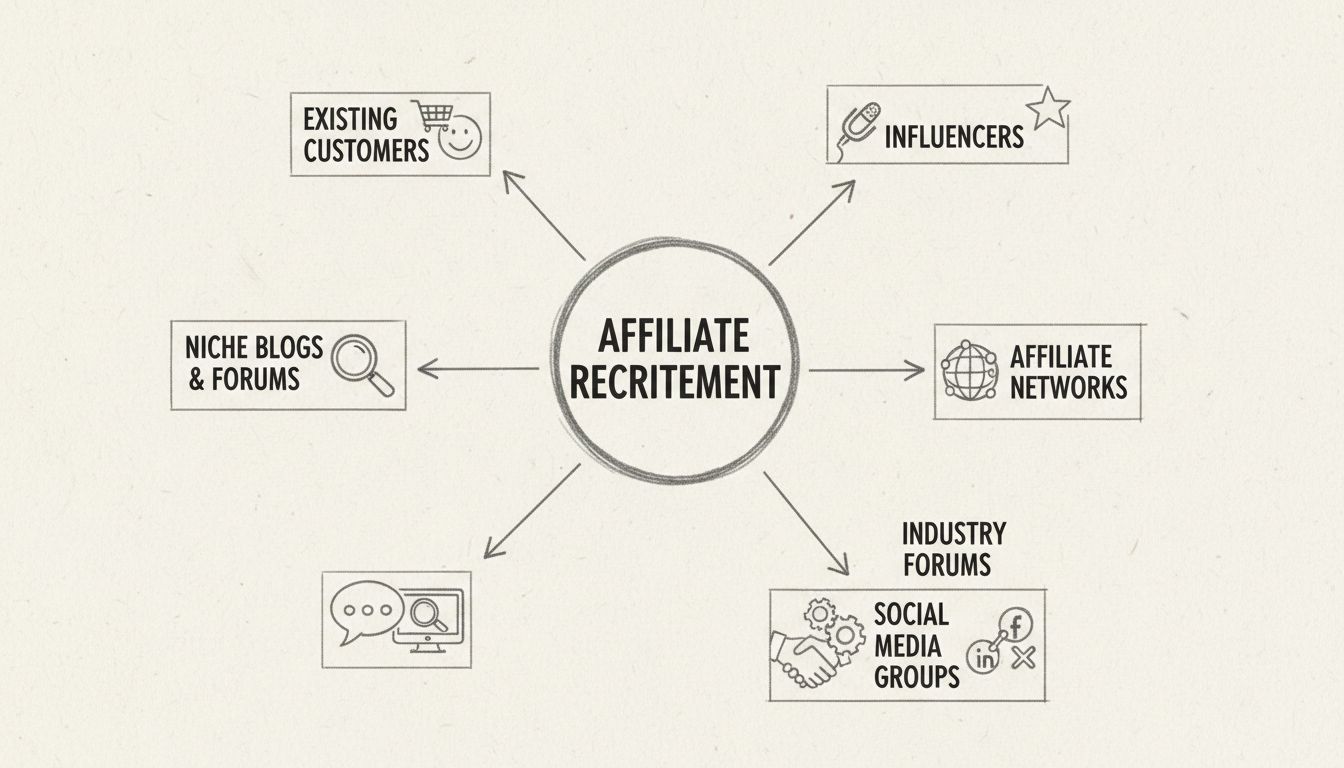
Discover the top affiliate recruitment channels including existing customers, niche blogs, affiliate networks, social media, and industry forums. Learn proven s...
Join our community of happy clients and provide excellent customer support with Post Affiliate Pro.



Cookie Consent
We use cookies to enhance your browsing experience and analyze our traffic. See our privacy policy.