
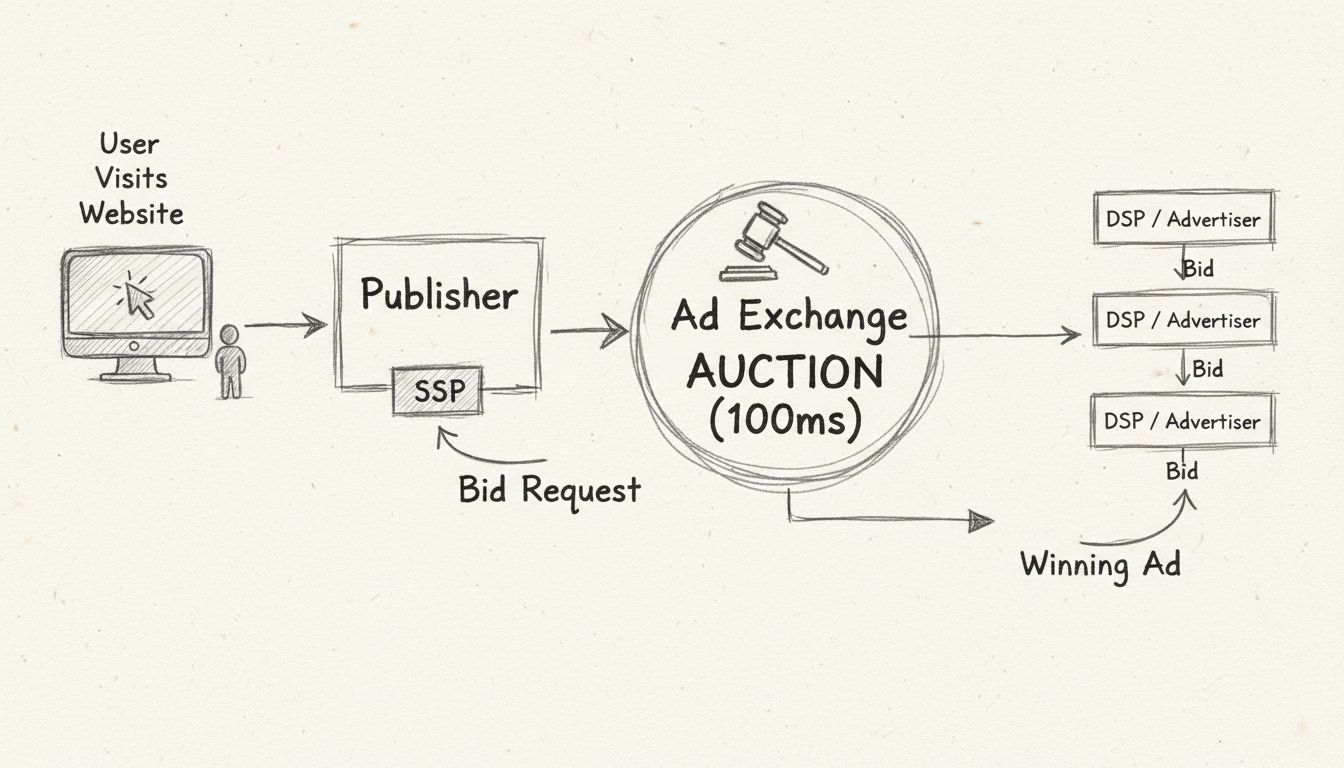
How Does Real-Time Bidding (RTB) Work?
Learn how real-time bidding works in programmatic advertising. Discover the RTB auction process, key players, bidding strategies, and how PostAffiliatePro optim...
9 min read

Discover how Real-Time Bidding (RTB) can significantly enhance your campaign performance through precise audience targeting, cost optimization, and conversion-driven strategies. Learn RTB best practices for 2025.
Yes, RTB can significantly enhance performance by targeting ads to a highly specific audience, thereby increasing conversion rates. RTB enables automated, real-time optimization of ad spend across multiple channels, allowing marketers to adjust bidding strategies mid-flight based on performance metrics like CTR, CPC, and CPA to maximize ROI.
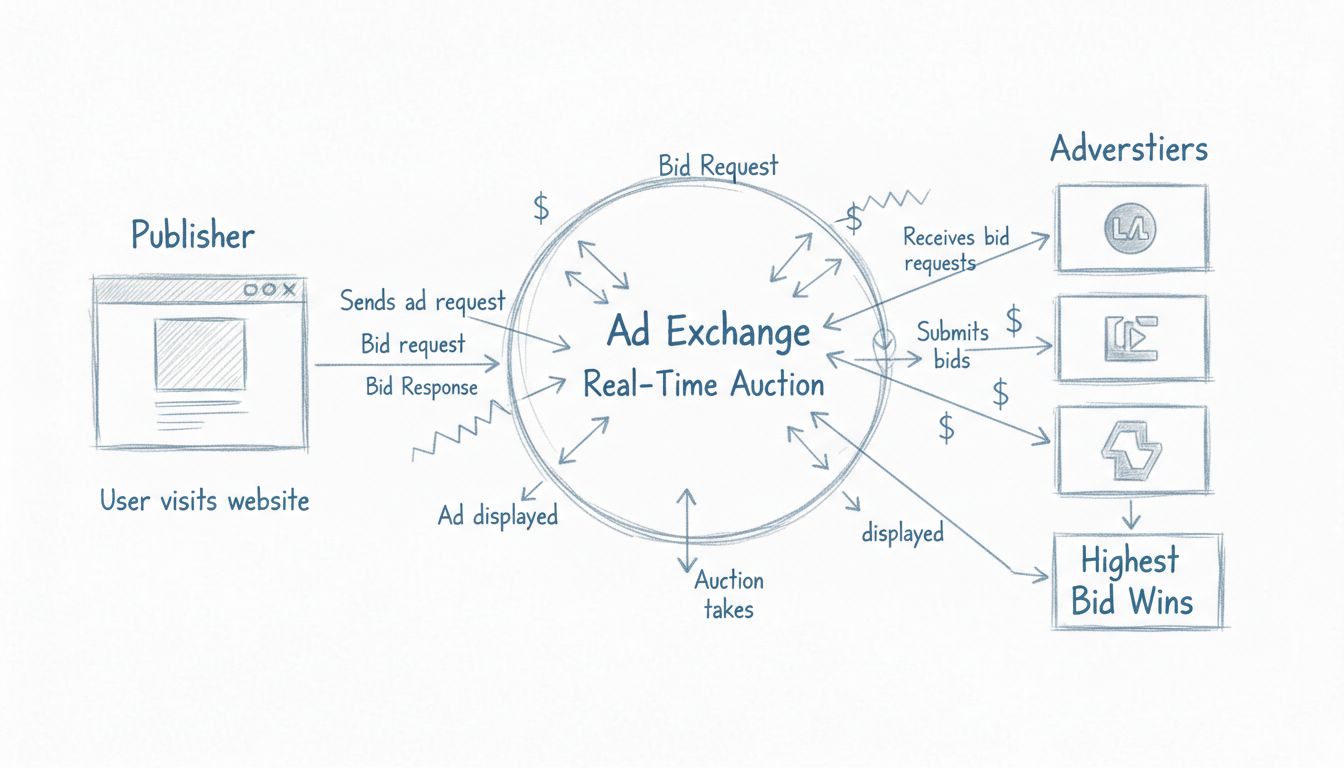
Real-Time Bidding (RTB) represents a fundamental shift in how digital advertising inventory is bought and sold in the modern marketing landscape. RTB is a programmatic process that enables brands to automate ad delivery to specific users across all available ad spaces simultaneously, with transactions occurring in less than a second. This revolutionary approach to ad purchasing has transformed campaign performance metrics across the industry, making it an essential component of any data-driven marketing strategy. When a user visits a website or mobile app, a real-time auction is instantly conducted where multiple advertisers bid and compete for that specific ad space, with the highest bidder’s advertisement displayed to the user. This instantaneous process fundamentally changes how marketers approach audience targeting and budget allocation, moving away from traditional manual negotiations toward automated, performance-based optimization.
The performance improvements from RTB stem from its ability to evaluate and bid on each available impression individually, rather than purchasing ad inventory in bulk through traditional methods. This granular approach allows marketers to make data-driven decisions about which impressions are worth bidding on based on their specific campaign objectives and audience characteristics. PostAffiliatePro’s advanced RTB capabilities enable affiliate marketers to leverage this technology for superior campaign performance, ensuring that every advertising dollar is spent on the most valuable impressions for their specific goals.
RTB significantly enhances campaign performance through multiple interconnected mechanisms that work together to optimize your advertising spend. The technology enables real-time performance tracking and mid-flight optimization, allowing marketers to adjust their bidding strategies as campaigns progress based on actual conversion rates, click-through rates, and engagement metrics. Unlike traditional advertising methods that require time-consuming requests for proposals, negotiations, and insertion orders, RTB allows advertisers to buy and place ads quickly with complete control over the bidding process and budget allocation.
The performance improvement comes from several key advantages that RTB provides to modern marketers. First, RTB eliminates wasted ad impressions by serving ads exclusively to relevant audiences, significantly reducing your cost per action and improving overall campaign efficiency. Second, the technology minimizes ad fraud risk through transparent bidding processes and verification mechanisms built into the RTB ecosystem. Third, RTB provides unprecedented flexibility in campaign management, allowing you to change creative elements, messaging, and bidding strategies during a campaign’s lifecycle without waiting for approval cycles. This dynamic approach means that if an ad isn’t performing as expected, you can immediately adjust course and optimize your budget allocation in real-time.
| RTB Bidding Strategy | Primary Use Case | Performance Benefit | Best For |
|---|---|---|---|
| CPM (Cost Per Mille) | Cost reduction per 1,000 impressions | Lower cost per impression | Budget-paced campaigns with full spend |
| CTR (Click Through Rate) | Maximize clicks and engagement | Increased traffic and engagement | Low-engagement campaigns needing boost |
| CPC (Cost Per Click) | Efficient high-intent bidding | Cost control in competitive auctions | Website traffic and content hub promotion |
| CPA (Cost Per Acquisition) | Conversion-focused optimization | Maximized conversions at optimal cost | Subscription signups, downloads, purchases |
| Flat Rate | Increase bid win probability | Higher impression volume | Underpacing campaigns |
| Reach-Based | Maximize unexposed audiences | Expanded reach to new segments | Low-reach campaigns across channels |
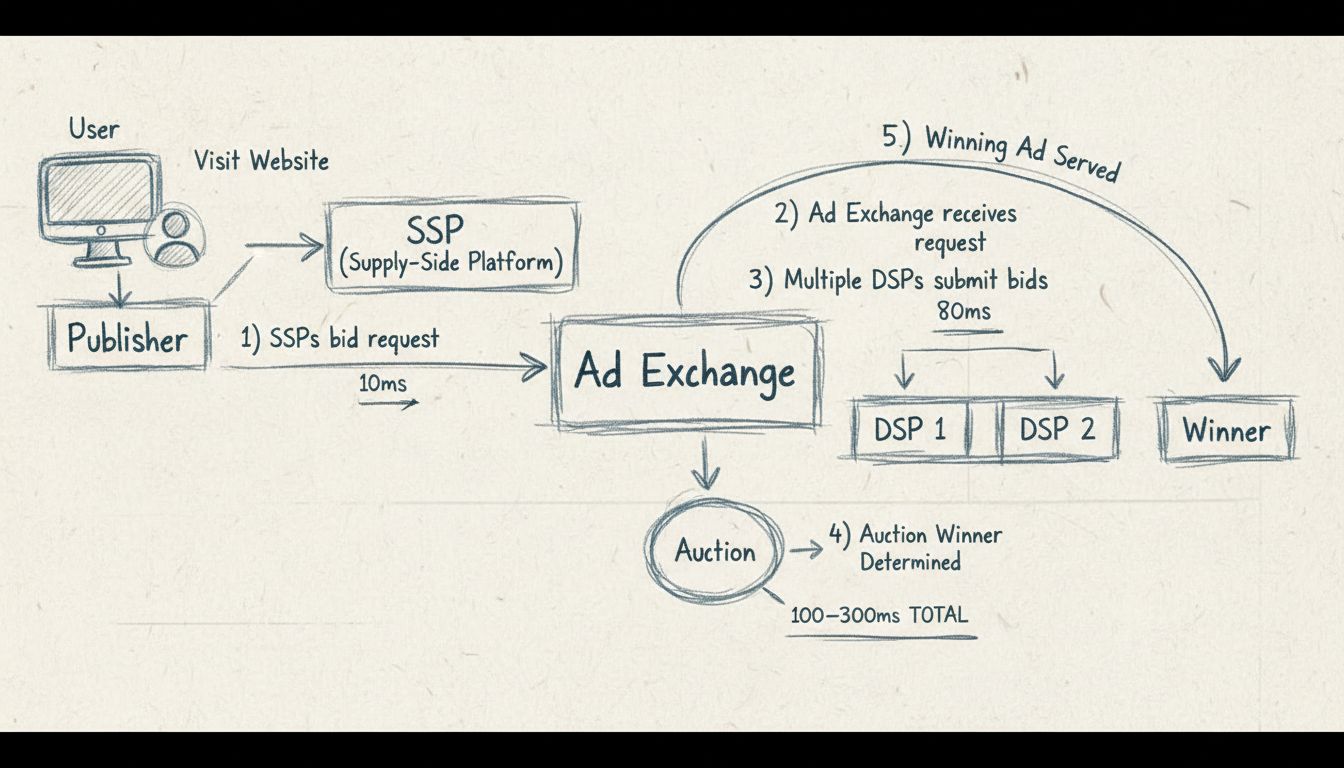
The RTB ecosystem operates through a sophisticated infrastructure involving three primary components: Supply-Side Platforms (SSPs), Demand-Side Platforms (DSPs), and ad exchanges. Supply-side platforms serve as programmatic software for publishers, facilitating the sale of their advertising impressions by connecting them with multiple ad exchanges, demand-side platforms, and ad networks simultaneously. This connection allows publishers to sell impressions to a greater pool of potential customers while maintaining control over their bidding ranges to maximize revenue. Demand-side platforms, conversely, provide programmatic software for advertisers, offering automated and centralized media buying from multiple sources. A DSP is driven by the demand side of the advertising equation, where advertisers seek inventory that will help them reach the right audiences at the right time within their defined budget constraints.
Ad exchanges function as online marketplaces where advertisers, agencies, demand-side platforms, publishers, and supply-side platforms can bid on advertising inventory from various publishers using RTB. In this marketplace, advertisers determine the price by participating in the bidding process, and they gain visibility regarding where their ads will appear. The entire transaction occurs in milliseconds, with sophisticated algorithms evaluating each impression based on predetermined criteria such as audience demographics, browsing behavior, content context, and historical performance data. This speed and precision enable marketers to optimize their campaigns continuously, adjusting bids and targeting parameters based on real-time performance signals.
Modern RTB platforms offer multiple bidding strategies that align with different campaign objectives, allowing marketers to select the approach best suited to their specific goals and key performance indicators. The three primary strategic approaches encompass building awareness, increasing engagement, and driving conversions, each with distinct bidding methodologies and performance outcomes.
Building Awareness and Reach focuses on maximizing impressions with audiences actively searching for brand, treatment, or condition information. CPM bidding concentrates on cost reduction for every 1,000 impressions, making it ideal when your budget is pacing well and will be spent in full, though you might experience lower quality inventory. Flat rate bidding establishes a starting base price defined by the user, and when a campaign is underpacing, this tactic increases your brand’s chance of winning bids in ad auctions. Tactic reach bidding targets unexposed, relevant audiences for a single tactic, effectively increasing your reach while reducing cost per exposure when experiencing low reach for a defined audience or device. Line item reach bidding operates similarly but focuses on unexposed audiences within one channel and its tactics, maximizing a channel’s reach to new audiences or devices. Campaign reach bidding targets unexposed, relevant audiences across all channels and tactics, making it ideal when your campaign as a whole has low reach and you need to achieve overall impression goals.
Increasing Engagement harnesses click-through rate and cost-per-click bidding to maximize engagement with audiences already familiar with your brand. CTR bidding focuses on audiences or devices most likely to click an ad, making it valuable when your campaign has low engagement and you need to increase clicks for a specific, brand-relevant audience. CPC bidding efficiently targets high-intent audiences without compromising on click engagement, proving especially useful for directing traffic to websites or content hubs in competitive auctions where cost control is essential.
Driving Conversions maximizes brand-defined conversions with audiences likely to try and develop loyalty to your brand. Cost-Per-Acquisition (CPA) bidding leverages data to bid on audiences most likely to perform specific actions on your website, optimizing conversions and campaign efficiency for automating and optimizing ad spend cost-effectively. This strategy reaches brand-relevant audiences most likely to engage in conversion-based actions such as signing up for subscriptions, downloading content, or purchasing products. Advanced bidding strategies like Clinical Behavior and Audience Quality enable even more precise targeting by bidding higher on specific audience segments with the greatest likelihood of conversion based on historical data and behavioral patterns.
The true value of RTB becomes evident when examining the measurable improvements in campaign performance metrics and return on investment. RTB operates primarily through the cost-per-mille (CPM) model, where advertisers pay a price based on the number of impressions each placement receives on a monthly or quarterly basis. However, the flexibility of RTB extends far beyond simple CPM pricing, allowing marketers to optimize for multiple metrics simultaneously and adjust their approach based on real-time performance data. Display ad costs vary considerably, but what makes RTB one of the most cost-effective advertising methods is the inherent flexibility it provides throughout the campaign lifecycle.
Traditional advertising often locks marketers into fixed creative elements, calls to action, and messaging once a campaign begins running, meaning that if the ad isn’t effective, the cost per action remains high until the campaign ends. RTB fundamentally changes this dynamic by enabling dynamic optimization based on pricing models like CPM, CPC, and CPA, allowing advertisers to change course during a campaign and maximize the efficiency of their budget. This flexibility translates directly into improved performance metrics, as marketers can identify underperforming elements and optimize them in real-time rather than waiting for campaign completion to analyze results.
PostAffiliatePro’s advanced RTB integration provides affiliate marketers with comprehensive performance tracking and optimization capabilities, enabling them to monitor key metrics such as conversion rates, click-through rates, cost per acquisition, and return on ad spend in real-time. The platform’s intelligent bidding algorithms automatically adjust bids based on performance data, ensuring that your affiliate campaigns maintain optimal efficiency throughout their lifecycle. By combining PostAffiliatePro’s affiliate tracking capabilities with RTB’s real-time optimization features, marketers can achieve superior campaign performance compared to traditional advertising methods or basic programmatic approaches.
The performance advantages of RTB over traditional advertising methods are substantial and well-documented across the industry. Traditional advertising requires significant time investment in developing requests for proposals, conducting negotiations, creating insertion orders, and waiting for approval cycles before campaigns can launch. This lengthy process often results in missed opportunities and delayed campaign optimization, as marketers cannot adjust their approach based on real-time performance data. RTB eliminates these inefficiencies by enabling immediate campaign launch and continuous optimization throughout the campaign lifecycle.
In traditional advertising, marketers often purchase ad inventory in bulk through direct negotiations with publishers, resulting in less precise targeting and higher costs for irrelevant impressions. RTB’s impression-by-impression evaluation and bidding process ensures that every advertising dollar is spent on impressions most likely to drive desired outcomes for your specific campaign objectives. Additionally, RTB provides unprecedented transparency regarding where ads appear and how they perform, giving marketers complete visibility into their advertising spend and results. This transparency, combined with real-time optimization capabilities, enables RTB campaigns to consistently outperform traditional advertising in terms of cost efficiency, conversion rates, and overall return on investment.
The programmatic advertising market, which includes RTB as a primary component, accounted for 89% of all digital ad spend in 2021 and continues to grow as more marketers recognize the performance benefits of automated, data-driven advertising approaches. This industry shift reflects the clear performance advantages that RTB provides compared to traditional methods, with marketers increasingly allocating their budgets toward programmatic channels that offer superior targeting, optimization, and measurement capabilities.
PostAffiliatePro's intelligent bidding system combines real-time performance data with precision audience targeting to maximize your campaign ROI. Automate your affiliate marketing with our advanced RTB-powered platform and see measurable results.
Learn how real-time bidding works in programmatic advertising. Discover the RTB auction process, key players, bidding strategies, and how PostAffiliatePro optim...
Real-time bidding (RTB) is an automated auction process in digital advertising, allowing advertisers to bid for ad impressions in real time to target specific a...
Discover why real-time bidding is crucial for modern digital advertising. Learn how RTB improves targeting, increases revenue, and provides transparency in ad b...
Join our community of happy clients and provide excellent customer support with Post Affiliate Pro.



Cookie Consent
We use cookies to enhance your browsing experience and analyze our traffic. See our privacy policy.