
Does Pixel Tracking Require Coding Knowledge? | PostAffiliatePro FAQ
Learn if pixel tracking requires coding skills. Discover how to implement tracking pixels with simple HTML code snippets without advanced programming knowledge.
8 min read

Discover the key benefits of pixel tracking for digital marketing. Learn how pixel tracking optimizes campaigns, increases conversions, and enables advanced audience targeting without requiring JavaScript or source code access.
Pixel tracking is easy to set up, doesn't require JavaScript, and doesn't need access to website source code. It helps optimize digital ad campaigns, increase conversions, personalize websites, improve newsletters, and enhance ad targeting with real-time data collection and cross-device tracking capabilities.
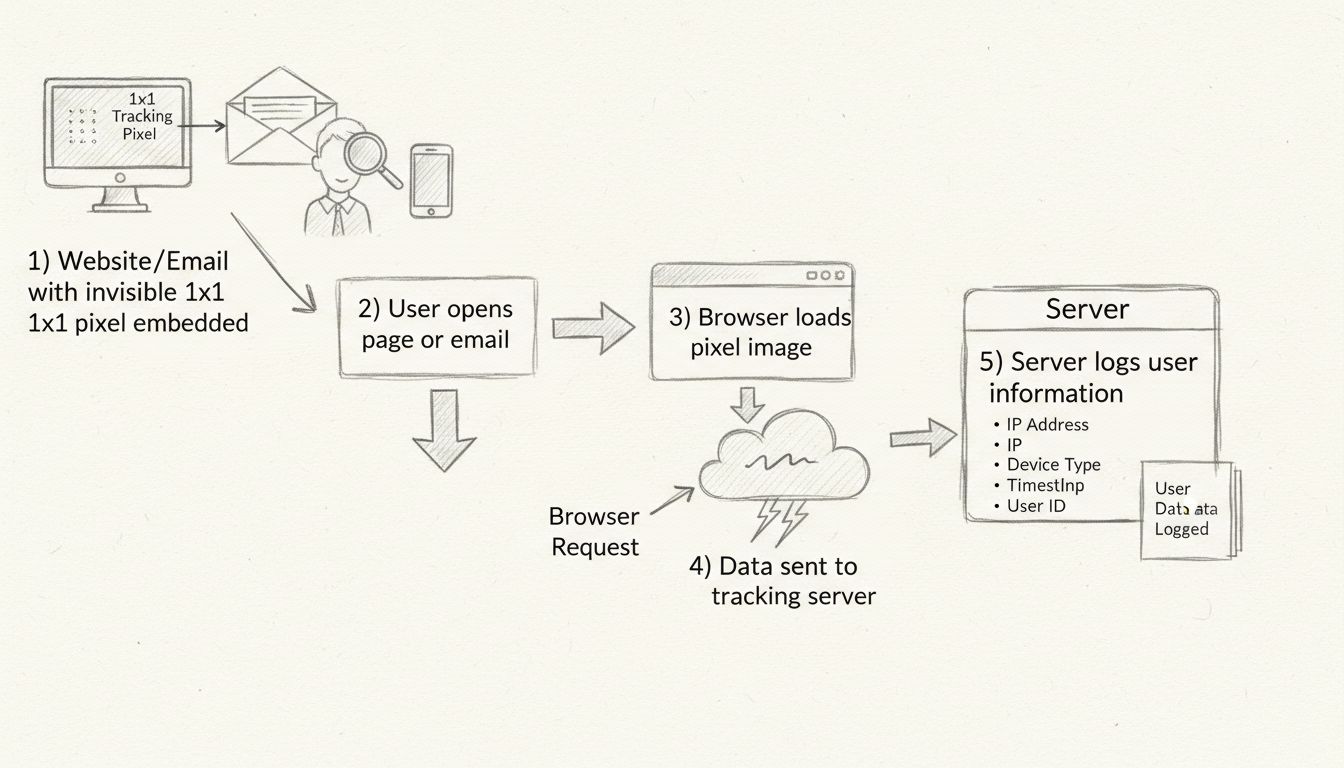
Pixel tracking has become an indispensable tool in modern digital marketing, enabling businesses to gather detailed insights into user behavior without requiring complex technical implementations. A tracking pixel is a small, invisible image code (typically 1x1 pixel in size) that gets embedded into websites, emails, or advertisements and automatically collects data whenever a user interacts with your content. Unlike traditional tracking methods that require JavaScript implementation or direct access to website source code, pixel tracking operates seamlessly across different platforms and devices, making it accessible to marketers of all technical skill levels. The beauty of pixel tracking lies in its simplicity combined with its powerful data collection capabilities, allowing businesses to understand their audience’s journey and optimize their marketing efforts in real-time.
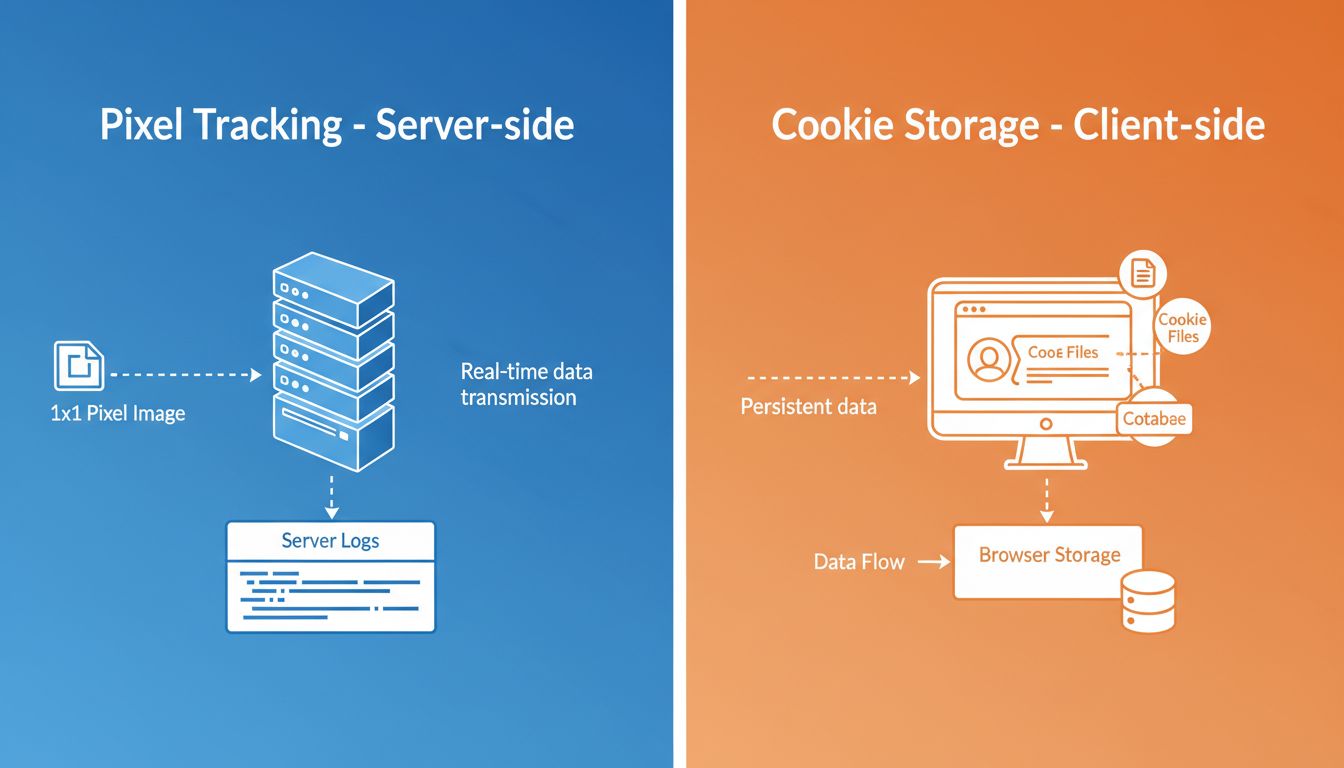
The fundamental advantage of pixel tracking is that it works on the server-side, meaning data is transmitted directly to your analytics platform without storing information on the user’s device. This approach makes pixel tracking significantly more resilient than browser-based cookies, which users can easily delete or block through their browser settings. In 2025, as privacy regulations continue to evolve and third-party cookies face increasing restrictions, pixel tracking has emerged as a more reliable alternative for maintaining consistent tracking across multiple devices and platforms. Whether you’re running email campaigns, managing affiliate programs, or optimizing paid advertising, pixel tracking provides the foundational data infrastructure needed to make informed marketing decisions and demonstrate clear return on investment.
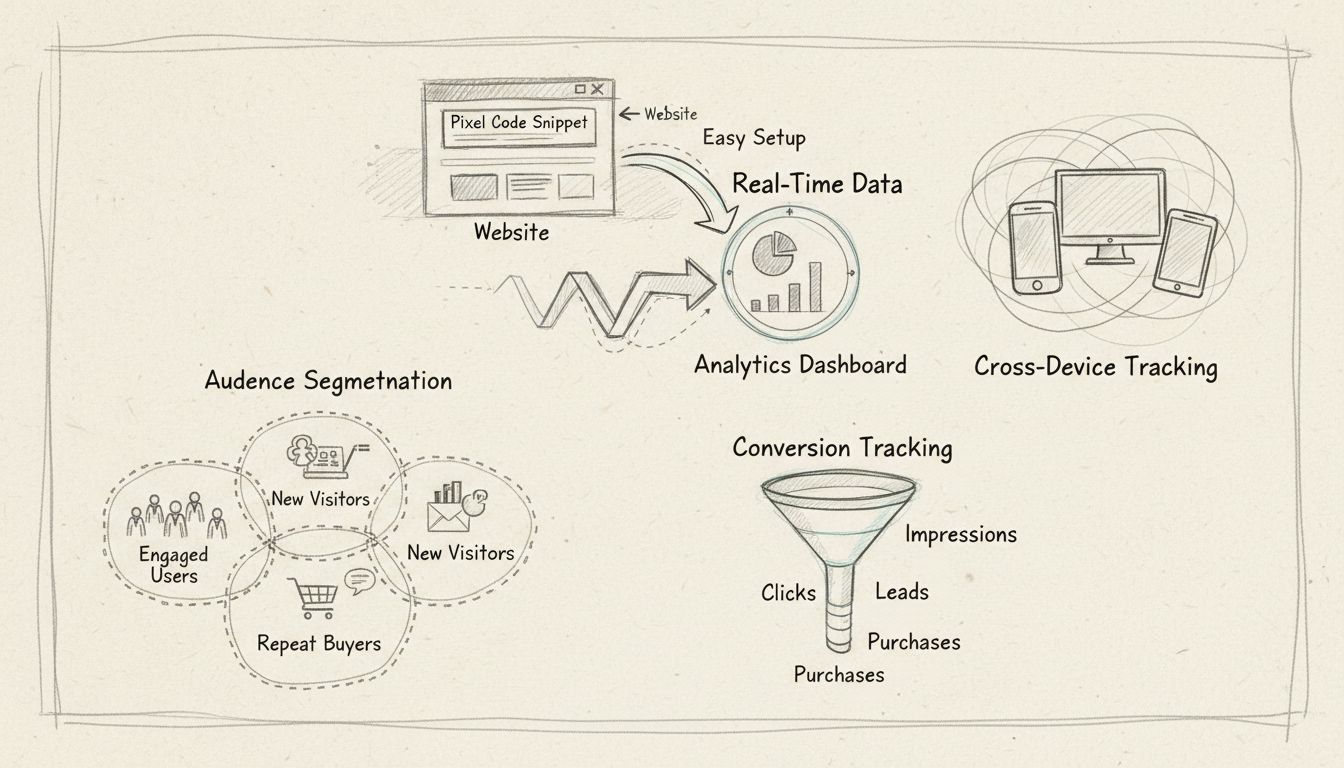
One of the most compelling benefits of pixel tracking is its remarkable ease of implementation, which democratizes advanced marketing analytics for businesses of all sizes. Unlike JavaScript-based tracking solutions that require developers to modify website code or integrate complex SDKs, pixel tracking can be deployed by simply copying a small code snippet and pasting it into your website’s header, footer, or email template. This straightforward approach means you don’t need deep technical knowledge, extensive development resources, or access to your website’s source code to start collecting valuable marketing data. Most major platforms including Facebook, Google Ads, LinkedIn, and specialized affiliate tracking platforms like PostAffiliatePro provide step-by-step instructions and user-friendly interfaces that guide you through the setup process, making it accessible even for non-technical marketers and small business owners.
The implementation flexibility of pixel tracking extends across different website platforms and content management systems. Whether your website runs on WordPress, Shopify, Wix, custom-built platforms, or any other CMS, you can implement pixel tracking without requiring platform-specific modifications or developer intervention. This universality is particularly valuable for agencies managing multiple client websites or businesses operating across different digital properties. Additionally, pixel tracking doesn’t interfere with website performance or user experience, as the pixel loads asynchronously and doesn’t block page rendering. The lightweight nature of pixel tracking means your website maintains optimal loading speeds while still collecting comprehensive data about user interactions, conversions, and engagement metrics that drive your marketing strategy forward.
Pixel tracking delivers immediate insights into how your marketing campaigns are performing, enabling you to make data-driven decisions quickly rather than waiting hours or days for reports to compile. When a user interacts with your website, email, or advertisement, the pixel instantly transmits data to your analytics platform, providing real-time visibility into metrics such as page views, clicks, form submissions, and purchases. This instantaneous feedback loop is transformative for campaign optimization, allowing you to identify underperforming ads, landing pages, or audience segments within hours rather than weeks. For time-sensitive campaigns like flash sales, limited-time offers, or seasonal promotions, real-time pixel tracking data enables you to adjust your strategy on the fly, reallocate budget to top-performing channels, and capitalize on emerging opportunities before they pass.
The real-time nature of pixel tracking also facilitates A/B testing and multivariate testing at scale. You can launch multiple campaign variations simultaneously and monitor their performance metrics in real-time, allowing you to quickly identify which creative elements, messaging, or targeting parameters resonate most with your audience. This continuous optimization cycle compounds over time, leading to progressively better campaign performance and higher return on ad spend. Furthermore, real-time data collection enables you to implement dynamic remarketing strategies, where you can immediately target users who have shown interest in specific products or services, increasing the likelihood of conversion while the user’s interest is still fresh.
Pixel tracking transforms your ability to optimize advertising spend by providing granular insights into which campaigns, ad creatives, audience segments, and marketing channels drive the most valuable conversions. By tracking user behavior across your website, you can identify which traffic sources deliver the highest-quality visitors, which landing pages convert best, and which audience segments have the highest lifetime value. This intelligence allows you to concentrate your advertising budget on the channels and strategies that deliver measurable results, eliminating wasteful spending on underperforming campaigns. Retargeting pixels specifically enable you to create sophisticated audience segments based on user behavior, such as visitors who viewed specific products, added items to their cart but didn’t purchase, or visited your website multiple times without converting.
The power of pixel-based retargeting lies in its ability to reconnect with interested prospects at the exact moment they’re most likely to convert. When someone visits your website but leaves without making a purchase, the retargeting pixel captures this behavior and allows you to display targeted advertisements to that user across other websites and social media platforms they visit. This persistent presence keeps your brand top-of-mind and provides multiple opportunities for conversion, significantly increasing your overall conversion rates. Additionally, pixel tracking enables you to create lookalike audiences on platforms like Facebook and Google, where the algorithm identifies new users who share similar characteristics and behaviors with your best customers, expanding your reach to high-quality prospects you might not have found through traditional targeting methods.
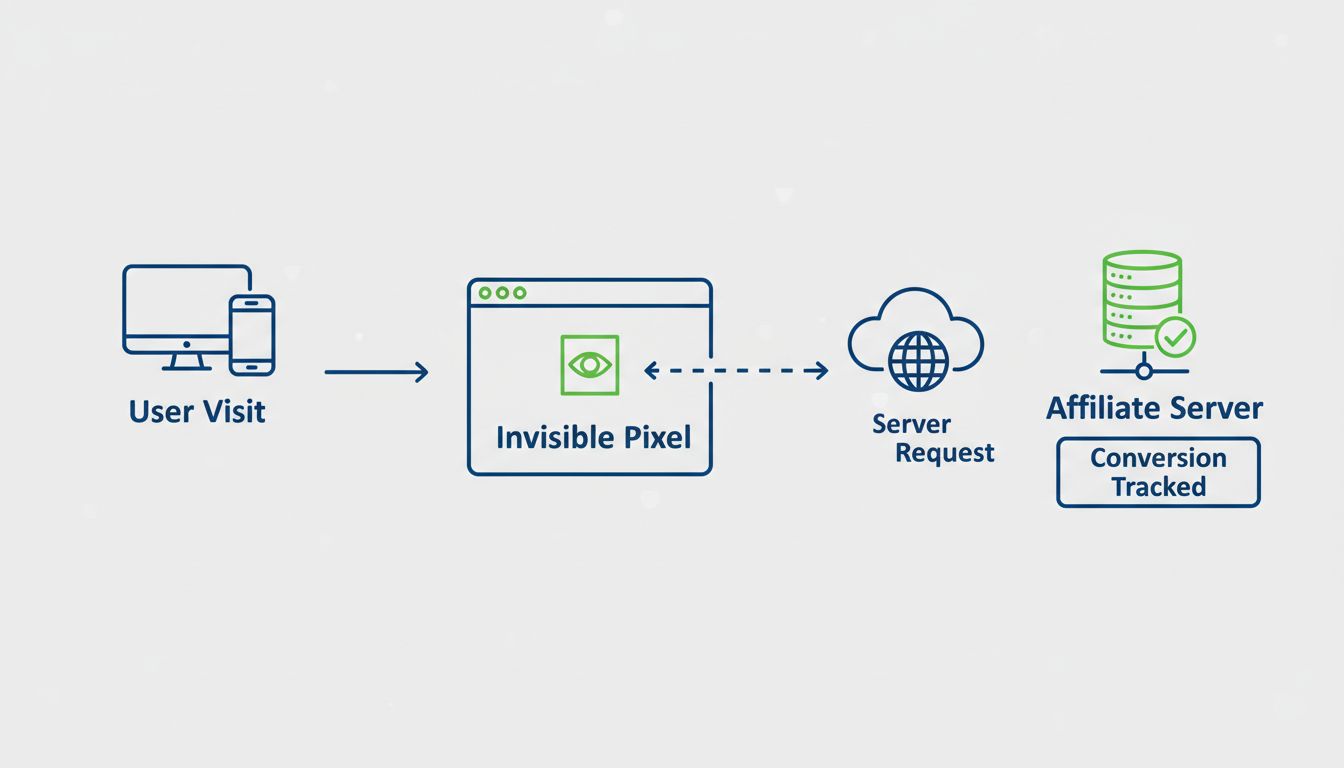
Pixel tracking provides the detailed conversion data necessary to understand and optimize every step of your customer journey, from initial awareness through final purchase. By implementing conversion pixels on key pages such as thank-you pages, order confirmation pages, or lead submission confirmations, you can accurately measure which marketing efforts drive actual business results. This attribution capability is crucial for calculating return on ad spend, determining which campaigns justify continued investment, and identifying which marketing channels contribute most to your bottom line. Unlike vanity metrics like impressions or clicks, conversion tracking focuses on actions that directly impact your revenue, ensuring your marketing budget is allocated to strategies that generate measurable business value.
The insights gained from conversion pixel tracking enable systematic conversion rate optimization across your entire digital presence. By analyzing conversion data by traffic source, device type, geographic location, and user demographics, you can identify patterns and opportunities for improvement. For example, you might discover that mobile users have a lower conversion rate than desktop users, prompting you to optimize your mobile experience. Or you might find that users from certain geographic regions have higher conversion rates, suggesting you should increase advertising spend in those areas. These data-driven insights compound over time, leading to continuous improvement in your conversion rates and overall marketing efficiency. PostAffiliatePro’s advanced conversion tracking capabilities enable affiliate managers to monitor every conversion in their network with precision, ensuring accurate commission calculations and identifying top-performing affiliates and campaigns.
Pixel tracking revolutionizes email marketing by providing visibility into how recipients interact with your email campaigns, far beyond simple open rates. Email tracking pixels embedded in your messages reveal not just whether an email was opened, but also which links were clicked, how many times the email was viewed, and what actions recipients took after clicking through to your website. This granular engagement data allows you to understand which email content resonates with your audience, which subject lines drive the highest click-through rates, and which calls-to-action convert most effectively. Armed with this intelligence, you can continuously refine your email strategy, personalizing content based on recipient behavior and preferences to increase engagement and conversions.
The combination of email pixel tracking with website conversion tracking creates a complete picture of your email campaign performance. You can track not just email opens and clicks, but also the downstream conversions that result from email engagement, calculating the true revenue impact of your email marketing efforts. This end-to-end tracking enables you to segment your email list based on engagement levels and behaviors, sending more targeted messages to highly engaged subscribers while re-engaging inactive users with special offers or content designed to reignite their interest. Additionally, email pixel tracking helps you identify your most engaged subscribers, who can then be targeted with premium offers or invited to exclusive programs, maximizing the lifetime value of your email list.
Pixel tracking enables sophisticated audience segmentation strategies that respect user privacy while delivering personalized marketing experiences. By tracking user behavior on your website, you can create detailed audience segments based on actions such as pages visited, products viewed, time spent on site, and conversion history. These first-party data segments allow you to deliver highly relevant messaging to different audience groups without relying on invasive third-party data sources. In an era of increasing privacy regulations and declining third-party cookie availability, first-party pixel tracking data has become increasingly valuable, providing a sustainable foundation for personalization and targeting strategies that comply with regulations like GDPR, CCPA, and LGPD.
Attribution modeling powered by pixel tracking helps you understand the true contribution of each marketing touchpoint in the customer journey. Rather than crediting all conversions to the last click, sophisticated attribution models distribute credit across multiple touchpoints, recognizing that customers typically interact with your brand multiple times before converting. This comprehensive view of the customer journey enables you to optimize your entire marketing funnel rather than focusing narrowly on last-click conversions. For affiliate programs specifically, pixel tracking provides clear attribution of conversions to specific affiliates and campaigns, ensuring fair commission calculations and identifying which affiliates drive the highest-quality traffic and conversions.
| Tracking Method | Real-Time Data | Cross-Device Tracking | User Control | Privacy Compliance | Implementation Complexity | Reliability |
|---|---|---|---|---|---|---|
| Pixel Tracking | Excellent | Excellent | Limited | High | Very Low | Very High |
| First-Party Cookies | Good | Limited | High | High | Low | High |
| Third-Party Cookies | Good | Excellent | High | Declining | Low | Declining |
| Server-Side Tracking | Excellent | Excellent | Limited | High | High | Very High |
| JavaScript Tracking | Good | Good | High | Medium | Medium | Medium |
Pixel tracking stands out as the optimal balance between implementation simplicity, data reliability, and privacy compliance. While server-side tracking offers similar advantages, it requires significantly more technical expertise and resources to implement. Third-party cookies, once the standard for cross-device tracking, are being phased out by major browsers and face increasing regulatory restrictions. First-party cookies remain valuable for certain use cases but cannot match pixel tracking’s cross-device capabilities and real-time performance. For most businesses seeking to implement effective tracking without extensive technical resources, pixel tracking represents the best choice for 2025 and beyond.
Successful pixel tracking implementation requires understanding how pixels function and where to place them for maximum effectiveness. Conversion pixels should be placed on pages that represent completed actions, such as thank-you pages after form submissions or order confirmation pages after purchases. Retargeting pixels are typically placed on all pages of your website to build comprehensive audience segments. Email tracking pixels are embedded within email templates to monitor opens and clicks. The key to effective pixel tracking is ensuring pixels are placed on the correct pages and that you’re tracking the right actions that align with your business objectives.
Data quality is paramount in pixel tracking implementation. Ensure that your pixel code is correctly installed and firing properly by using pixel testing tools provided by most platforms. Monitor your tracking data regularly to identify any discrepancies or issues that might affect data accuracy. Implement proper data validation to ensure that only legitimate conversions are being tracked, preventing inflated metrics that could lead to poor decision-making. Additionally, coordinate pixel implementation across your marketing team to avoid duplicate tracking or conflicting pixels that might distort your data.
Pixel tracking, like all data collection methods, must comply with applicable privacy regulations. Under GDPR, you must obtain explicit user consent before implementing tracking pixels that collect personal data, and you must clearly disclose your tracking practices in your privacy policy. CCPA requires California residents to have the right to opt-out of tracking, and you must provide clear mechanisms for users to exercise this right. LGPD in Brazil imposes similar requirements for Brazilian users. PostAffiliatePro and other reputable tracking platforms provide built-in compliance features and documentation to help you implement tracking in accordance with these regulations.
Transparency is essential for maintaining user trust while implementing pixel tracking. Clearly communicate your tracking practices in your privacy policy, cookie consent banners, and terms of service. Provide users with easy mechanisms to opt-out of tracking if they choose. Implement proper data security measures to protect the personal data you collect through pixel tracking. By combining effective pixel tracking with strong privacy practices, you can gather the insights needed to optimize your marketing while respecting user privacy and complying with applicable regulations.
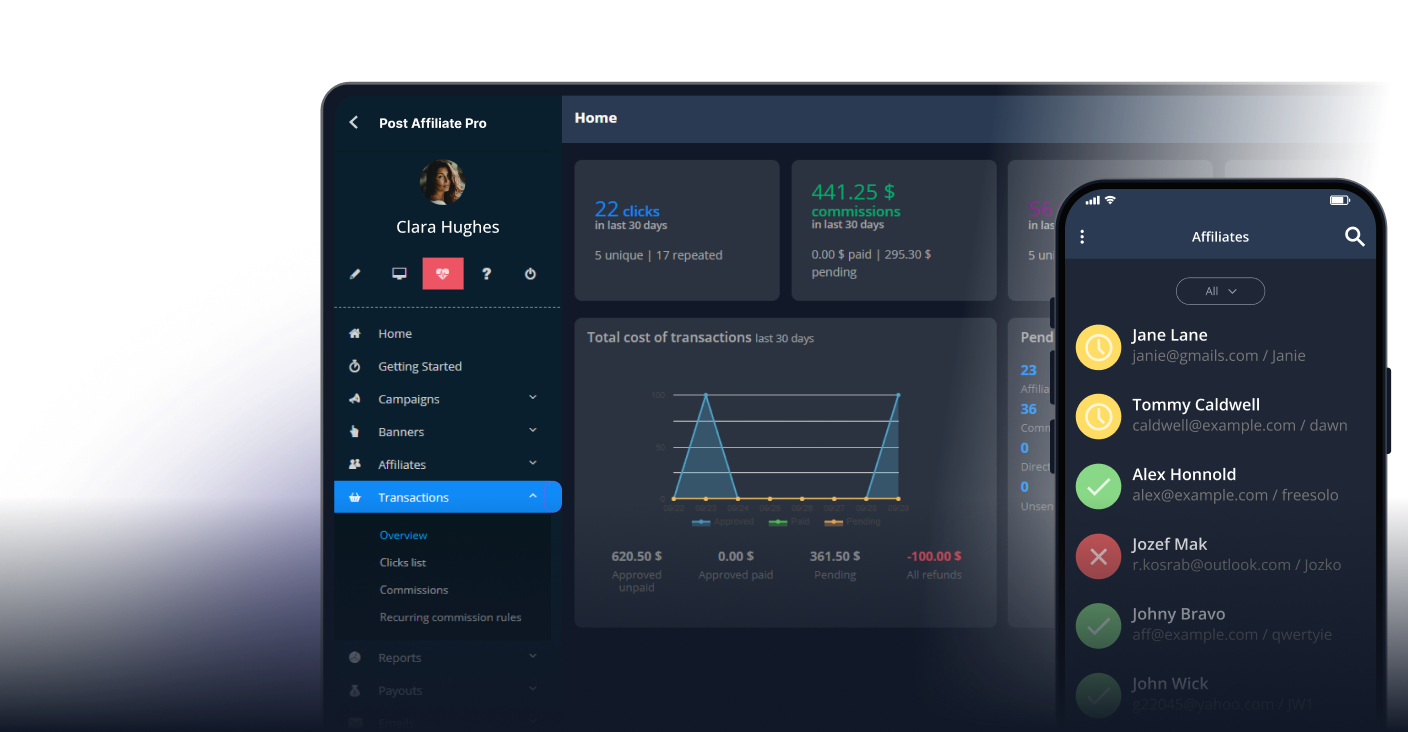
PostAffiliatePro stands out as a leading affiliate tracking platform that leverages pixel tracking technology to deliver unparalleled visibility into affiliate program performance. Unlike generic analytics platforms, PostAffiliatePro’s pixel tracking is specifically designed for affiliate marketing, enabling precise attribution of conversions to individual affiliates and campaigns. The platform’s advanced conversion tracking capabilities ensure that every sale, lead, or desired action is accurately attributed to the affiliate who drove the traffic, enabling fair commission calculations and performance-based optimization. With real-time reporting dashboards, you can monitor your affiliate program’s performance as it happens, identifying top performers and underperforming campaigns instantly.
PostAffiliatePro’s pixel tracking integrates seamlessly with your existing marketing infrastructure, whether you’re running a small affiliate program or managing a complex network with hundreds of affiliates. The platform provides detailed conversion data that goes beyond simple attribution, offering insights into affiliate quality, traffic source performance, and customer lifetime value. This comprehensive data enables you to optimize your affiliate program by promoting top-performing affiliates, adjusting commission structures based on performance, and identifying opportunities to expand successful partnerships. The platform’s fraud detection capabilities, powered by pixel tracking data, help protect your program from invalid conversions and ensure that commissions are paid only for legitimate, high-quality traffic.
Pixel tracking through PostAffiliatePro also enables sophisticated audience analysis and customer journey mapping. You can understand not just which affiliates drive conversions, but also the quality of those conversions, the customer lifetime value of traffic from different affiliates, and the optimal commission structures for different affiliate segments. This intelligence allows you to build a more profitable affiliate program by focusing resources on the affiliates and campaigns that deliver the highest-quality customers. The platform’s integration with major advertising networks and email marketing platforms ensures that your pixel tracking data flows seamlessly across your entire marketing ecosystem, providing a unified view of your marketing performance.
Pixel tracking has evolved from a nice-to-have marketing tool to an essential component of modern digital marketing strategy. Its ease of implementation, combined with powerful data collection capabilities, makes it accessible to businesses of all sizes while delivering insights that drive real business results. The benefits of pixel tracking—from real-time campaign optimization to advanced audience segmentation to privacy-compliant tracking—make it the tracking method of choice for forward-thinking marketers in 2025. By implementing pixel tracking effectively and leveraging platforms like PostAffiliatePro that specialize in affiliate tracking, you can gain complete visibility into your marketing performance, optimize your campaigns with precision, and build a more profitable marketing operation. Start implementing pixel tracking today and unlock the data-driven insights that will transform your marketing results.
PostAffiliatePro provides advanced pixel tracking and conversion monitoring capabilities that help you optimize your affiliate campaigns, track conversions accurately, and maximize your ROI. Start tracking every conversion with precision today.
Learn if pixel tracking requires coding skills. Discover how to implement tracking pixels with simple HTML code snippets without advanced programming knowledge.
Learn when to use pixel tracking in Post Affiliate Pro for accurate affiliate conversion tracking. Discover pixel tracking benefits, implementation methods, and...
Understand the differences between pixel tracking and cookies. Learn how each technology works, their advantages, privacy implications, and which tracking metho...
Join our community of happy clients and provide excellent customer support with Post Affiliate Pro.



Cookie Consent
We use cookies to enhance your browsing experience and analyze our traffic. See our privacy policy.