Discover the latest affiliate marketing statistics for 2025, including market size, growth trends, ROI metrics, and industry insights to optimize your affiliate program strategy.
Published on Dec 28, 2025.Last modified on Dec 28, 2025 at 7:40 am
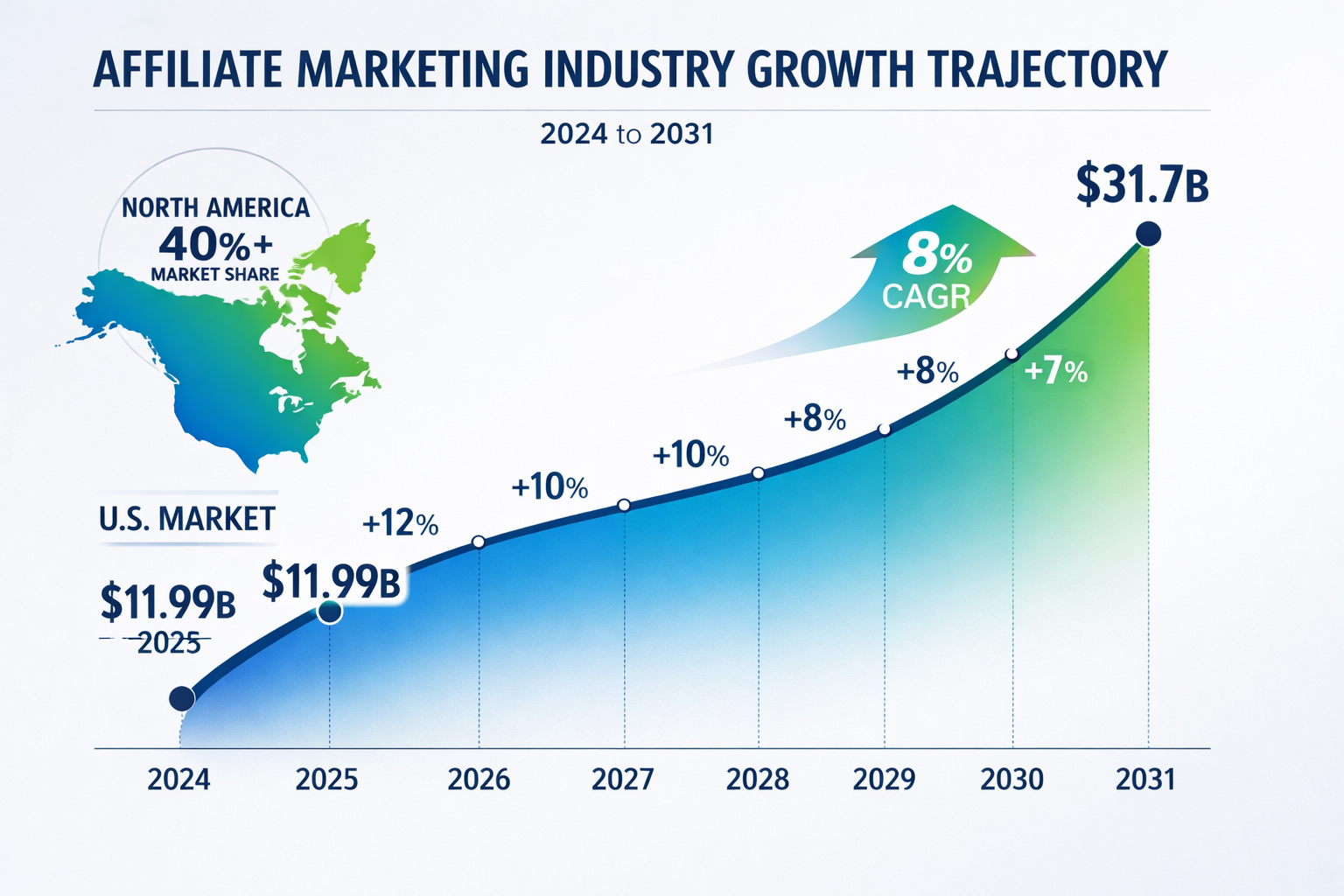
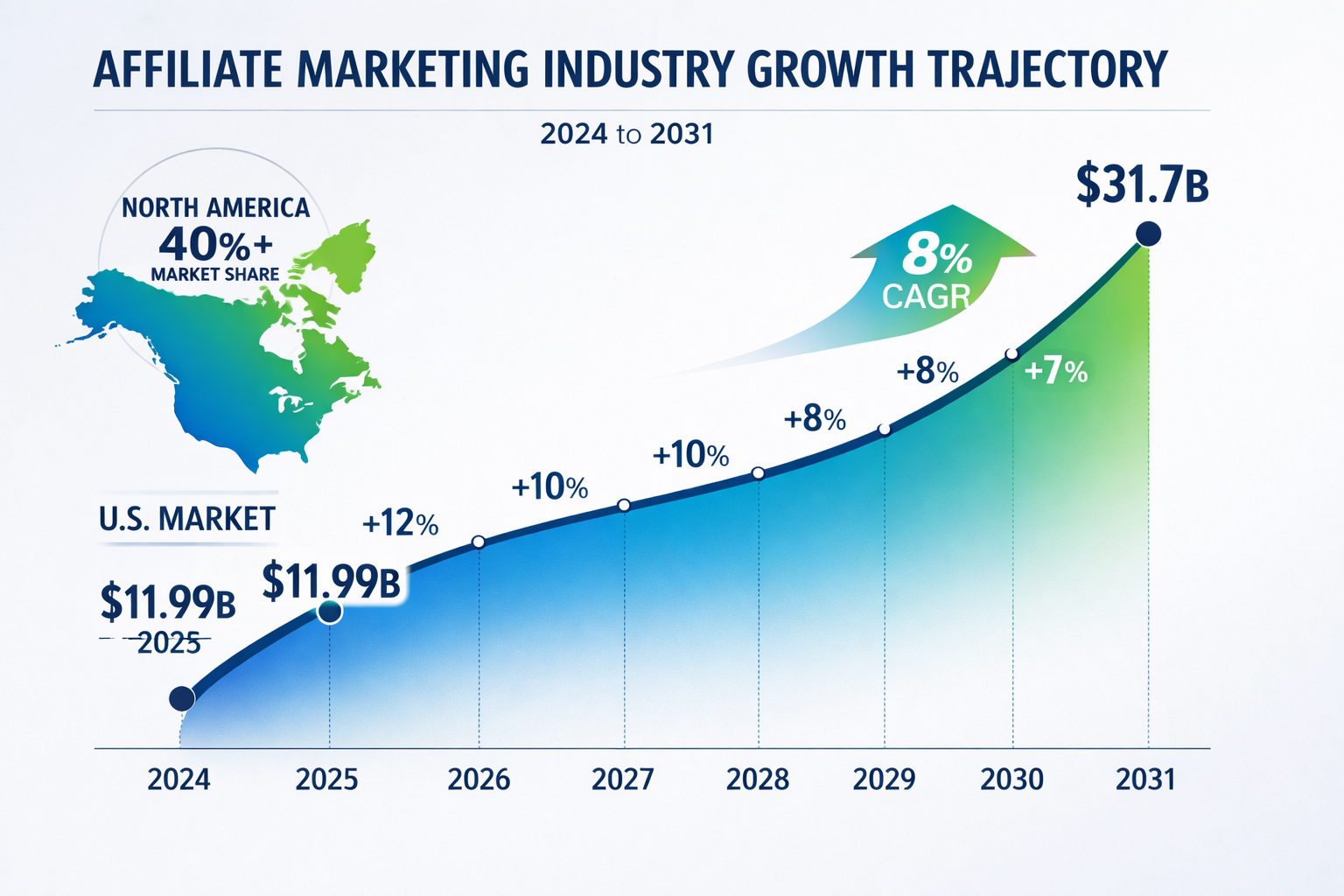
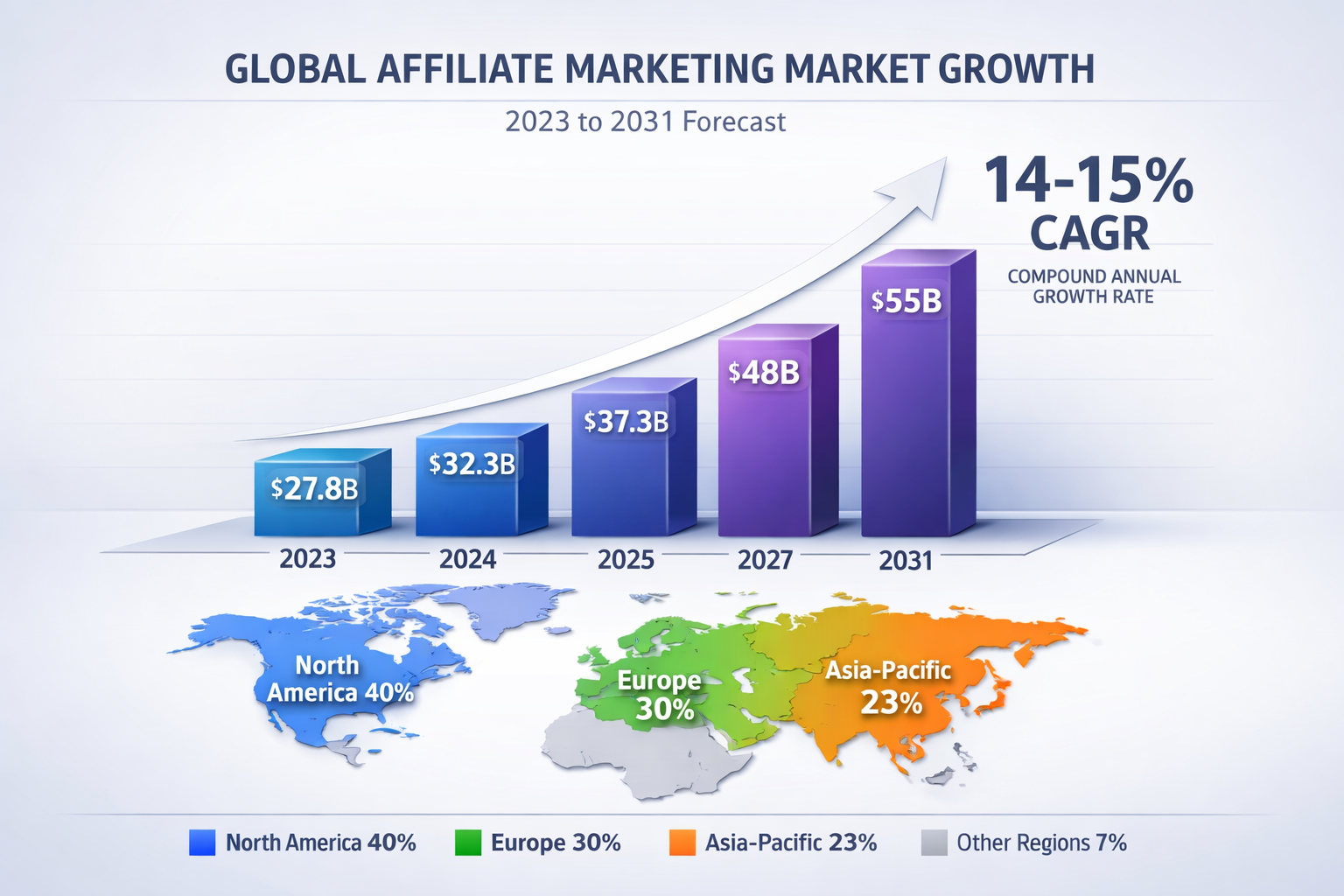
The global affiliate marketing industry has reached a significant milestone, valued at $18.5 billion in 2024 and projected to grow to $31.7 billion by 2031, representing a compound annual growth rate (CAGR) of 8%. This expansion is driven by the increasing adoption of performance-based marketing strategies across industries, the explosive growth of ecommerce, and the rise of content creators seeking monetization opportunities. North America dominates the market, accounting for over 40% of global affiliate revenue, with the United States alone contributing 39% of this share. In the U.S. specifically, affiliate marketing spending reached approximately $11.99 billion in 2025 and is projected to climb to $16 billion by 2028, reflecting strong confidence from businesses investing in this cost-effective, performance-driven channel.
Why Brands Are Investing in Affiliate Marketing
The widespread adoption of affiliate marketing demonstrates its proven effectiveness as a customer acquisition and revenue-generation channel. More than 80% of advertisers leverage affiliate marketing programs, while 81% of brands actively use affiliate partnerships to boost sales and expand brand awareness. The Cost-Per-Sale (CPS) model remains the dominant revenue structure, allowing businesses to pay affiliates only when a conversion occurs, making it an attractive, risk-free investment for advertisers. Companies using affiliate marketing report an impressive average ROI of $15 for every $1 spent, translating to a 1,400% return on investment—significantly outperforming traditional advertising channels. This superior performance compared to other marketing methods has made affiliate marketing a cornerstone of modern digital strategies, with brands recognizing its scalability and measurable results.
Marketing Channel
Adoption Rate
Key Advantage
Affiliate Marketing
80%+
Performance-based, measurable ROI
Content Marketing
High
Builds authority and trust
PPC Advertising
Moderate
Immediate visibility
Email Marketing
High
Direct audience engagement
Social Media Marketing
High
Broad reach and engagement
Affiliate Marketing ROI
$15:$1
Highest cost-efficiency
AI, Video, and Mobile: The New Affiliate Marketing Landscape
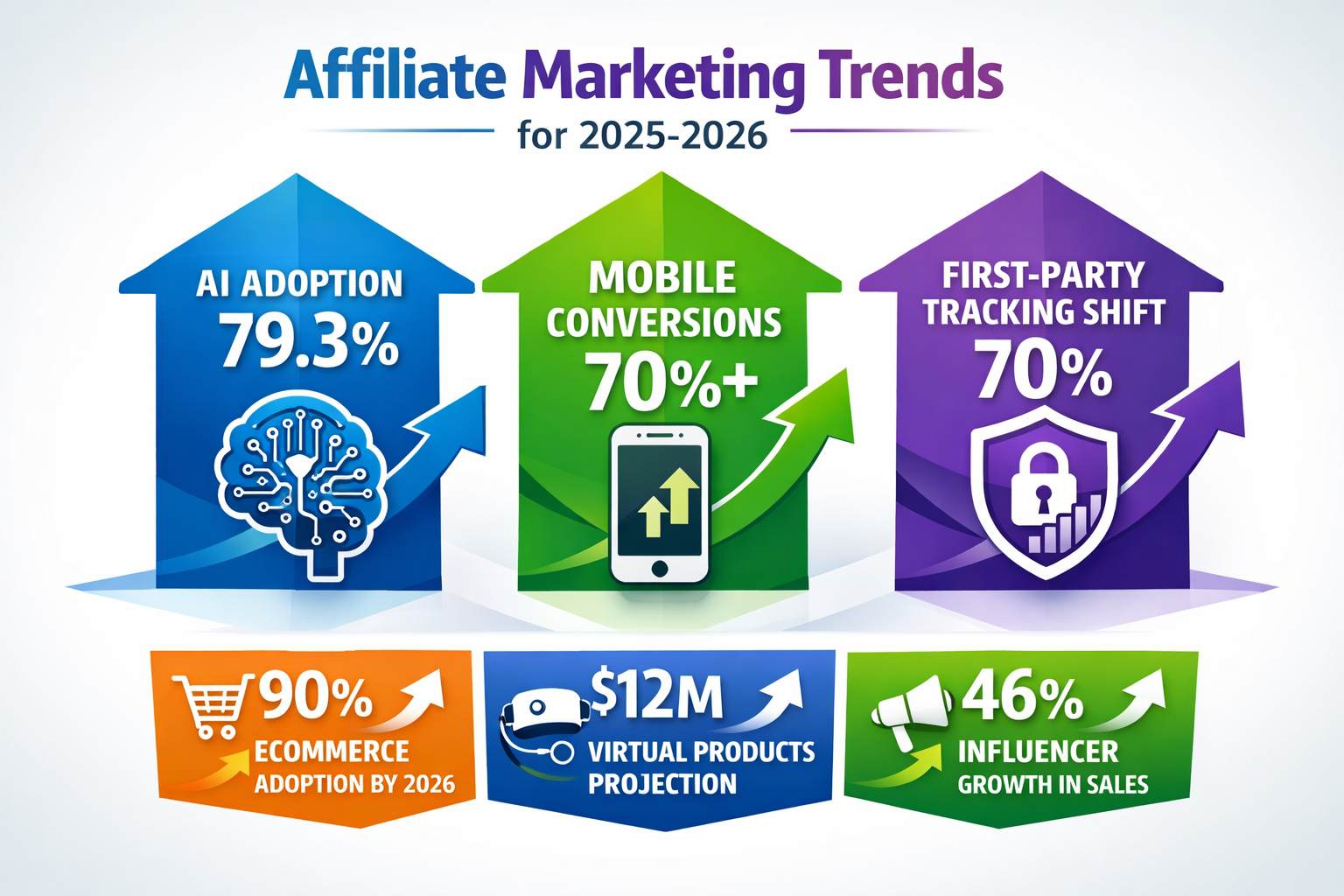
Artificial intelligence is revolutionizing affiliate marketing, with nearly 79.3% of affiliate marketers now adopting AI-powered tools to automate content creation, optimize SEO strategies, and personalize campaigns at scale. These AI-driven solutions enable affiliates to produce high-quality content faster, analyze market trends in real-time, and identify high-converting keywords without extensive manual research. Video content has emerged as a game-changer, with campaigns incorporating video experiencing 49% higher conversion rates compared to text-based content alone, making it essential for modern affiliate strategies. The shift toward mobile-first experiences is undeniable, as over 70% of affiliate conversions now occur on mobile devices, necessitating responsive design and seamless user experiences. Influencer partnerships continue to drive remarkable results, with influencer-led affiliate campaigns generating 46% higher sales compared to traditional affiliate methods, leveraging the trust and authenticity that influencers command with their audiences.
Key Trends Shaping Affiliate Marketing in 2025:
Nearly 80% of affiliate marketers use AI tools for content creation and campaign optimization
Video content drives 49% higher conversion rates than text-based content alone
Over 70% of affiliate conversions occur on mobile devices, emphasizing mobile optimization
Influencer partnerships boost sales by 46%, making creator collaborations essential
31% of content creators rank affiliate marketing as their primary income source
First-party data and privacy-compliant tracking are replacing cookie-based attribution
Micro-influencers with niche audiences outperform macro-influencers in engagement and conversions
Niche Selection: Where the Real Money Is
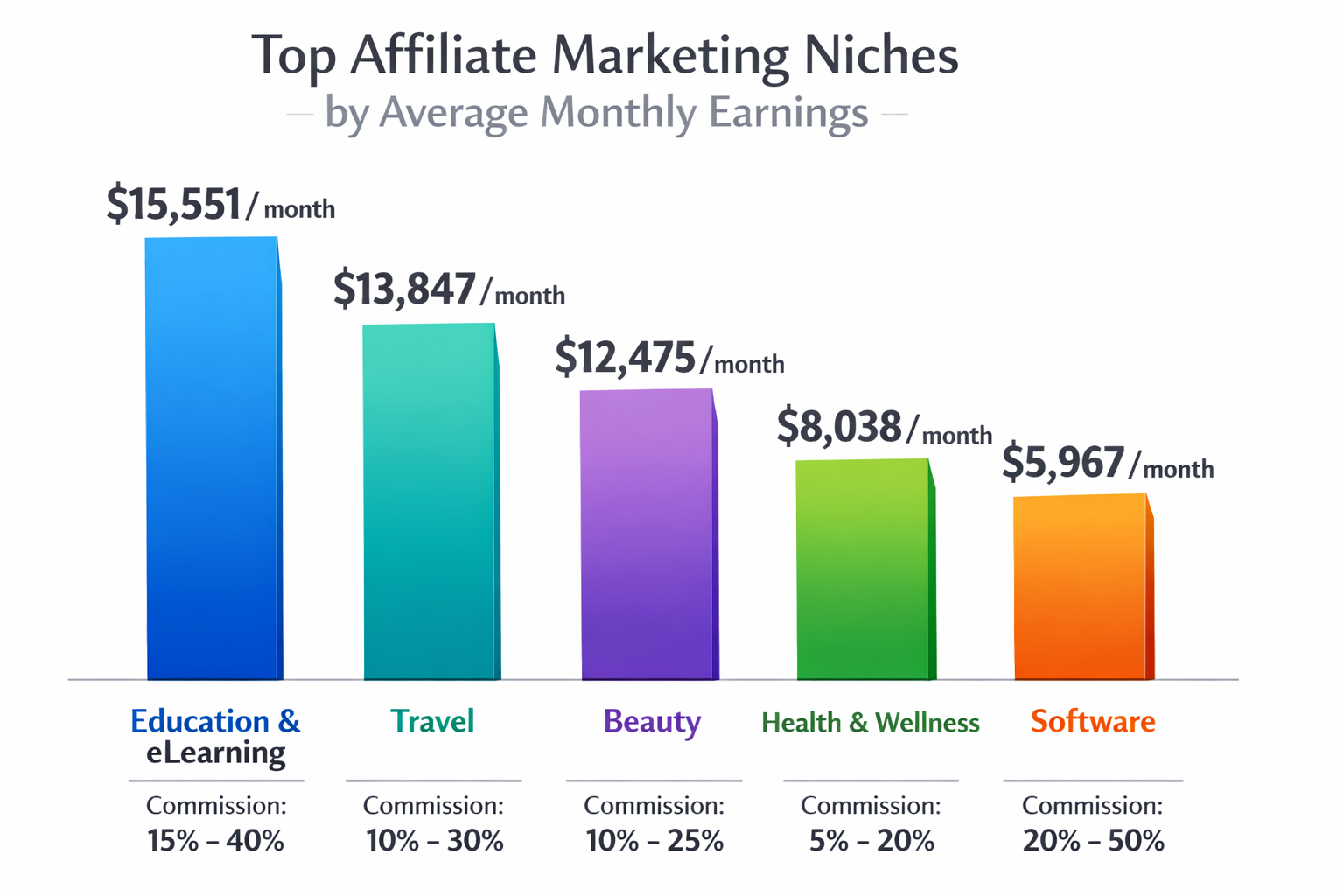
Affiliate marketing earnings vary dramatically across different niches, with education and eLearning leading the pack at an average of $15,551 per month, followed by travel ($13,847/month) and beauty ($12,475/month). The software and SaaS sector offers particularly attractive commission structures, ranging from 20% to 70% per sale, making it highly lucrative for affiliates who can effectively target business decision-makers. Amazon Associates, despite offering lower individual commission rates, maintains dominance with a 46.21% market share of the affiliate network landscape, benefiting from its vast product catalog and trusted brand reputation. The income disparity between experienced and novice affiliates is substantial—experienced affiliate marketers earn approximately 9.45 times more than beginners, with top performers generating six-figure annual incomes through strategic niche selection, SEO expertise, and optimized conversion funnels. This significant earnings gap underscores the importance of specialization, audience understanding, and continuous optimization in building a sustainable affiliate marketing business.
Building Trust: The Consumer Behavior Behind Affiliate Success
Consumer trust in affiliate recommendations has become a critical driver of affiliate marketing success, with 88% of consumers making purchase decisions based on recommendations from influencers, bloggers, and trusted online personalities. The research phase is extensive—81% of customers research products online before making a purchase decision, and 74% of shoppers visit multiple affiliate websites to compare products, prices, and reviews before committing to a purchase. This multi-touchpoint journey creates numerous opportunities for affiliates to influence purchasing decisions through valuable, comparison-focused content. User-generated content (UGC) significantly amplifies conversion rates, with campaigns incorporating authentic customer reviews and testimonials experiencing 28% higher conversion rates than those relying solely on affiliate recommendations. Furthermore, customers acquired through affiliate channels demonstrate stronger loyalty, with 21% higher repeat purchase rates compared to those arriving through other marketing channels, indicating that affiliate-driven traffic tends to be higher-intent and more engaged.
Navigating Challenges: Traffic, Algorithms, and Fraud
Search Engine Optimization (SEO) remains the dominant traffic source for affiliate marketers, with 69% of affiliates prioritizing organic search as their primary channel, followed closely by social media platforms used by 67% of marketers to drive traffic to their affiliate content. Mobile devices account for over 70% of affiliate conversions, making mobile optimization not just beneficial but essential for affiliate success in the current digital landscape. However, affiliate marketers face significant obstacles that threaten revenue stability and growth. Traffic generation remains the primary challenge for 45% of affiliates, intensified by frequent search algorithm updates that negatively impact 25% of marketers, causing traffic fluctuations and revenue unpredictability. Affiliate fraud concerns affect 67% of marketers, with fraudulent activities including fake leads, bot traffic, and cookie stuffing eroding trust and wasting advertising budgets. Additionally, privacy regulations such as GDPR and CCPA have complicated tracking and attribution, forcing platforms to shift away from third-party cookies toward more complex, first-party data solutions.
The Future of Affiliate Marketing: Opportunities and Evolution
The affiliate marketing landscape is poised for explosive growth, with projections indicating that over 90% of ecommerce businesses will adopt affiliate marketing by 2026, up from current adoption rates, signaling the channel’s transition from niche strategy to mainstream necessity. Virtual products and digital services represent an emerging frontier, with the market projected to generate $12 million in revenue by 2030, offering affiliates opportunities in online courses, software subscriptions, digital downloads, and NFTs with minimal overhead costs. The industry is undergoing a fundamental shift in attribution methodology, as approximately 70% of affiliate platforms are moving away from cookie-based tracking toward first-party data collection and server-side solutions, ensuring compliance with privacy regulations while maintaining accurate conversion attribution. PostAffiliatePro stands at the forefront of this evolution, providing affiliate program managers with advanced tracking capabilities, fraud detection, and performance analytics that adapt to these regulatory changes while maximizing ROI. For businesses and affiliates alike, the future demands sophisticated tools, data-driven strategies, and a commitment to transparency—making investment in robust affiliate management platforms not just advantageous but essential for competitive success in an increasingly crowded marketplace.
Frequently asked questions
What is the current size of the affiliate marketing industry?
The global affiliate marketing industry is valued at $18.5 billion in 2024 and is projected to reach $31.7 billion by 2031, growing at a compound annual growth rate (CAGR) of 8%. North America dominates with over 40% of global revenue, while the U.S. alone accounts for $11.99 billion in 2025, projected to reach $16 billion by 2028.
How much ROI can businesses expect from affiliate marketing?
Businesses using affiliate marketing report an impressive average ROI of $15 for every $1 spent, translating to a 1,400% return on investment. This makes affiliate marketing one of the most cost-effective marketing channels available, significantly outperforming traditional advertising methods and other digital marketing channels.
Which niches are most profitable for affiliate marketers?
The most profitable niches for affiliate marketing include education and eLearning ($15,551 average monthly income), travel ($13,847/month), beauty ($12,475/month), and health and wellness ($8,038/month). Software and SaaS programs offer particularly attractive commission structures ranging from 20% to 70% per sale.
What percentage of ecommerce sales come from affiliate marketing?
Affiliate marketing drives 16% of all ecommerce sales in the U.S. and Canada, making it one of the most important revenue channels for online retailers. This significant contribution demonstrates the channel's effectiveness in influencing consumer purchasing decisions and driving measurable business results.
How has AI impacted affiliate marketing in 2025?
Nearly 79.3% of affiliate marketers have adopted AI-powered tools for content creation, SEO optimization, and campaign personalization. AI enables faster content production, real-time market analysis, and improved targeting, allowing affiliates to scale their efforts while maintaining quality and relevance.
What are the biggest challenges facing affiliate marketers?
The primary challenges include traffic generation (45% of affiliates), search algorithm updates (25%), affiliate fraud concerns (67%), and privacy regulation compliance (GDPR, CCPA). Additionally, 73% of affiliates struggle with dependence on external platforms like Google and social media algorithms for traffic.
Is affiliate marketing still worth it in 2025?
Yes, affiliate marketing remains highly valuable in 2025 and beyond. With the industry projected to grow to $31.7 billion by 2031 and over 90% of ecommerce businesses expected to adopt affiliate marketing by 2026, it continues to be a proven, cost-effective channel for customer acquisition and revenue generation.
PostAffiliatePro provides comprehensive affiliate program management with advanced tracking, fraud detection, performance analytics, and compliance tools. It helps brands recruit quality affiliates, manage commissions, track conversions accurately, and optimize ROI while adapting to evolving privacy regulations and industry standards.
Ready to Scale Your Affiliate Program?
PostAffiliatePro provides the tools and insights you need to manage, track, and optimize your affiliate marketing program for maximum ROI. Join leading brands that trust PostAffiliatePro to power their affiliate success.
Affiliate Marketing Industry Size 2025-2026: Market Growth, Trends & Opportunities
Discover the latest affiliate marketing industry statistics for 2025-2026. Global market valued at $17-18B in 2025, projected to reach $20B+ in 2026. Learn mark...
Why Is Affiliate Marketing the Future? 2025 Trends & Growth Opportunities
Discover why affiliate marketing is the future of online business. Learn about low startup costs, passive income potential, scalability, and market growth proje...
Affiliate Marketing is Dead—Or is It? The Truth About Performance-Based Marketing in 2025
Discover why affiliate marketing isn't dead but thriving. Learn the latest trends, statistics, and strategies for success in 2025 with PostAffiliatePro's compre...