
How Does Pay Per Sale Work? Complete Guide to PPS Affiliate Marketing
Learn how pay per sale (PPS) affiliate marketing works in 2025. Discover commission structures, tracking mechanisms, earning potential, and best practices for m...
14 min read
Pay Per Sale (PPS) is a cost-effective affiliate marketing model where affiliates are rewarded only for actual sales they generate, aligning advertising spend with real results.
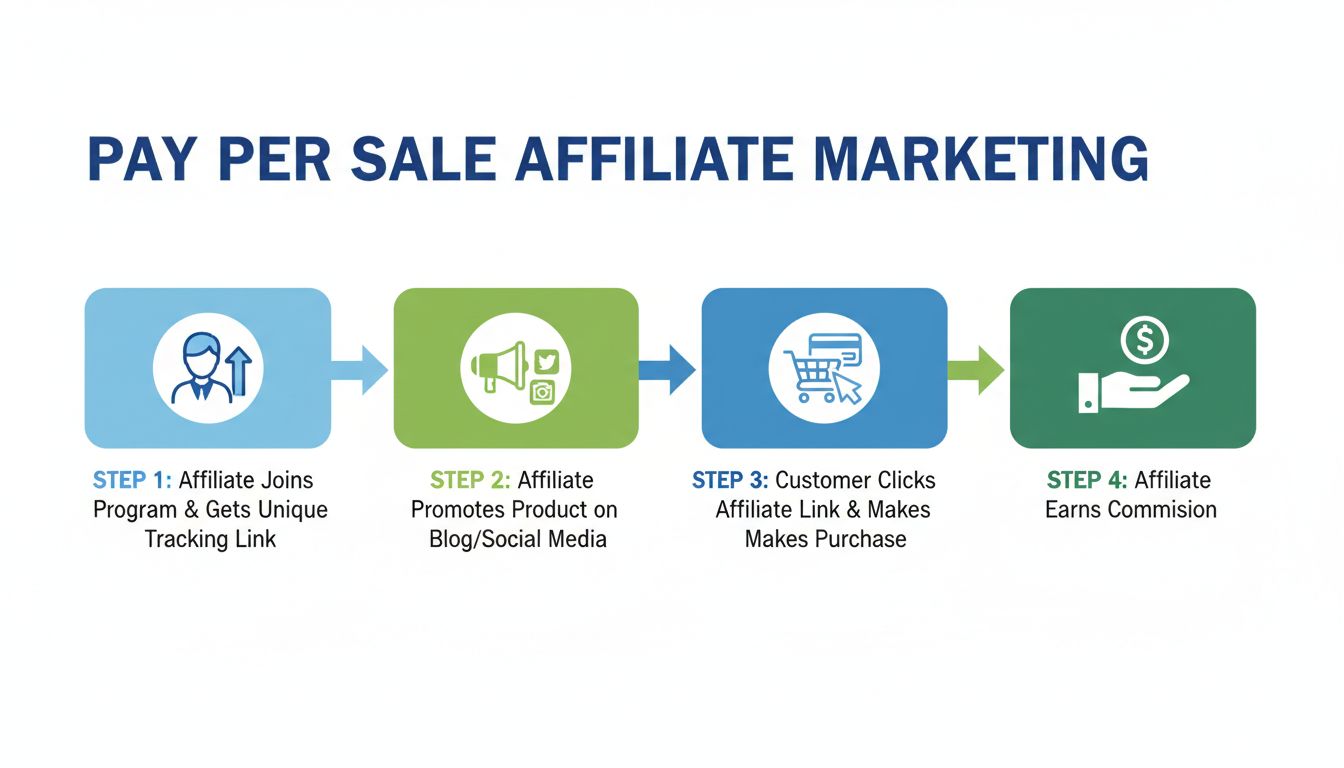
Pay Per Sale (PPS), also known as Cost Per Sale (CPS), is a performance-driven marketing model where advertisers compensate affiliates or publishers for each sale generated through their marketing efforts. Unlike models such as Pay Per Click (PPC) or Pay Per Impression (PPI), PPS ensures payment only upon the successful completion of a sale, making it a cost-effective and results-oriented approach.
This model is extensively utilized in digital marketing, particularly within affiliate marketing, to motivate affiliates to promote products or services efficiently, aligning their goals with those of advertisers.
The Pay Per Sale model originated as a solution to the inefficiencies of traditional advertising methods. Businesses demanded more accountable and performance-based solutions, which led to the advent of PPS. With the growth of digital marketing, this model became more prominent, offering a way to ensure that advertising expenditures are directly linked to sales outcomes.
Over time, PPS has evolved with technological advancements, integrating sophisticated tracking and analytical tools to accurately attribute sales to specific affiliates, thereby enhancing its efficiency and attractiveness.
Affiliate networks serve as platforms that connect advertisers with affiliates, providing the infrastructure to facilitate and monitor PPS arrangements. They offer tools for managing campaigns, tracking sales, and processing payments. Networks play a critical role in expanding market reach, offering access to a diverse array of affiliates, and ensuring transparency and accountability in PPS marketing.
Enhanced Fraud Prevention: Technological advancements will lead to more sophisticated methods for detecting and preventing fraudulent activities in PPS campaigns.
Integration with AI and Machine Learning: Enhancements in targeting and personalization through AI can improve conversion rates and campaign efficiency.
Mobile and Social Media Optimization: As mobile usage and social media engagement rise, optimizing PPS strategies for these platforms will be essential.
Focus on Experiential Marketing: Delivering value-driven and experiential shopping experiences will become increasingly important in driving sales.
With pay-per-sale, affiliate marketers earn a commission on every product sale they refer.
The cost of pay per sale lead generation can vary depending on the lead generation company and the type of lead generation services they offer. Typically, pay per sale lead generation services range from $500 to $5000 per month.
Discover how Pay Per Sale can help you maximize ROI by rewarding affiliates for real sales. Learn strategies, benefits, and how to set up your own PPS program.
Learn how pay per sale (PPS) affiliate marketing works in 2025. Discover commission structures, tracking mechanisms, earning potential, and best practices for m...
Cost per sale (CPS) is a performance-based payment method in affiliate marketing where merchants pay affiliates a commission for each sale generated. This model...

Discover comprehensive pricing for pay per sale lead generation in 2025. Learn cost ranges by industry, pricing models, and how PostAffiliatePro delivers superi...
Join our community of happy clients and provide excellent customer support with Post Affiliate Pro.




Cookie Consent
We use cookies to enhance your browsing experience and analyze our traffic. See our privacy policy.